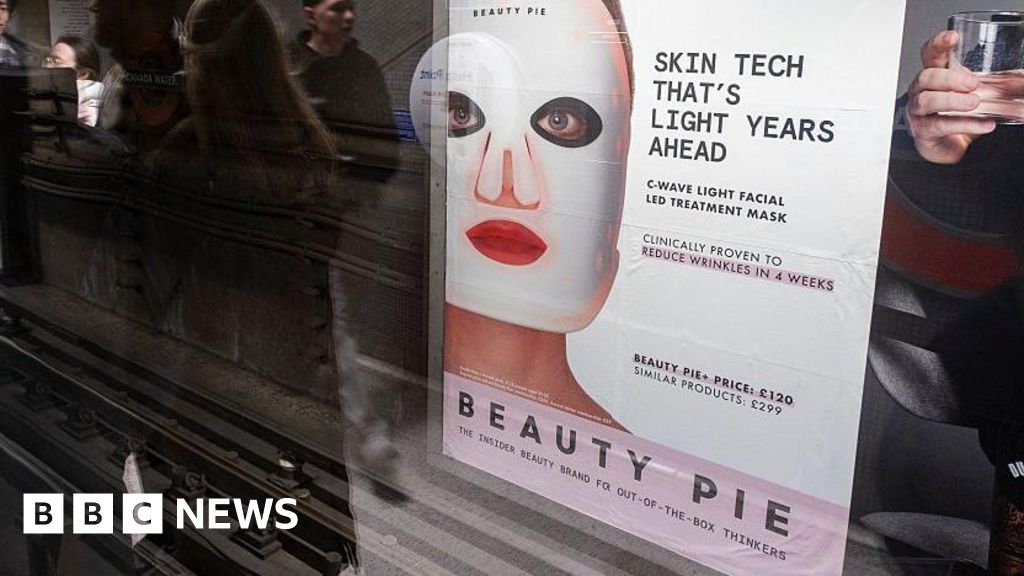
Beauty Pie's LED Mask Ad Banned for Promising to Do What 28 People Couldn't Prove
Beauty Pie's LED mask ad got banned for claiming it was clinically proven to reduce wrinkles - turns out 28 people and a free hydrogel don't count as a clinical trial.
An advert for Beauty Pie's LED face mask has been banned for claiming it was "clinically proven to reduce wrinkles in four weeks" - a statement the advertising watchdog found about as solid as a wrinkle on a 30-year-old.
The Advertising Standards Authority said Beauty Pie didn't provide enough evidence to back the claim, despite the brand's trial involving 28 people aged 30 to 65 over four weeks. The ASA called this a "relatively small" sample size, which is polite regulatory speak for "you need more than a dinner party's worth of testers to prove something."
LED technology is a known medical tool for treating eczema, acne, psoriasis, and sun damage, but at-home LED devices are now flooding the market - projected to be worth £600 million globally by 2032, according to analysis firm Skyquest. Dermatologists, however, have told the BBC there haven't been clinical trials large or long enough to confirm the benefits of these consumer-grade gadgets.
Beauty Pie, a direct-to-consumer cosmetics membership firm that sells luxury formulas at affordable prices, markets its C-Wave Light Facial LED mask at £199 for members or £299 for non-members - a bargain compared to rivals, they say. The ad, spotted on the London Underground, called the mask "skin tech that's light years ahead," which the ASA felt required "robust, product-specific evidence."
Beauty Pie defended itself by saying 92% of testers agreed or strongly agreed that their "fine lines appear less visible" after four weeks. But the ASA noted a few wrinkles in the study design: no placebo group, a small sample size, and testers were asked to use an exfoliating product and a hydrogel - neither sold with the mask - which the brand's own website says should be used "on a clean, dry face."
"We therefore considered the reported improvements in the appearance of wrinkles could not be attributed to the [mask] alone," the ASA ruling stated, in what might be the least surprising scientific conclusion since "water is wet."
Beauty Pie argued that sample sizes of 20 to 25 are routinely accepted by other regulators, but the ASA wasn't buying it - or the mask's claims. The watchdog concluded the ad was misleading and ordered Beauty Pie to stop making such claims unless they can back them up with proper evidence.
BBC News has contacted Beauty Pie for comment, presumably to ask if they have a larger study or just a really good moisturizer.
The Good Times
News in your inbox.
One sardonic roundup, delivered on your schedule. Free. Unsubscribe whenever your tolerance for wit runs out.
Already subscribed but we never reach your inbox? Check your spam folder and hit 'Not spam' (or 'Remove from spam') to bust us out of junk-mail purgatory. You'll be helping everyone else too.
Don't open any of our emails for a month and you'll be automatically removed from the mailing list.
Rewrite Article
Select parts to regenerate with a fresh AI pass. Translations will be updated automatically.
Generate AI Image
Creates a sardonic version of the article image using OpenAI.