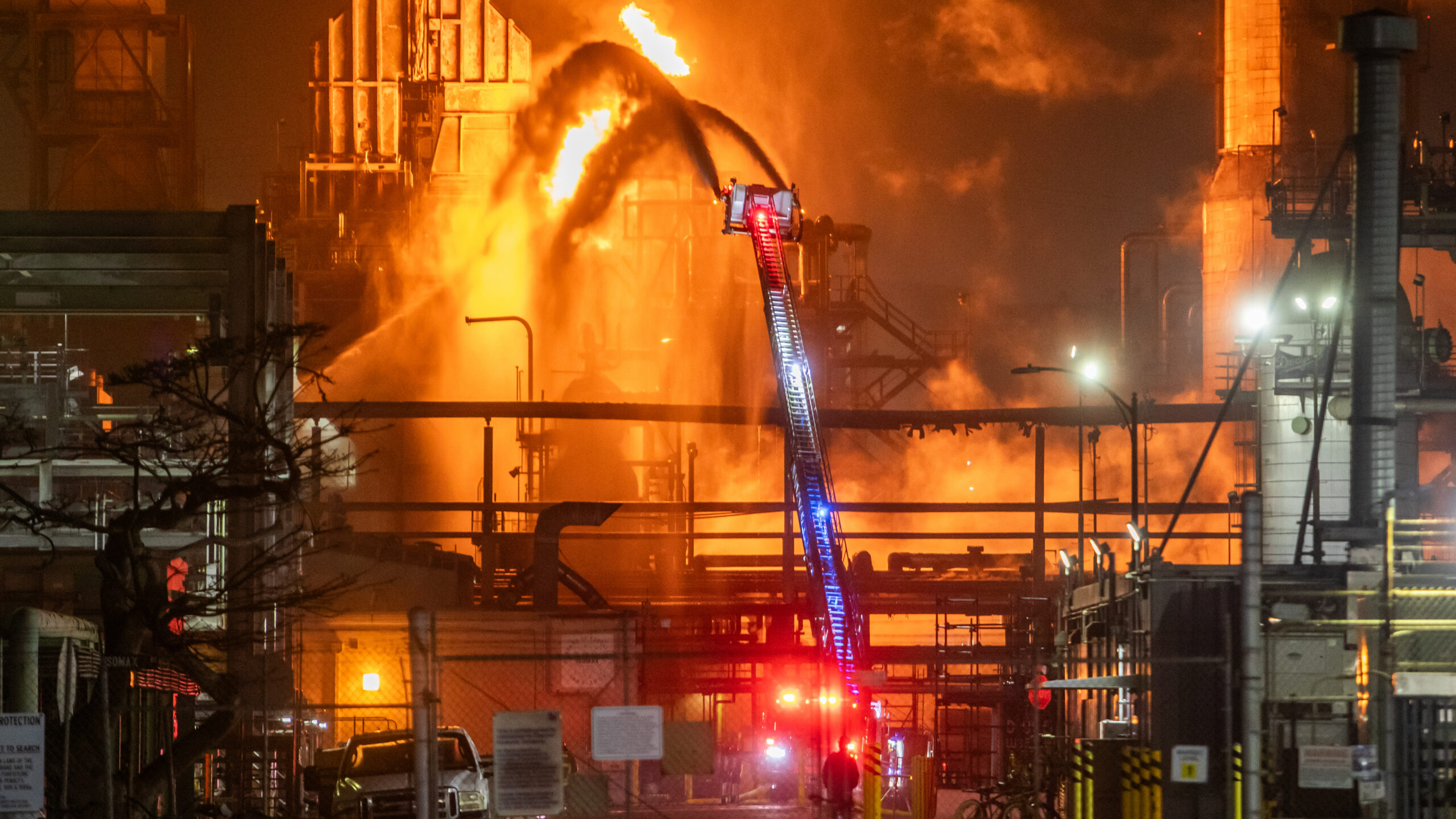
Chemical Accidents Surge as Feds Decide Now Is the Perfect Time to Weaken Safety Rules
Chemical accidents are up 57% since 2021, but the Trump administration wants to weaken safety rules anyway - because nothing says 'protecting communities' like rolling back protections while infrastructure ages.
In 2018, physicist Ronald Koopman showed up at a Southern California Air District meeting to discuss something that sounds like a chemistry exam nightmare: hydrofluoric acid dispersion and water mitigation testing. Turns out, hydrofluoric acid - also known as hydrogen fluoride or HF - is used to make everything from refrigerants to Teflon. It’s also one of the most corrosive, dangerous chemicals known to humanity. Koopman’s 1980s experiments warned of deadly accident potential. Now, with the Trump administration poised to roll back safety rules and a new analysis showing chemical accidents on the rise, his warnings are feeling less like arcane science and more like prophecy.
According to an analysis released Monday by Public Employees for Environmental Responsibility (PEER), the number of accidents involving dangerous chemical releases jumped 57 percent between 2021 and 2025, from 83 to 131. Injuries and deaths from those accidents also climbed, from 60 to 89 over the same period. Chemical Safety Board (CSB) reports show over 650 accidents between April 2020 and May 2026, with 103 fatalities, 355 injuries, and 314 cases of “substantial property damage.” Close to 150 million people live within three miles of these facilities, with Black and Latino communities facing the highest exposure risk.
Many refineries were built before 1985, and as PEER senior counsel Jeff Ruch notes, “With each passing year the risk gets greater because the infrastructure continues to age.” Koopman’s 1980s tests for Amoco (later BP) demonstrated this nicely: when they released 1,000 gallons of HF, they expected a small gas cloud. Instead, a ground-hugging mist traveled miles downwind. After the 2019 Philadelphia Energy Solutions explosion released over 5,000 pounds of HF, Koopman told NPR it was “unconscionable” to let people live so close. The neighboring mostly Black and brown neighborhood was spared only by “favorable wind conditions.” Exposure to 170 parts per million of HF for 10 minutes can kill or seriously injure.
PEER petitioned the EPA to ban HF after the Philadelphia blast; the agency refused. Close to 50 refineries use HF and have reported over 200 accidents with serious injuries or deaths in the past 25 years. These are a fraction of the 12,000 facilities regulated under the EPA’s Risk Management Program (RMP). The new statistics emerged from a lawsuit forcing the CSB to disclose releases - a federal judge ruled in 2019 that communities have a right to know. Yet the Trump EPA removed a public data tool designed to inform communities of nearby risks last year, and Trump has tried to eliminate the CSB by withholding funding (Congress kept it alive).
Earlier this year, the administration proposed weakening the Biden-era RMP rules finalized in 2024, claiming a need to “reduce regulatory burden.” The Biden rules required safer-alternatives analyses, independent root-cause investigations, worker participation, and climate adaptation planning. An EPA spokesperson said the agency is reviewing comments and targeting a final rule in late 2026, adding that accident rates declined between 2014 and 2023, proving industry prevention programs worked before the “nonsensical” Biden rule. PEER’s Ruch counters that the Biden EPA used the same data and reached the opposite conclusion, and that any decline is a supposition unsupported by current data. Meanwhile, chemical accidents causing evacuations, injuries, or multiple casualties happen at least once a week. “With each passing year the risk gets greater because the infrastructure continues to age,” Ruch said. “The federal response to it is shrinking.”
The Good Times
News in your inbox.
One sardonic roundup, delivered on your schedule. Free. Unsubscribe whenever your tolerance for wit runs out.
Already subscribed but we never reach your inbox? Check your spam folder and hit 'Not spam' (or 'Remove from spam') to bust us out of junk-mail purgatory. You'll be helping everyone else too.
Don't open any of our emails for a month and you'll be automatically removed from the mailing list.
Rewrite Article
Select parts to regenerate with a fresh AI pass. Translations will be updated automatically.
Generate AI Image
Creates a sardonic version of the article image using OpenAI.