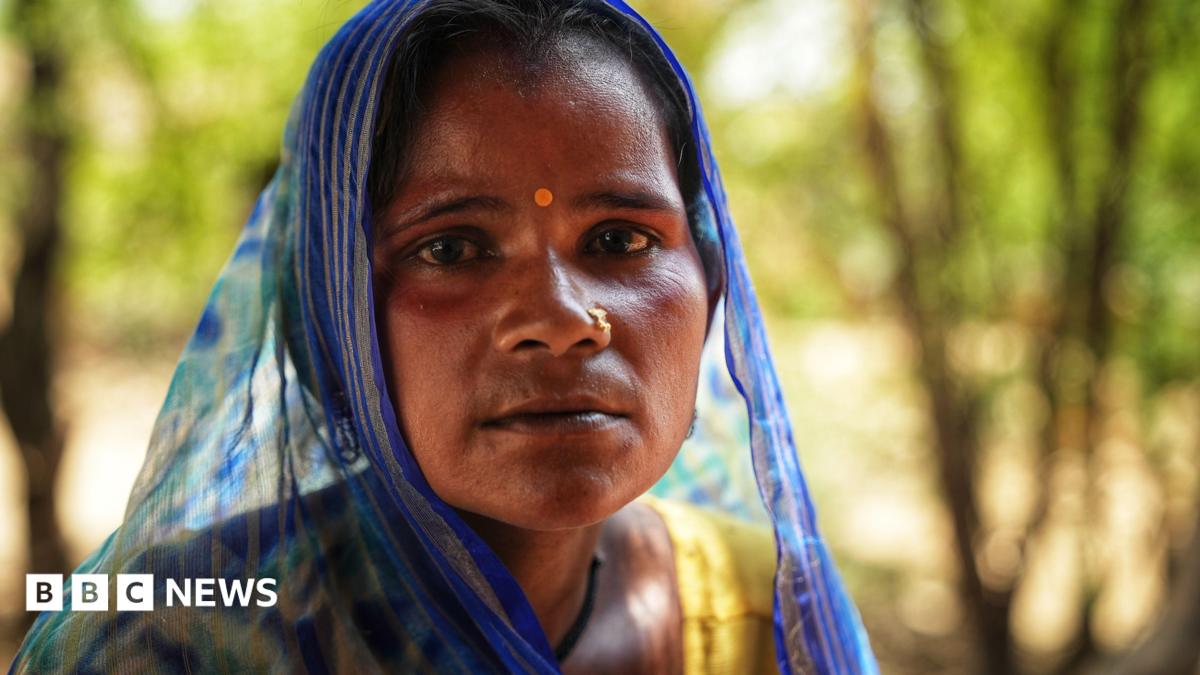
In the drought-prone Bundelkhand region of northern India, 40-year-old Mamta starts her day before sunrise, hauling three empty plastic buckets to the nearest handpump. With temperatures soaring above 40C, this trek is just the first of up to 10 she'll make daily. The taps from a government drinking water scheme have been dry for two years, leaving the village's 1,000 residents reliant on a few handpumps. But Mamta's obstacles aren't just meteorological. As a member of the Valmiki community, part of the Dalits - historically deemed 'untouchable' under India's caste system - she must wait for dominant-caste residents to finish before she can approach the pump. 'If they are standing there, we cannot fill water. We have to wait until they leave,' she says. Afterward, some upper-caste residents pour water over the pump to 'cleanse' it. Because nothing says hygiene like a caste-based rinse cycle.
Bundelkhand, spanning districts in Uttar Pradesh and Madhya Pradesh, is no stranger to drought - it faced several major ones between 2002 and 2016, earning a reputation as a poster child for water scarcity. The rocky plateau stores little groundwater, and erratic rainfall plus hotter temperatures make access unpredictable. A study of over a century of weather records shows temperatures rising across nearly the entire region, with parts nearing 48C in recent summers. Residents and researchers say this heat is pouring new fuel on an old fire: as families compete for scarce water, Dalits face discrimination more frequently.
'Conflict over water is not new,' says Mitashi Singh of the Centre for Science and Environment. 'What is changing is the role hotter summers are playing in making water scarcer and intensifying tensions that already existed.' Local officials, however, deny both water shortages and caste discrimination at public sources. Dominant-caste residents also insist they don't discriminate, though they acknowledge the growing squeeze. Ram Gopal Singh, in his 50s, points to abandoned wells that have been dry for almost 20 years. Everyone tries to collect water in the cooler morning hours, leading to arguments over turns and quantities. 'But there is no caste-based dispute at these handpumps,' he insists.
Dalit residents tell a different story. There's no formal queue; families stagger their visits to avoid confrontations. Mamta goes very early or late afternoon. 'The fear of being targeted stays with me throughout,' she says. About 50km away in Shahjahanpur, Shiv echoes this: 'No matter how hot it is, even if we have to wait for hours for one bucket of drinking water, we wait because we do not have a choice.' Three years ago, his mother Parmi Devi was allegedly assaulted after an argument at a handpump. 'I was thrashed and beaten up and thrown on the ground three times,' she alleges. 'It was not just about water. It was because of our caste.' A police complaint was filed, but no arrests have been made.
Such disputes surface in complaints logged by the Dalit Dignity and Justice Centre (DDJC), a non-profit in Uttar Pradesh. Police registered 113 cases under India's anti-atrocity law in the area in 2025, with most complaints during May and June involving water, says Kuldeep Singh Baudh of DDJC. 'To truly understand [the heat's] impact, you have to see it from the perspective of the communities that are the most excluded.' The district magistrate's office rejects these claims, touting the federal Jal Jeevan Mission and local pond restoration efforts. Traditional water bodies have been revived, and women-led Jal Sahelis groups monitor supplies.
Mukul Sharma, a researcher on caste and environmental politics, argues that climate change is 'not the origin of these injustices, but a threat multiplier.' More water alone won't fix the problem if caste still dictates who gets to use it. So as Mamta waits beside the handpump, three empty buckets at her feet, she knows her day will involve eight to ten trips, each choreographed around who else is there. In cooler months, it's a few times a day; in summer, it's a marathon. But at least the pump gets a good rinse.
The Good Times
News in your inbox.
One sardonic roundup, delivered on your schedule. Free. Unsubscribe whenever your tolerance for wit runs out.
Already subscribed but we never reach your inbox? Check your spam folder and hit 'Not spam' (or 'Remove from spam') to bust us out of junk-mail purgatory. You'll be helping everyone else too.
Don't open any of our emails for a month and you'll be automatically removed from the mailing list.
Rewrite Article
Select parts to regenerate with a fresh AI pass. Translations will be updated automatically.
Generate AI Image
Creates a sardonic version of the article image using OpenAI.