Canada Opens Citizenship to 'Lost Canadians' - Americans Suddenly Very Interested in Ancestry
Canada's new citizenship law for descendants of French-Canadian emigrants has sparked a surge in applications from Americans suddenly keen to embrace their maple-syrup heritage - and maybe get a backup passport.
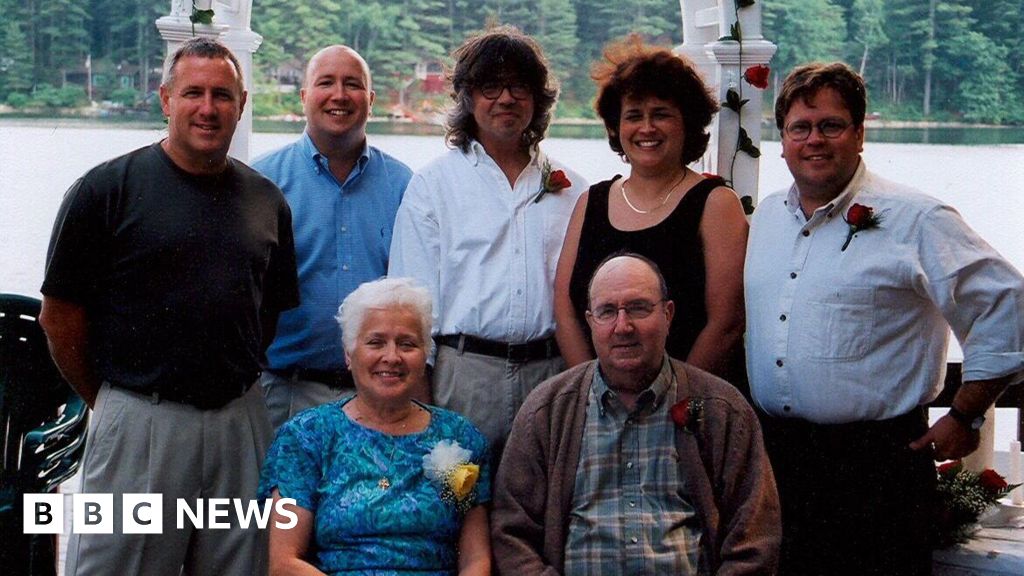
Joe Boucher learned plenty from his older siblings - biking, skating, hockey - but one thing he never picked up was French. That's because when his parents grew up in Maine, teaching French in school was illegal, and the language was treated as a sign of second-class citizenship. Boucher's family is among the more than a million French-Canadians who moved to New England in the 19th and 20th centuries, only to find that Canadian law made it nearly impossible to pass citizenship to their U.S.-born children. The result: generations of so-called "lost Canadians."
A new law, effective December 2025, aims to fix that historical inequity by letting anyone who can prove an ancestral tie claim Canadian citizenship - not just children of Canadians. Between 15 December 2025 and 31 January 2026, Canadian immigration officials received 12,430 applications, processed 6,280, and granted 1,480. The law's timing, arriving at the tail end of President Donald Trump's first year of his second term, has not gone unnoticed. "We sort of feel the ground shifting under our feet a little bit these days," Boucher told the BBC. "It's nice to know that the connectivity to the home country, as it were, is there."
Under the new rules, descendants are automatically considered Canadian - they just need to prove it. The application costs a modest C$75 ($55; £40), but hiring genealogists, digging up records, and consulting lawyers can push the total into the thousands. Montreal genealogist Ryan Légère is so swamped he's considering hiring an employee. "What was kind of like a side business has turned into full time," he told the BBC. He worries institutions are "overwhelmed, understaffed, and not fully prepared" for the volume. Applicants must navigate old Quebec baptismal certificates (in French, with hard-to-read script), anglicized surnames (Desjardins became Gardner; Bonenfant, Goodchild), and a requirement that the qualifying ancestor became a Canadian citizen on or after 1 January 1947. No cut-off exists for how far back the ancestral tie can go, but going forward, Canadian parents must have lived in Canada for more than 1,095 days to pass on citizenship.
A spokesperson for Immigration, Refugees and Citizenship Canada confirmed each application is reviewed case-by-case, and online genealogy sites won't cut it as sole proof. The law could mean millions of Americans qualify - but would they actually move north? Tim Cyr, a Mainer with French-Canadian roots, says Trump's presidency is a reason to seek dual citizenship: "We're facing something I never thought we'd face in a million years. It's not a great time to have an American passport." Still, he doesn't plan to relocate. Boucher is more philosophical: "I keep coming back to the idea of identity." His ancestors arrived in Canada 400 years ago, and he's turned the Henry Wadsworth Longfellow poem about the Acadian expulsion, Evangeline, into a song. Would he move? "My life is very much here… but there could be a time in the future. I've fantasised about living there for many years."
The Good Times
News in your inbox.
One sardonic roundup, delivered on your schedule. Free. Unsubscribe whenever your tolerance for wit runs out.
Already subscribed but we never reach your inbox? Check your spam folder and hit 'Not spam' (or 'Remove from spam') to bust us out of junk-mail purgatory. You'll be helping everyone else too.
Don't open any of our emails for a month and you'll be automatically removed from the mailing list.
Rewrite Article
Select parts to regenerate with a fresh AI pass. Translations will be updated automatically.
Generate AI Image
Creates a sardonic version of the article image using OpenAI.