British Elections Offer a Smorgasbord of Competitiveness, With Extra Side of Existential Dread
Britain heads to the polls with a fractured political landscape where Labour and the Tories are both unpopular, and voters are switching parties like they're swapping cars.
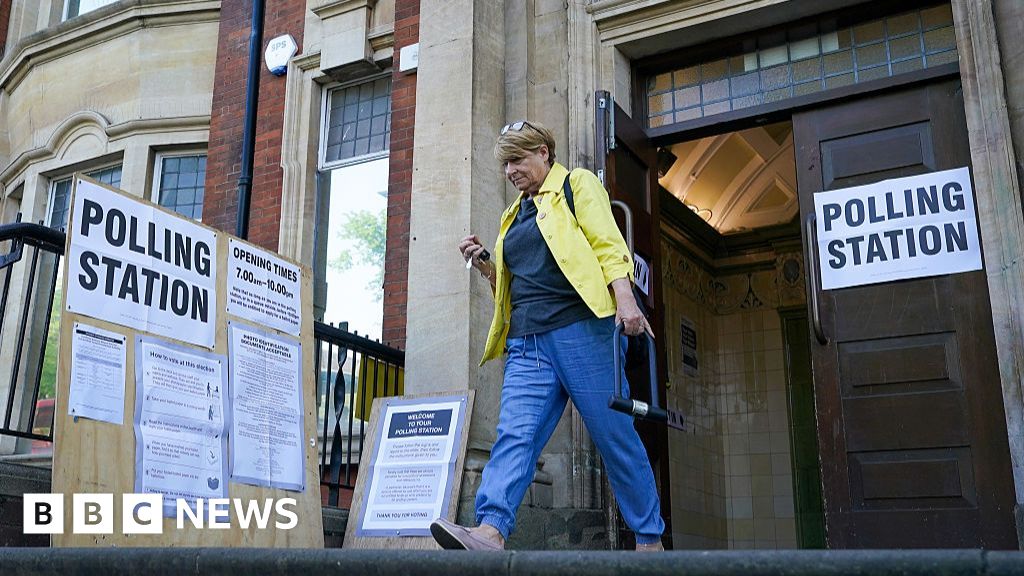
There are now just days left before a vital set of elections across Britain on Thursday, which will determine who gets to spend billions of pounds of taxpayers' money and set the mood for political leaders from town halls all the way up to Westminster. If your doormat hasn't been carpeted with colorful leaflets and your social feeds haven't been chock-full of political promises, you might be in Northern Ireland or one of those parts of England that apparently don't matter this year. For the rest of you, strap in - these elections matter and tell us something about the British political tussle of the mid-2020s.
In recent years, the palette of popular political parties has widened from the traditional primary colors of Labour and the Conservatives to include the Liberal Democrats, Reform UK, the Green Party of England and Wales, and competitive independents. In Wales, there's Plaid Cymru, dreaming of an independent Wales; in Scotland, the Scottish Green Party and the Scottish National Party both want Scotland to go its own way. Most of these parties have been around for a while - Reform UK less so - but what's changed is they all appear more competitive in more places than they used to be. This coincides with Labour and the Conservatives both being unpopular at the same time, which is as rare as a polite Twitter debate.
This fracturing was clear at the last general election two years ago, even if the makeup of the House of Commons afterward didn't really reflect it. Labour won a huge majority of seats but did so with the smallest ever vote share for a government with an overall majority in the House of Commons. Simultaneously, the Conservatives won less than 30% at a general election for the first time since 1832. Professor Sir John Curtice, the BBC's lead elections analyst, told The Times: "We're going to see records tumble. We are living in unprecedented circumstances. The opinion polls suggest that the traditional Conservative-Labour duopoly is facing its biggest challenge since its advent in the 1920s." He added: "The basic assumptions of British politics - there isn't enough space for a party to the right of the Tories or the left of Labour - have gone."
Activists report horror or excitement depending on their party affiliation, with voters now switching allegiances as unsentimentally as swapping a Mazda for a Renault. The research group More in Common wrote of a "shattered Britain" last summer, concluding: "For many Britons, recent years have been imbued with a sense of unending crises and dissatisfaction with the status quo." Little wonder things feel so febrile.
Labour circles have used "May" as a three-letter shorthand for months, dreading that deep-seated unpopularity would switch from opinion polls to voting reality. The scale of these elections looks set to vividly expose Labour's vulnerabilities: the tussle between Plaid Cymru and Reform UK to dominate in Wales, with Labour staring at losing for the first time in a century; the SNP expected to triumph again in Scotland; Reform hoping to win in Labour strongholds like Barnsley and Sunderland; the Liberal Democrats eyeing gains at the Conservatives' expense in Surrey and Hampshire; and independents, particularly those focused on Gaza, expected to make gains in places with significant Muslim populations like Lancashire, Birmingham, and east London. Labour also fear an onslaught from all sides in London.
If Labour does get a multi-colored shellacking from rivals to both its left and right, it will intensify conversations about the Westminster government's direction and leadership - though that doesn't necessarily mean the ousting of Sir Keir Starmer in the short term. It might, though. But hey, at least the elections will be competitive.
The Good Times
News in your inbox.
One sardonic roundup, delivered on your schedule. Free. Unsubscribe whenever your tolerance for wit runs out.
Already subscribed but we never reach your inbox? Check your spam folder and hit 'Not spam' (or 'Remove from spam') to bust us out of junk-mail purgatory. You'll be helping everyone else too.
Don't open any of our emails for a month and you'll be automatically removed from the mailing list.
Rewrite Article
Select parts to regenerate with a fresh AI pass. Translations will be updated automatically.
Generate AI Image
Creates a sardonic version of the article image using OpenAI.