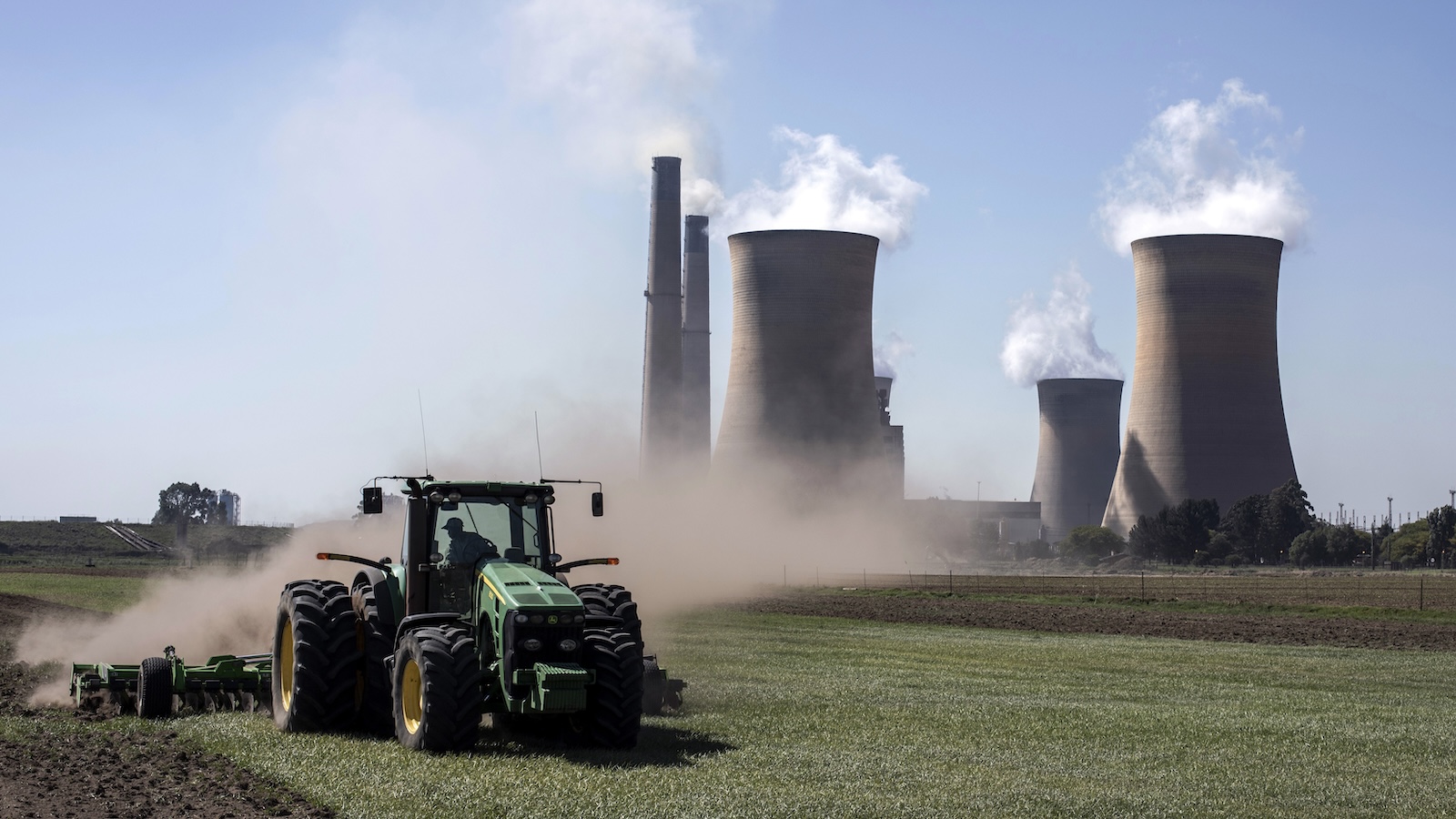
World's Food System Progress: Moving at the Speed of a Hungry Snail
New study says world's food system progress is moving slower than a glacier in molasses, with 2030 goals now virtually impossible - but hey, 2050 might work!
A new report reveals that humanity's collective effort to build sustainable, resilient food systems is about as effective as trying to fill a bathtub with a teaspoon - and the water's draining. The study, led by the Food Systems Countdown Initiative and published in Nature Food, finds that global progress toward eliminating hunger and poverty by 2030 is, to put it mildly, not on track. In fact, for most of the United Nations' Sustainable Development Goals (SDGs), hitting the 2030 deadline is now 'virtually impossible.' But hey, no pressure.
The report expands on previous work by tracking progress at both global and regional levels, offering an interactive dashboard that grades nearly every country on about 50 metrics, including the cost of a healthy diet, fruit and vegetable availability, agricultural yields, and greenhouse gas emissions from food production. Spoiler alert: the environmental report card is particularly grim.
Take greenhouse gas emissions from agri-food systems, which account for about a third of manmade emissions, according to the U.N. Food and Agricultural Organization. The study found that emissions are trending upward globally - because of course they are. To reach net-zero agri-food emissions by 2030, every region would need to accelerate progress by about 70 percent each year for the next four years. As lead author Bianca Carducci, an independent nutrition scientist, put it, that 'is absolutely not going to happen.' Most countries shift about 5 percent per year on some indicators, so we'd need a miracle, not a plan.
But Carducci cautions that the 70 percent figure is a regional average; some countries might actually be doing well on emissions. However, progress must be viewed holistically - a country could be close to one target while stagnating on another. Michael Puma, a professor at Columbia University's Climate School who wasn't involved in the report, reminds us that progress isn't binary: 'It's not as simple as success or failure by 2030.'
The report also maps interactions between metrics, showing how emissions are influenced by cropland change, yields, water withdrawals, fisheries, and even civil society participation. These could be entry points for improvement. And if 2030 feels too ambitious, the authors found that regions are more on track to meet nutrition and environmental goals by 2050. But Carducci warns against throwing in the towel: leaders 'shouldn't just throw in the towel and say, OK, we're not going to make it so we don't really need to do anything for the next four years.'
Puma suggests that overly ambitious deadlines can incentivize quick fixes that don't last. The focus should be on designing realistic pathways and building in accountability. After all, it's not about the finish line - it's about the journey, preferably one that doesn't involve a starving planet.
The Good Times
News in your inbox.
One sardonic roundup, delivered on your schedule. Free. Unsubscribe whenever your tolerance for wit runs out.
Already subscribed but we never reach your inbox? Check your spam folder and hit 'Not spam' (or 'Remove from spam') to bust us out of junk-mail purgatory. You'll be helping everyone else too.
Don't open any of our emails for a month and you'll be automatically removed from the mailing list.
Rewrite Article
Select parts to regenerate with a fresh AI pass. Translations will be updated automatically.
Generate AI Image
Creates a sardonic version of the article image using OpenAI.