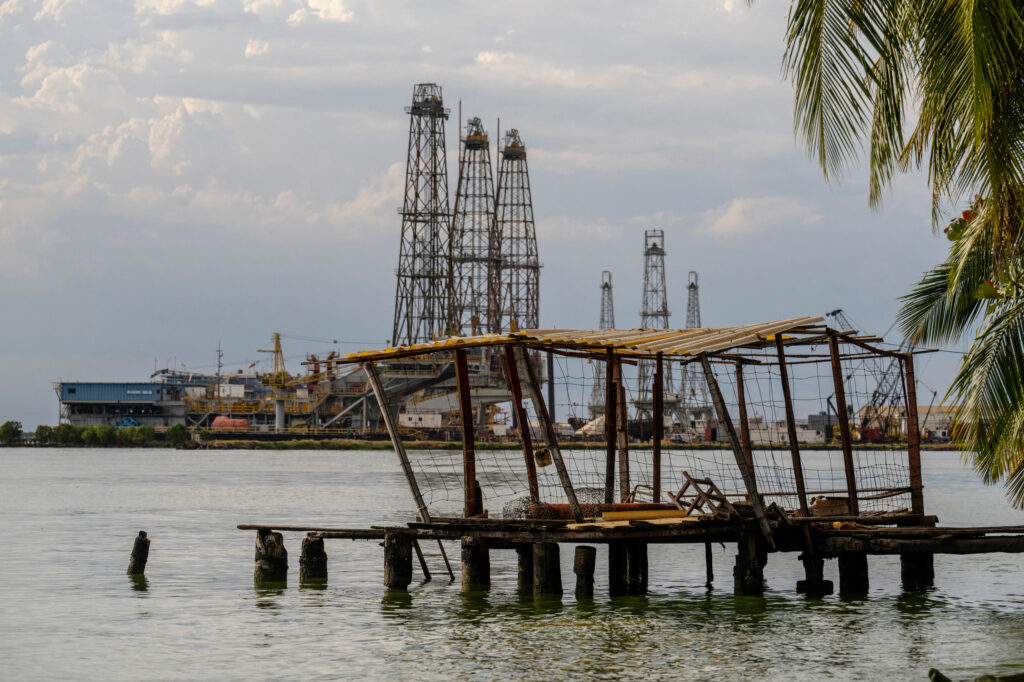
Venezuela to Ramp Up Oil Production in Lake Maracaibo; Locals Wonder About Third Eye Growth
Venezuela plans to revive oil production in Lake Maracaibo, where centuries of spills, flaring, and subsidence have left locals swimming in toxic sludge and hoping for a cleanup that never comes.
Mónica Godoy Molero has a darkly humorous warning for anyone who takes a dip in Venezuela's Lake Maracaibo after an oil spill: you might sprout a third eye. It's the kind of gallows humor you develop when you've lived for generations next to an oil industry that treats the environment like a suggestion.
The lake, a massive brackish tidal bay in northwestern Zulia state, has been exploited for over a century. Around 4 million people live there, many relying on its polluted waters for drinking, bathing, and fishing. Oil spills are so routine that activist and ecotourism guide Gustavo Carrasquel Parra says it's not a matter of if another spill will happen, but when. His business took a hit two years ago after a spill coated his clients' feet in oil and tar - not exactly the spa treatment they were expecting.
Reported spills rose from 77 in 2021 to 84 in 2022, though the government hasn't released any data in four years, making it hard to know just how bad things have gotten. Breathing the air is risky too, thanks to gas flaring from wells lacking capture technology. Land subsidence from decades of careless drilling means contaminated floodwaters regularly swamp towns. Exposure to heavy metals and chemicals is linked to neurotoxicity, cancer, and cardiovascular disease - a real party favor package.
Now, with the Trump Administration pushing for a revival of Venezuelan oil production amid global market volatility, residents are bracing for more of the same. Interim President Delcy Rodríguez's government, after Nicolás Maduro's capture, reformed the hydrocarbons law in January to allow broader private participation, including U.S. companies. Experts worry this could lead to more environmental exploitation if enforcement remains lax. Venezuela already has robust environmental laws - under Article 12 of the constitution, for example, every oil project requires an environmental impact study. But as ecologist Antonio Machado Allison notes, "The government hasn't shown that they want to follow the law."
Chevron, the only major U.S. oil company operating in the country, declined to comment on its role in the mess. Local communities are supposed to approve new drilling projects, but economic promises often win out. Jesus Aboud, a Venezuelan geophysicist, saw PDVSA take land meant for cocoa and coffee farming in his hometown without using it for extraction. "Companies come and go, but they don't have the obligation of leaving it clean enough," he said.
Not everyone is worried. Former PDVSA geologist Juan Francisco Arminio blames corruption and bad policies, not the industry itself. But Parra, now lobbying for 5% of state oil revenue to go toward lake remediation, isn't holding his breath. "We were the ones on the ground, constantly monitoring the situation, not the government," he said. Molero, who plans to stay in Maracaibo, hopes for improvement but doubts it. "Apparently, they put in actions to protect and sanitize the lake, but I don't know if it's helped at all."
The Good Times
News in your inbox.
One sardonic roundup, delivered on your schedule. Free. Unsubscribe whenever your tolerance for wit runs out.
Already subscribed but we never reach your inbox? Check your spam folder and hit 'Not spam' (or 'Remove from spam') to bust us out of junk-mail purgatory. You'll be helping everyone else too.
Don't open any of our emails for a month and you'll be automatically removed from the mailing list.
Rewrite Article
Select parts to regenerate with a fresh AI pass. Translations will be updated automatically.
Generate AI Image
Creates a sardonic version of the article image using OpenAI.