
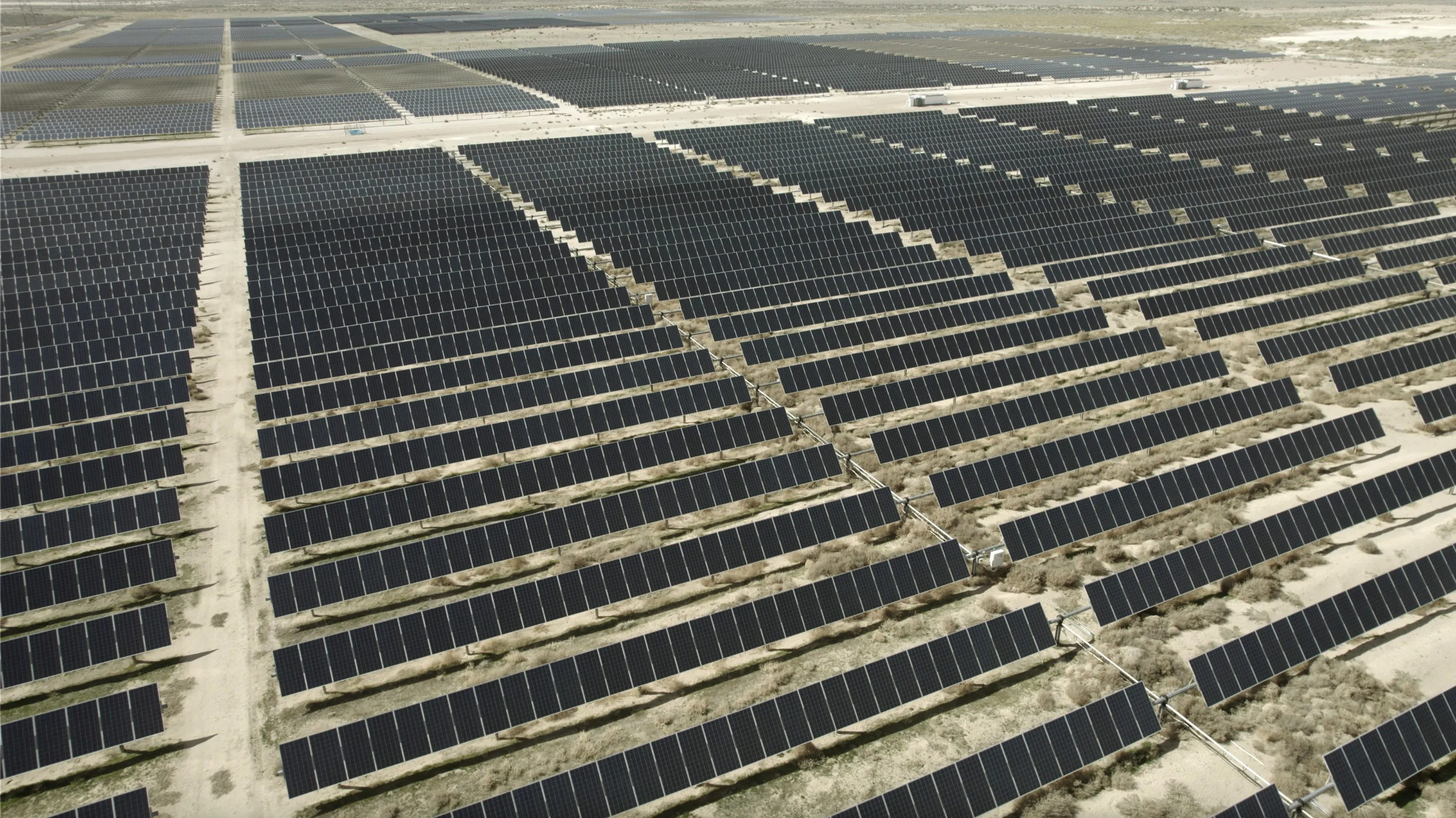
In a stunning upset that took years to orchestrate and required the sun to be out, solar power has officially become Utah's top electricity source for the first time ever. May 2026 will go down in history as the month photovoltaic panels generated nearly 1 terawatt hour - about a third of the state's electricity - according to Ember, a global energy think tank. Natural gas chugged along at 32 percent, coal slumped to 28 percent, and wind, bless its heart, managed 2 percent.
Dan Schroeder, a physics professor at Weber State University who apparently has a calendar reminder for checking energy data, called it "wonderful news for air quality, the climate, and jobs and the economy." We'd add that it's also nice to see the sun finally take credit for the work it's been doing all along.
So how did this happen? Big solar farms, obviously. The 2,500-acre Green River Energy Center in central Utah went live this spring, packing 400 megawatts of solar and 400 megawatts of battery storage. Excelsior Energy Capital's Faraday Solar project in Utah County - the state's second-largest county, for those keeping score - started feeding up to 685 megawatts to a Meta data center last fall. And the Elektron Solar Project, an 80-megawatt farm, began powering Salt Lake City, Park City, and Summit County back in June 2024. All that juice adds up.
Solar is also a job machine, supporting nearly 8,000 jobs in Utah, according to the Solar Energy Industries Association. The state boasts 132 solar companies, including 54 developers and 23 manufacturers, and investors threw $1.5 billion at Utah's solar market in 2025 alone. For comparison, oil and gas extraction scraped by with 1,291 jobs in 2025, and coal mining had 1,059 in 2023. Coal and petroleum product manufacturing added 1,905 jobs last year. So solar is literally out-employing fossil fuels by a longshot.
This is a big deal for a state that, in 2017, relied on coal for 64 to 78 percent of its electricity depending on the month. By 2023, coal dipped below half during some parts of the year. This spring, it fell under a third. That's what we call a slow, steady, and mildly triumphant energy transition.
But before we pop the champagne, Schroeder reminds us that solar won't dominate every month - electricity generation is complicated, after all. Still, with Utah's sunny, dry climate, there's "room to grow." He points to California, where solar hit nearly 51 percent of generation in May (the most recent month Ember has data), proving Utah is just a late bloomer.
Logan Mitchell, a climate scientist and energy analyst at Utah Clean Energy, says we'll see "milestones like this increasingly happen." And the national numbers back him up: about 51 percent of new utility-scale electricity generation added this year is expected to be solar, with 43.4 gigawatts of solar, 24.3 gigawatts of battery storage, and 11.8 gigawatts of wind coming in 2026, versus just 6.3 gigawatts of natural gas and zero coal. Zero. That's not a typo.
Of course, some of Utah's solar goes to other states, and some projects serve a single customer - like the Faraday Solar project, which is basically Meta's personal juice box. But the renewable surge isn't just solar. Mitchell crunched numbers from PacifiCorp (parent of Rocky Mountain Power) and found that wind blew past all other sources in their Utah, Wyoming, and Idaho portfolio in December and January for the first time. "Wind plus solar is on a tear right now," he said. "We may have achieved liftoff."
They complement each other too: wind peaks in winter, solar in summer. Most of PacifiCorp's wind comes from Wyoming, spokesperson Jona Whitesides says, thanks to investments like 400 megawatts added at Rock Creek II last fall. "A lot of days we are using more wind," he said. "There are no fuel costs there; it's essentially free." Free energy - what a concept.
But here's the catch: the Trump administration is phasing out tax incentives for wind and solar, calling them "expensive and unreliable." Because nothing says reliable like coal, which has been known to run out, and natural gas, which is mostly methane and loves to spike in price. Mitchell points out that renewables plus batteries are now among the cheapest, cleanest, and most consistent sources, and they don't care about global politics.
Meanwhile, the warming West is already making life miserable: a record-hot spring followed by a cold snap killed fruit farmers' crops, virtually zero snowpack over the winter sets up an explosive wildfire season and water uncertainty, and tick bites are sending more people to the ER, thanks to milder winters. "In order to reduce those impacts in the future, we need to be reducing our emissions," Mitchell said. "And we need to be doing it faster."
But the federal pivot has already made PacifiCorp drop plans for new wind and solar in the next two decades, per its latest Integrated Resource Plan update, drawing criticism from renewable advocates. Whitesides calls the plan a "snapshot in time" that changes with costs and policies. "It didn't make financial sense to move forward with new renewable resources at this given time," he said. "In two years, we could have a different administration. It may bring back more renewables."
So Utah's solar record is a win - for now. But if we really want to keep the sun shining on the grid, maybe we should stop letting politics pull the plug.