UK Decides That If You're Under 18 in 2027, You'll Never Legally Buy Cigarettes - Better Stock Up Now, Kids
The UK passes a law that will eventually make cigarette sales illegal for anyone born after 2009, proving that if you stigmatize smoking long enough, you can just ban it outright - and maybe social media is next.
For nearly two decades, British retailers have been telling customers that if they were born after today's date 18 years ago, they can't buy cigarettes. Starting next year, that date will freeze. Under a recently passed law, selling cigarettes to anyone born on or after January 1, 2009, will be illegal - in perpetuity. So as long as the law holds, no one 17 or younger on New Year's Day 2027 will ever legally purchase tobacco. It's a generational tobacco ban, and it's a very different approach from the U.S. policy of "grudging toleration" - tax, regulate, scold, but don't outright ban.
The word "prohibition" conjures images of speakeasies and Al Capone, but the UK isn't the first to try this. The Maldives did it in November. New Zealand passed one in 2022, but a new government repealed it before it could take effect. In the U.S., 22 towns in Massachusetts - starting with Brookline - have passed generational bans, possibly paving the way for statewide legislation. The irony is that decades of stigmatizing smoking may have created the very conditions for an outright ban. As the smoker base shrinks, the constituency opposed to prohibition shrinks with it.
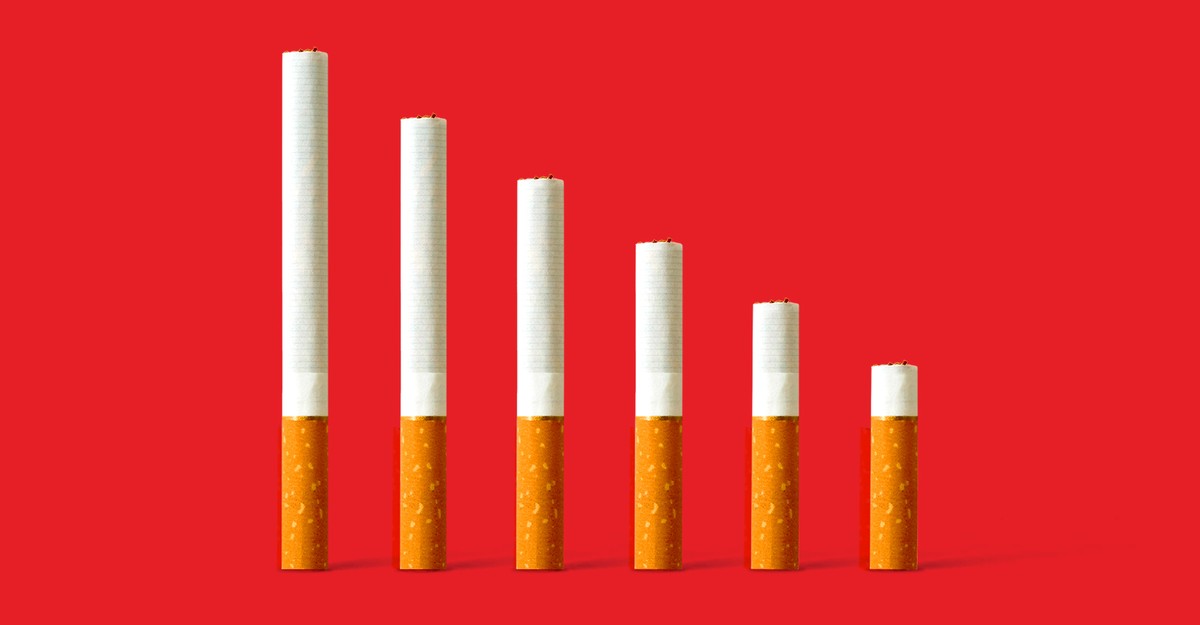
Back in 1974, at least 40 percent of Americans smoked. Today, it's just one in 10. Policy changes drove that: the surgeon general's 1964 warning, advertising bans, mandatory labels, clean air laws, and the $200 billion settlement with tobacco companies in the late '90s. But smoking still kills roughly half a million Americans a year - nearly seven times as many as drug overdoses. Even in 2035, more than 160,000 current smokers are projected to die from their habit. At this point, does anyone still lighting up a Marlboro not know it's bad for them?
Of course, there are reasons America might not follow the UK. The UK's socialized health-care system means taxpayers directly bear smoking's costs. Americans are more individualistic and suspicious of government. And it's unclear whether the ban will actually reduce harm - some people will just buy illegally, through friends or black markets, which can generate crime. We don't have enough research yet to judge if the costs will be worth the benefits.
But the UK's experiment offers lessons beyond smoking. America is beset by addictive products like social media and gambling apps. In a landmark ruling last month, a jury determined Meta and YouTube must pay a woman $6 million for damage caused by their products' addictiveness - the same argument made about tobacco decades ago. The Public Health Advocacy Institute is now suing sportsbooks and prediction markets. If tobacco's experience is any guide, stigmatizing, taxing, and regulating something long enough can eventually create the conditions for an outright ban. Prohibition has been a dirty word since the 21st Amendment, but as Carnegie Mellon professor Jonathan Caulkins notes, we already successfully ban fireworks and raw milk. So maybe the age of half measures is ending.
The Good Times
News in your inbox.
One sardonic roundup, delivered on your schedule. Free. Unsubscribe whenever your tolerance for wit runs out.
Already subscribed but we never reach your inbox? Check your spam folder and hit 'Not spam' (or 'Remove from spam') to bust us out of junk-mail purgatory. You'll be helping everyone else too.
Don't open any of our emails for a month and you'll be automatically removed from the mailing list.
Rewrite Article
Select parts to regenerate with a fresh AI pass. Translations will be updated automatically.
Generate AI Image
Creates a sardonic version of the article image using OpenAI.