President Donald Trump has insisted he doesn't need congressional approval to keep bombing Iran, arguing that past presidents treated the War Powers Resolution like a suggestion box - totally optional and easily ignored. "So many presidents, as you know, have gone and exceeded it," Trump said. "It's never been used. It's never been adhered to. Nobody's ever asked for it before."
As the 60-day deadline under the 1973 War Powers Resolution expired on Friday, Trump's administration contends the clock paused when a ceasefire went into effect - a legal theory that has sparked a lively debate about whether a truce counts as "stopping the war" or just "taking a breather."
The reality, as usual, is messier than Trump's summary. The 1973 law, passed to stop then-President Richard Nixon from waging an eternal war in Vietnam, requires the president to end any use of U.S. armed forces 60 days after notifying Congress - unless lawmakers vote to continue. Trump notified Congress of strikes against Tehran on February 28, making Friday the big day.
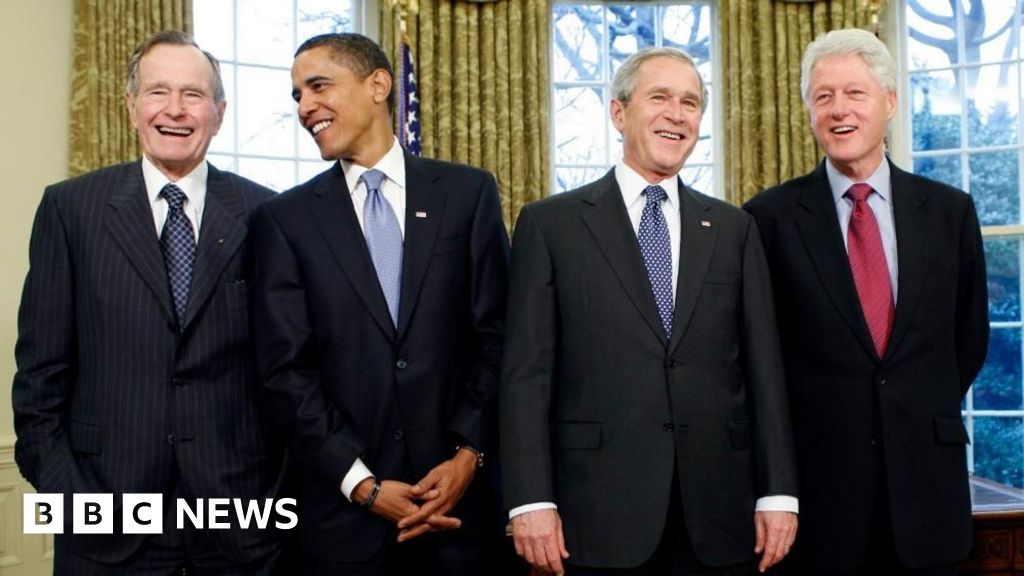
Some predecessors actually played by the rules. In 1983, Ronald Reagan got congressional approval for Marines in Lebanon within the 60-day window. George H.W. Bush sought authorization for the 1991 Gulf War before launching Operation Desert Storm, even though he argued he didn't technically need it. His son, George W. Bush, got Congress on board for wars in Afghanistan (2001) and Iraq (2003).
But Trump isn't entirely wrong. Bill Clinton's 1999 Kosovo bombing campaign blew past the 60-day limit without congressional blessing. Barack Obama argued the 2011 Libya campaign wasn't "hostilities" under the law - a creative interpretation that allowed a seven-month NATO intervention to continue without approval.
David Schultz, a political science professor at Hamline University, offered a reality check: "Just because other presidents haven't invoked it doesn't mean what Trump is doing here is correct." He noted the founders in 1776 and 1787 specifically feared strong executives committing the nation to war without legislative support.
Trump has pointed out that the Iran conflict has been short compared to Vietnam (19 years), Iraq (nearly nine years), World War II (six years), and Korea (three years). But with Washington and Tehran still deadlocked over the Strait of Hormuz and Iran's nuclear program, Trump's exit strategy remains about as clear as mud. As Obama once said of Afghanistan: "It's harder to end wars than it is to begin them."
The Good Times
News in your inbox.
One sardonic roundup, delivered on your schedule. Free. Unsubscribe whenever your tolerance for wit runs out.
Already subscribed but we never reach your inbox? Check your spam folder and hit 'Not spam' (or 'Remove from spam') to bust us out of junk-mail purgatory. You'll be helping everyone else too.
Don't open any of our emails for a month and you'll be automatically removed from the mailing list.
Rewrite Article
Select parts to regenerate with a fresh AI pass. Translations will be updated automatically.
Generate AI Image
Creates a sardonic version of the article image using OpenAI.