Trump Admin Shelves Cyclospora Research Just as Record-Breaking Outbreak Hits 30,000 Cases
While a record-breaking Cyclospora outbreak sickens nearly 30,000, the USDA decides to shutter its research - because why study a problem when you can just let it fester?
The Trump administration has decided that now - right in the middle of the largest Cyclospora outbreak in US history - is the perfect time to stop studying Cyclospora. According to Politico, the USDA is defunding two of its three Cyclospora research programs, and the third is about to lose every single scientist working on it. The Beltsville Agricultural Research Center near Washington, DC, is being shut down, with remaining work moved to Iowa. But here's the kicker: none of the scientists plan to relocate. They're retiring, getting reassigned, or just leaving the USDA's research services altogether. As one USDA employee put it, "They will have no parasitologists. There will be a big knowledge gap." You don't say.
The timing is, shall we say, unfortunate. The CDC has tallied nearly 30,000 confirmed and probable cases of cyclosporiasis this summer, with at least 922 hospitalizations and two deaths. To put that in perspective, the US typically sees between 2,000 and 5,000 cases annually since 2018, though 2025 saw a modest 1,180. So, yes, this is a record-breaking outbreak, and we're choosing this moment to drop the ball on research.
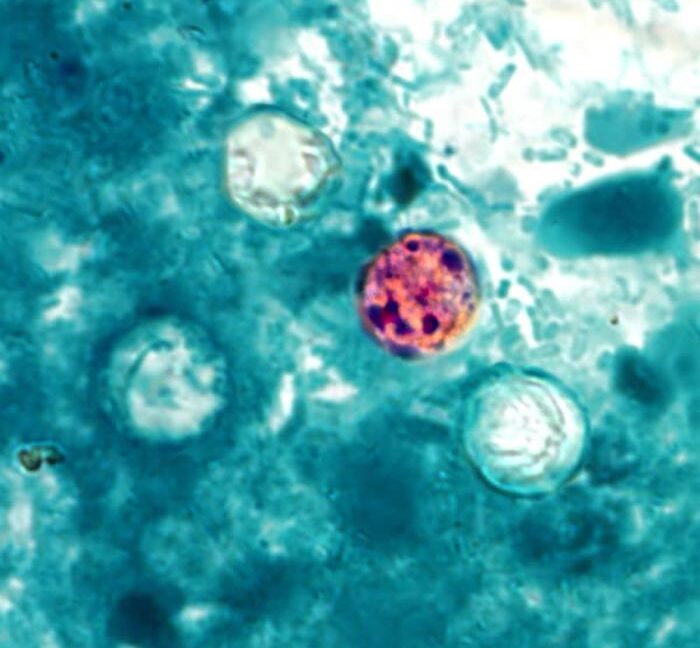
Cyclospora is a particularly finicky parasite. Unlike E. coli or Salmonella, it grows and reproduces only in the human gut, not in lab conditions. It can be shed intermittently or at low levels, requiring repeat fecal samples from infected individuals - because who doesn't love a good stool sample? Its genome is much larger than bacteria, making sequencing expensive and laborious. And it reproduces sexually, meaning each generation is a genetic mix-and-match, making it tough to trace back to contaminated food. Bacteria, by contrast, are asexual clones, easy to trace. Show-offs.
Researchers were hoping this outbreak would be a goldmine for understanding the parasite. "We see this as an enormous opportunity, this current outbreak, to have really a lot of samples that could help us understand these outbreaks better," one USDA employee told Politico. But those working on the defunded programs are now barred from further research and can only preserve samples from previous outbreaks. The disruption, experts say, will be hard to overcome. Joelle Mosso of the Western Growers Association, which represents produce farmers, noted, "The bigger impact is that there are very few people in the world that study these [parasites]. It's not just replacing the lab. It takes decades to build expertise." Decades we apparently don't have.
The Good Times
News in your inbox.
One sardonic roundup, delivered on your schedule. Free. Unsubscribe whenever your tolerance for wit runs out.
Already subscribed but we never reach your inbox? Check your spam folder and hit 'Not spam' (or 'Remove from spam') to bust us out of junk-mail purgatory. You'll be helping everyone else too.
Don't open any of our emails for a month and you'll be automatically removed from the mailing list.
Rewrite Article
Select parts to regenerate with a fresh AI pass. Translations will be updated automatically.
Generate AI Image
Creates a sardonic version of the article image using OpenAI.