Thwaites Glacier Still Doomed, Now With Extra Doom, Scientists Confirm
New models confirm the Doomsday Glacier is melting faster than expected, may unpin from the seafloor by 2038, and could double its sea level contribution - but hey, at least we're getting better at predicting the doom.
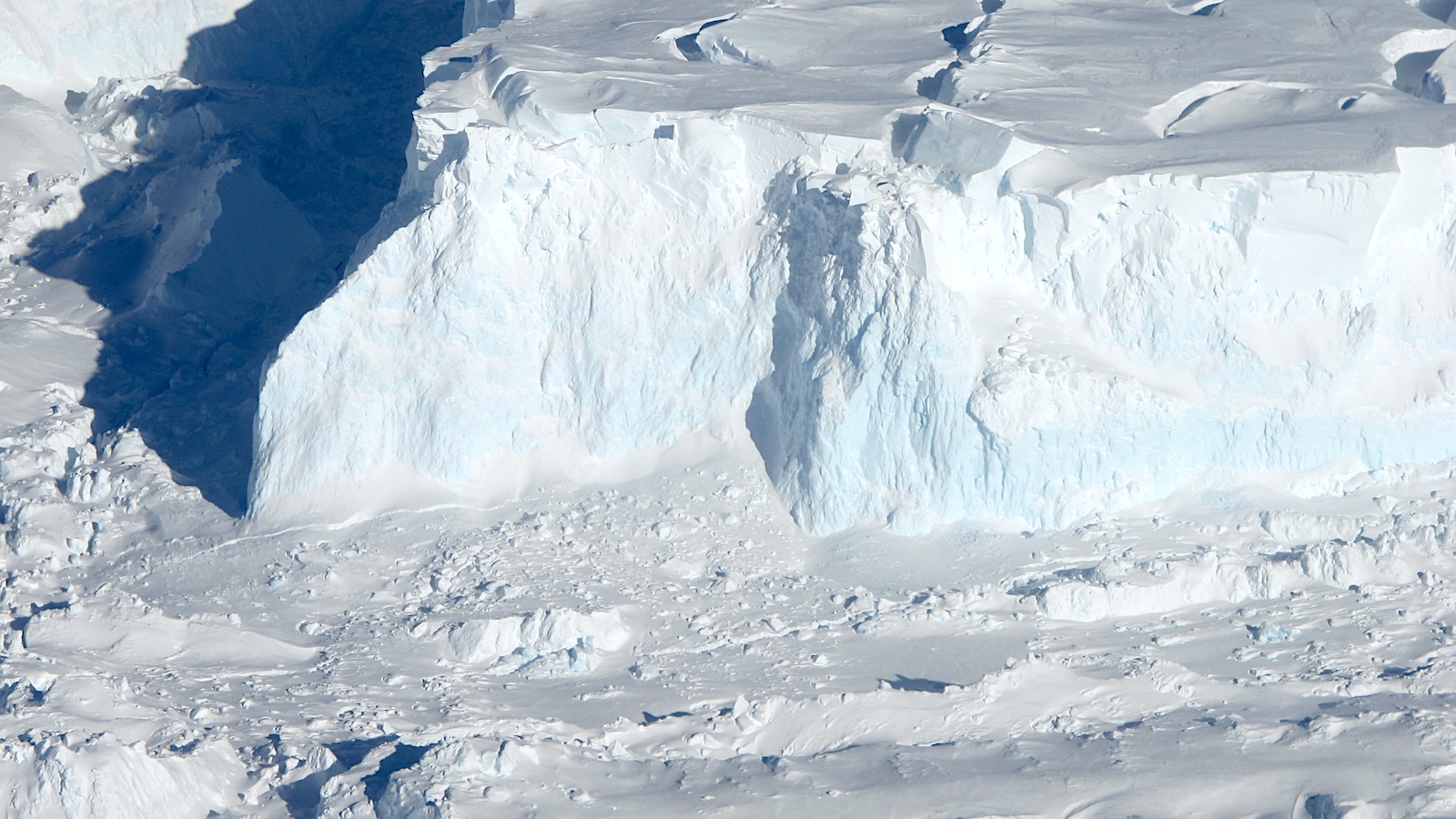
A single glacier at the bottom of the world may be all that stands between us and catastrophic sea level rise, and scientists have just published fresh research confirming it's melting faster than we thought - because of course it is. Thwaites, affectionately known as the "Doomsday Glacier," is roughly the size of Florida and holds enough ice to raise global coastlines by two feet. But it also acts as a cork holding up the West Antarctic ice sheet, much of which sits below sea level. As Thwaites deteriorates, more of that ice gets exposed to the ocean, creating a feedback loop that accelerates melting. If Thwaites collapses entirely, the whole interior of the sheet could follow, raising seas by as much as 10 feet.
Tracking Thwaites' demise from space is easy. Predicting its future has been trickier. For years, computer models couldn't even pass the simple test of recreating the retreat satellites have already observed, making them unreliable for looking ahead. But now scientists have plugged in a major missing piece. A new paper in Nature Communications appears to be the first to account for what's happening underneath Thwaites - specifically at the grounding zone, where the glacier's icy underbelly rests on the seabed. Only recently did scientists realize this zone isn't a fixed boundary but oscillates with the tides. As it bobs up and down, warm water pushes underneath, creating cracks and miles-long channels that allow even more melting.
Previous simulations didn't account for this dynamic, said Mattia Poinelli, a glaciologist at UCLA and first author of the paper. By including it, his team's model was able to match satellite observations. It also showed that Thwaites could become permanently unpinned from the seafloor as early as 2038, with a 60 percent chance of that happening by the end of the century - an eventuality that would likely ratchet up the melting even more. "There are many other unknowns, but this solves a specific and very important piece of the puzzle," Poinelli said.
If the climate remains as warm as it is now, the model shows Thwaites would add three centimeters of sea level rise by the end of the century. That may not sound like much, but it doubles previous projections. Thwaites contributes about 4 percent to sea level rise, which over the past three decades amounts to some 10 centimeters - enough to send homes in North Carolina crashing into the sea and force coastal communities in the Solomon Islands and Senegal to move to higher ground. And since global warming isn't holding steady but continuing to ramp up, the world should brace for even more melt than the model predicts, Poinelli said.
But what if humans get their act together and slow climate change, or find a way to safely cool the oceans with geoengineering? A separate study in Geophysical Research Letters in July tested that hypothetical with Thwaites and its comparably large neighbor, Pine Island glacier, the fastest melting glacier in Antarctica. Together they account for the bulk of sea level rise from Antarctica. Ocean melt is the primary culprit, so the researchers "switched it off completely" in their model, said Rosie Williams, an ice sheet modeler at the British Antarctic Survey and lead author of the paper. For all their similarities, Pine Island and Thwaites would respond very differently. In cooler ocean temperatures, Pine Island could recover ice within a decade and eventually regrow to where it was 80 years ago - thanks in part to its relatively intact outer shelf. Thwaites, on the other hand, would keep losing ice and raising sea levels worldwide for at least 150 years. The researchers hypothesize that's because Thwaites is in much worse shape, with the eastern half significantly diminished and the western half disintegrated into many icebergs. Even in this fictional best-case scenario, the glacier may be doomed.
But "that doesn't mean there's nothing we can do," Williams said. Each fraction of a degree of warming makes a difference in how quickly Thwaites disintegrates, and lowering greenhouse-gas emissions could protect other glaciers around Antarctica. "The more we can slow it down," she said, "the longer we have to adapt to any change that's coming."
The Good Times
News in your inbox.
One sardonic roundup, delivered on your schedule. Free. Unsubscribe whenever your tolerance for wit runs out.
Already subscribed but we never reach your inbox? Check your spam folder and hit 'Not spam' (or 'Remove from spam') to bust us out of junk-mail purgatory. You'll be helping everyone else too.
Don't open any of our emails for a month and you'll be automatically removed from the mailing list.
Rewrite Article
Select parts to regenerate with a fresh AI pass. Translations will be updated automatically.
Generate AI Image
Creates a sardonic version of the article image using OpenAI.