
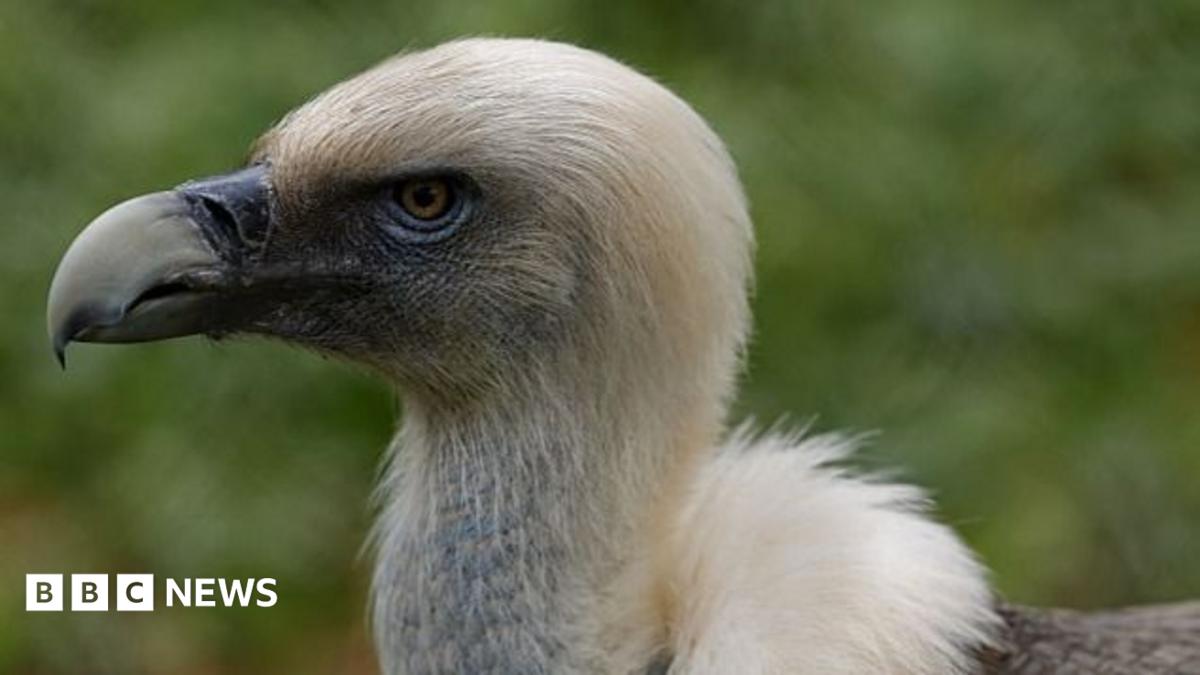
In the sacred forest of Awka-Etiti, a man known as the Vulture King is on a mission to save the birds that many would rather forget. 'People fear the environment where the shrine is. No evil will ever happen here. So, nobody fights vultures that perch here,' Chukwuemeka Igwe, the self-appointed protector, tells the BBC.
Vultures have long been associated with death and decay, so their disappearance from West African skies went largely unnoticed. But conservationists warn that hunting linked to traditional beliefs and spiritual practices is driving several species to the brink of extinction. Without these scavengers, ecosystems lose a crucial defense against disease.
In Awka-Etiti, a town in south-eastern Nigeria, residents are bucking the trend. The town is home to a sacred forest surrounding a shrine dedicated to the deity Nguma. At its heart stands an ancient tree that locals say has watched over the community for centuries, serving as the spiritual home of the shrine. Though largely Christian, some residents still observe traditional practices where vultures play a key role.
Igwe, now in his 50s, has earned his nickname through tireless volunteer work with the Nigeria Conservation Foundation (NCF). 'The indigenous don't hunt vultures,' he says. Instead, locals sometimes offer fresh animal sacrifices at the shrine, which attract the birds. An adage explains their significance: 'When you put down a sacrifice and you do not see vulture[s], know that something happened in the spirit world.' Vultures are a good omen, indicating the deity has accepted the sacrifice.
Elsewhere, vultures are rarely admired. 'In the eyes of many people, vultures are downright ugly,' the article notes. But scientists emphasize their vital role. Vultures consume dead animals within hours, preventing carcasses from becoming breeding grounds for dangerous bacteria and diseases. NCF conservation biologist Stella Egbe warns: 'In places where the total collapse of vultures has happened, there has been impact of rising zoonotic diseases.' Their powerful stomach acids allow them to safely consume infected animals, stopping the spread of diseases like anthrax and rabies.
Rapid urban growth across Africa has also destroyed many of the tall trees vultures nest in. But poisoning is the cause of death for an estimated 60% of vultures in Africa, according to BirdLife International. The use of vultures and their body parts in traditional medicine and Vodun (Voodoo) has emerged as one of the most significant drivers of their decline, especially in West and southern Africa. Dead adult vultures in Nigeria used to sell for around 25,000 to 30,000 naira ($18 to $22; £13 to £16) each, but can now fetch up to 200,000 naira ($145; £107) per bird, says Egbe. Vulture eggs and nests are increasingly targeted too, a 'shocking' development for such a slow-breeding species. Adult vultures reach sexual maturity between ages five and seven, producing only one chick every year or two, and many young do not survive their first year.
Seven species of vultures in Africa are now classified as globally Endangered or Critically Endangered by BirdLife International. A recent report says African vulture populations have fallen by between 80% and 97% over 50 years. In January 2020, more than 2,000 hooded vultures were found dead in Guinea-Bissau, many with their heads removed - a sign of belief-based practices.
Conservationists have been searching for communities where vultures are not hunted, feared, or exploited, and they found one in Awka-Etiti. Igwe and other residents became worried when outsiders arrived to hunt the birds and numbers dwindled. He now visits markets, buses, and public spaces to spread the word: 'I tell them that vulture is helpful to human life.' Working with the NCF for six years, Igwe has mobilized community leaders, local groups, and security teams to protect the birds. Local bylaws now help formalize their protection. Volunteers have recorded more than 160 vultures, up from about 20 in 2017.
Nigeria has become a major hub for the illegal trade of vultures, partly due to its biodiversity and porous borders. Abdullahi Maiwada, a spokesman for the Nigerian Customs Service, insists: 'We are doing everything possible to make sure that the smuggling of items, including vultures, including donkeys, and other species outside the country is suppressed to the barest minimum.' Customs officials have carried out seizures and supported prosecutions linked to illegal trafficking. But Maiwada admits that enforcement alone is not enough - education will be crucial. 'If people understand why these species should be preserved, then our enforcement will only be complementary.'
Despite limited data, there are encouraging signs in Awka-Etiti. 'The missing vultures are almost back. If you go to the marketplace now, you see vultures. At one time they disappeared, but now they are coming back,' Igwe confirms. Egbe believes this small town demonstrates what is possible when communities lead conservation efforts. 'What we've done in Awka-Etiti is one very good example of a success story where people have taken charge of what's going on in their environment.' For Igwe, every returning bird represents hope. But with populations still collapsing across Africa, he knows protecting them will require much more than one community.