Wood Pellet Giant Promised Jobs, Delivered Dust and Disappointment
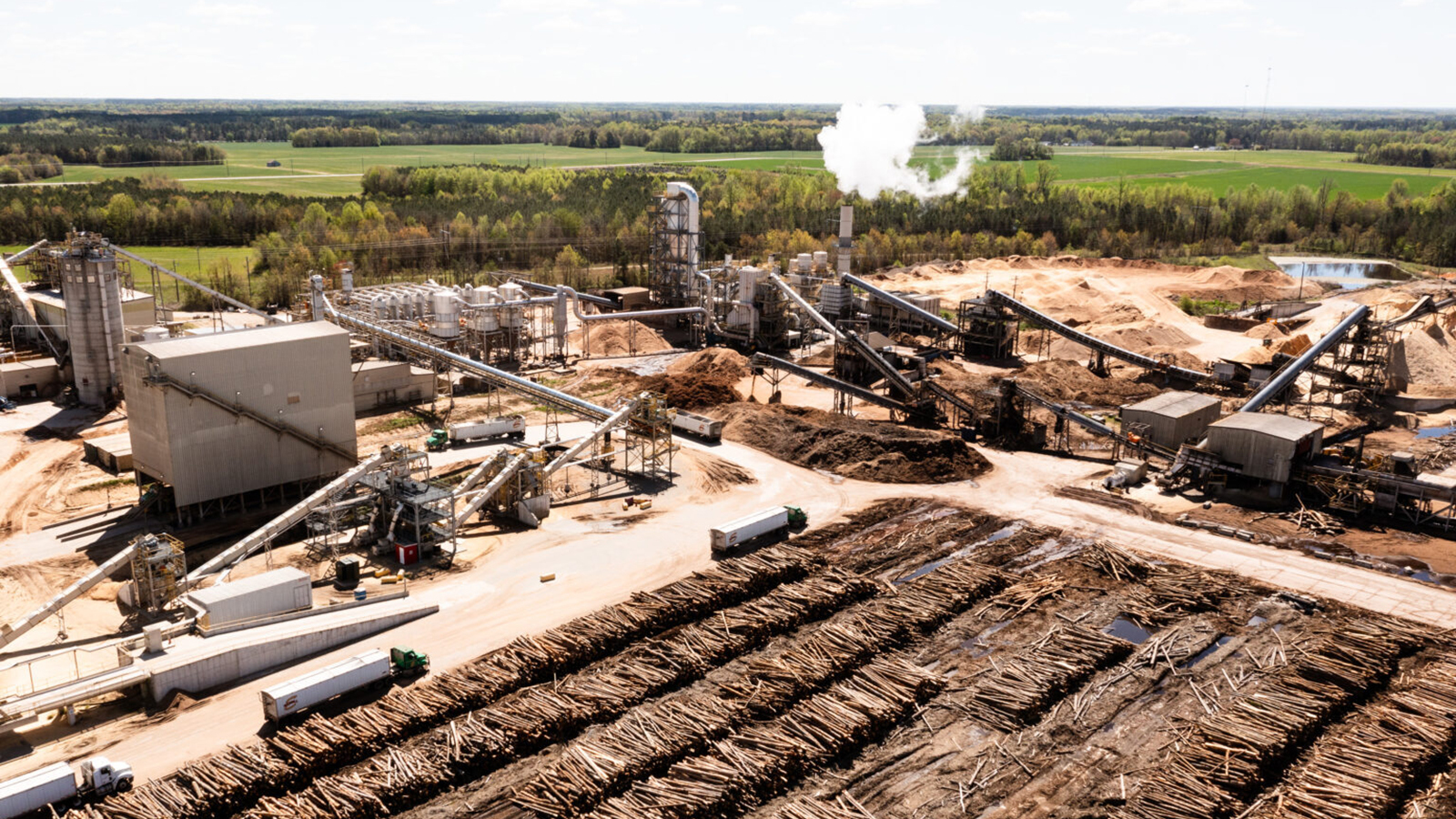
Enviva's wood pellet facility in North Carolina promised jobs but delivered dust, noise, and pollution - while burning pellets emits more carbon than coal. Surprise!
After the world's largest wood pellet producer, Enviva Biomass, built what it called a state-of-the-art facility near Ruby Bell's home in Faison, North Carolina, the retired educator started organizing. She warned residents about potential impacts and tried to stop the company from adding to the area's environmental burden. It's been an uphill climb.
Bell recalls the day reality set in. After spending 20 minutes talking to a resident, she was sniffling, her nose ran, and her eyes burned. Her pants were covered in dust from sitting in a chair. "If it's like this after 20 minutes, I can only imagine what it's like for those people living there," she says.
Such experiences drew Sherri White-Williamson deeper into environmental justice work. After decades working for federal agencies in D.C., she returned to North Carolina, enrolled at Vermont Law School at age 63, and founded the Environmental Justice Community Action Network (EJCAN). The group educates rural communities to advocate for themselves, initially focusing on hog farms and landfills but soon adding wood pellet plants to the list.
More than a decade after Enviva's facility opened, Bell's skepticism is justified: hundreds of well-paying jobs never materialized, while noise, truck traffic, and air quality worsened. White-Williamson notes the biomass rush began in Europe in the late 2000s, when the EU mandated 20% cuts in greenhouse gas emissions and increases in renewable energy. The American South's forests were tapped to help. The Dogwood Alliance estimates Enviva's North Carolina facilities consume about 50,000 acres of forest annually, causing flooding and deforestation.
Enviva claims it only uses wood unsuitable for other purposes, but environmental groups have documented clear-cut logging and mature trees being fed to pellet mills. The pellets are shipped overseas, while the forests - which would otherwise store carbon - are destroyed. Research shows burning wood pellets emits even more carbon than coal; MIT researchers calculated it could take over a century for young trees to absorb the excess CO2.
Recent data found Enviva's facilities are 50% more likely to be located in vulnerable communities already besieged by pollution. Oversight has failed: despite citations for emitting too many toxins, the Department of Environmental Quality allowed Enviva to expand production in 2019 over community objections. "The story is always the same," says White-Williamson. "The community that doesn't have the power... is always getting the short end of the stick."
Danielle Purifoy, a professor at UNC Gillings School of Public Health, says the pellet manufacturing process releases particulate matter, carbon monoxide, nitrogen oxide, and VOCs - pollutants known to harm respiratory systems. A survey by the Southern Environmental Law Center confirmed air pollution, dust, noise, and traffic measurably impact quality of life. Residents complained of constant noise, needing to wash cars daily, no longer sitting on porches, and even wearing masks indoors. "Folks are speaking up more because they now understand the direct link," says White-Williamson. EJCAN helps communities document harm and build collective power for protections.
The Good Times
News in your inbox.
One sardonic roundup, delivered on your schedule. Free. Unsubscribe whenever your tolerance for wit runs out.
Already subscribed but we never reach your inbox? Check your spam folder and hit 'Not spam' (or 'Remove from spam') to bust us out of junk-mail purgatory. You'll be helping everyone else too.
Don't open any of our emails for a month and you'll be automatically removed from the mailing list.
Rewrite Article
Select parts to regenerate with a fresh AI pass. Translations will be updated automatically.
Generate AI Image
Creates a sardonic version of the article image using OpenAI.