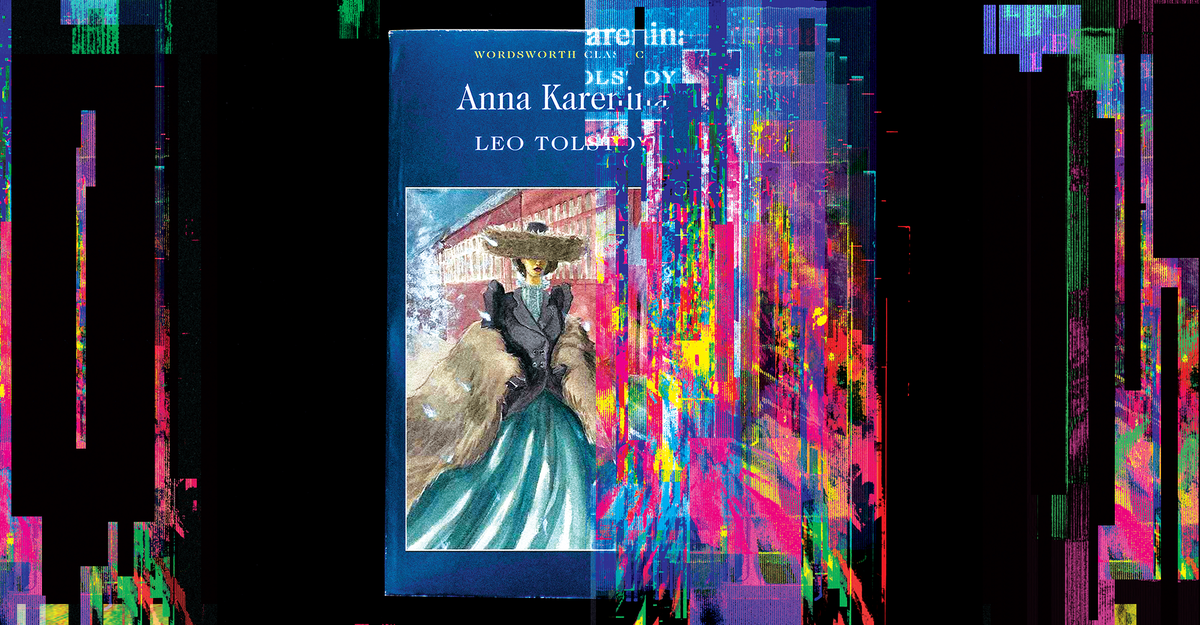
The Death of Reading: Alexandria's Library Had It Coming, But What's Our Excuse?
Americans are reading less than ever, preferring gambling and TikTok to books - and Harvard students now need ChatGPT to get through 'A Clockwork Orange.'
Twenty-three hundred years ago, King Ptolemy I of Egypt decided that hoarding every scroll he could get his hands on was a good use of his army's time. Ships arriving at Alexandria were ransacked, scrolls were seized, and the Library of Alexandria became the ancient world's greatest repository of knowledge - until it wasn't. By 400 C.E., it had vanished, and historians have spent centuries blaming Julius Caesar, angry archbishops, and, more recently, humidity, mice, and a severe lack of funding for maintenance. As classics scholar Roger Bagnall put it, the library's disappearance wasn't the cause of a dark age - it was a symptom that the dark age had already arrived.
Fast forward to 2025, and Americans are apparently re-enacting that tragedy on a national scale, minus the fire and the mice. According to the National Endowment for the Arts, fewer than half of all adults reported reading a book of any kind in 2022. Only 38 percent read a novel or short story. The proportion of Americans who read for pleasure on any given day fell from 28 percent in 2004 to 16 percent in 2023, per the American Time Use Survey. Meanwhile, gambling has become more popular than reading a book: 57 percent of Americans placed a bet last year. So yes, we'd rather gamble than read. That's a choice.
The decline cuts across age, gender, and education levels. Even retirees, women, and college graduates - the demographics that once kept bookstores in business - have jumped ship. And the books people do read are getting simpler: New York Times best sellers today have sentences about one-third shorter than a century ago. In 1958, the top-selling novel was Boris Pasternak's "Doctor Zhivago," full of long, complex sentences about tsars and oppression. Last year's top seller was "Sunrise on the Reaping," a young-adult Hunger Games prequel. The New York Public Library's chief librarian, Brian Bannon, told The Atlantic that young-adult fiction is wildly popular among adults. Other top sellers include a "Diary of a Wimpy Kid" installment and a "Dog Man" book. The most popular novel written for adults was the romantasy "Onyx Storm," which features sentences like: "A muscle in his square jaw ticks as he stares down at me, rippling the tawny-brown skin of his stubbled cheek." It's not Pasternak, but at least it's words.
News reading has also cratered. In 1975, about half of 20-somethings read a newspaper daily. Today, fewer than 10 percent do. Most Americans now get news on phones, and 40 percent prefer watching or listening rather than reading. Fourth- and eighth-grade reading scores have slid for a decade. In 2024, only 35 percent of high-school seniors were "proficient" at analyzing complex themes; about the same number scored below "basic." Nearly 30 percent of American adults cannot paraphrase or make inferences from a multipage text - up from under 20 percent in 2017. Amanda Kordeliski, on the board of the American Association of School Librarians, told The Atlantic that librarians now buy graphic novels to accommodate students' diminished reading levels.
And yet, Americans are probably reading more words than ever - just not in long form. Emails, texts, X posts, Instagram captions: we're drowning in fragments. Maryanne Wolf, a cognitive neuroscientist at UCLA, argues we're losing the ability to think deeply about writing. We're not illiterate, she says; we're postliterate. The next generation reads even less: from 1984 to 2025, the percentage of 13-year-olds who rarely or never read for fun rose from 8 to 29 percent. Kindergarten teachers report that many students don't know nursery rhymes or fairy tales. Only 2 percent of adults read to a child on a given day. High-school students told focus groups that reading for pleasure feels "alien."
Even at Harvard, reading is apparently a burden. Margaret Rennix, Harvard's assistant director for humanities and social-sciences support, told The Atlantic about a student who used ChatGPT to "translate" Anthony Burgess's "A Clockwork Orange" because Old English was too hard. Another professor had to bring in Rennix to convince students that reading entire books is worthwhile - because some students view reading as "arbitrarily withholding information." Yes, at Harvard, in a sociology course, students needed to be persuaded that reading the actual text might be valuable.
Reading has transformed human consciousness, according to historian Walter J. Ong. It enabled inner concentration, extended focus, logical deduction, and a new kind of rational thought. But that was then. Now we're trading deep reading for scrolling, and the consequences are already visible: shallower politics, weaker culture, and a society that may soon forget how to think in paragraphs. The Library of Alexandria fell because people stopped caring. We're doing the same, but at least we have memes.
The Good Times
News in your inbox.
One sardonic roundup, delivered on your schedule. Free. Unsubscribe whenever your tolerance for wit runs out.
Already subscribed but we never reach your inbox? Check your spam folder and hit 'Not spam' (or 'Remove from spam') to bust us out of junk-mail purgatory. You'll be helping everyone else too.
Don't open any of our emails for a month and you'll be automatically removed from the mailing list.
Rewrite Article
Select parts to regenerate with a fresh AI pass. Translations will be updated automatically.
Generate AI Image
Creates a sardonic version of the article image using OpenAI.