
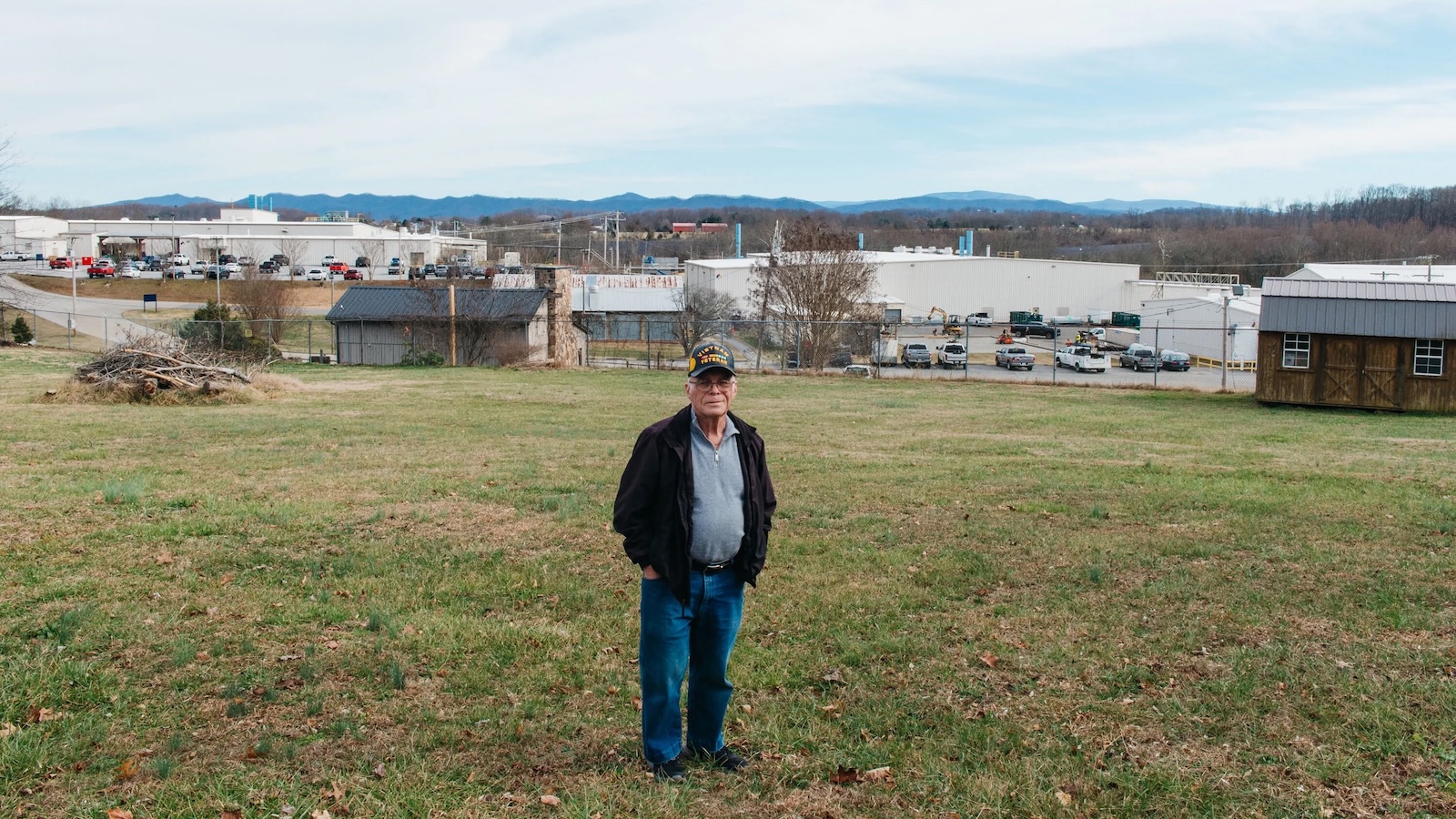
Luther “Sunny” Miller is pushing 80, but he still remembers his days at Aerojet, a rocket and missile manufacturer that sat in his backyard. He can’t prove it, but he blames the plant for his thyroid and bladder woes and his wife’s kidney disease. Last year, BWX Technologies bought the factory in Jonesborough, Tennessee, and announced a big expansion: a 10-year, $1.6-billion contract to turn depleted uranium oxide from the Department of Energy into high-purity depleted uranium for the Y-12 National Security Complex in Oak Ridge. The company promises 175 permanent jobs, but Miller and his neighbors are less than thrilled. “They’re going to turn over the most beautiful parts of Tennessee into a nuclear waste area,” he said.
But hey, jobs are jobs, and Tennessee officials see this as the start of a “nuclear renaissance” centered on Oak Ridge, the Manhattan Project’s old stomping grounds. Billions are flowing into the region, which is apparently a hot spot for nuclear expertise. Tennessee is now one of five finalists for a Department of Energy “nuclear lifecycle innovation campus” that could finally deal with the radioactive leftovers of the atomic age. The catch: the region’s history is littered with contamination, illnesses, and accidents, which makes some folks a tad wary.
Nuclear waste is a headache. Spent fuel stays radioactive for millennia and sits in concrete containers because there’s nowhere else to put it. The feds have wanted a permanent underground repository forever, but Yucca Mountain in Nevada got stuck in political quicksand. With the Trump administration wanting to quadruple nuclear energy output, the problem is urgent: the nation’s 85 interim storage sites already hold over 86,000 tons of radioactive waste - enough to fill a football field nearly 10 yards deep.
The innovation campuses are the latest attempt to solve this. Instead of forcing a site on a community, the DOE invited states to volunteer. These industrial centers would handle uranium enrichment, fuel fabrication, reprocessing, recycling, and even energy generation. Waste management would anchor the project. In July, Tennessee, Utah, Oklahoma, Louisiana, and Idaho made the shortlist for further talks.
Tennessee’s edge dates back over 80 years to when Oak Ridge was chosen for the Manhattan Project. Today, the Y-12 complex and Oak Ridge National Laboratory sit amid a sprawl of museums, highway-exit chains, and top-secret facilities. Joe Hoagland, a physical chemist at the lab, says, “Part of Oak Ridge’s role is that we have expertise in all parts of that fuel cycle. We know how to enrich it. We know how to use it. We know how to store it. We know how to transport it, and we understand the chemistries around how to recycle it.”
For years, East Tennessee hosted legacy companies like GE and Westinghouse, but now it’s more like startup culture, Hoagland says. The Tennessee Department of Economic and Community Development has secured $10 billion in investment over the past decade, bringing 3,000 new jobs from companies like BWXT, Orano, and Centrus. Officials dream of tens of thousands more jobs and an educational pipeline. “The second graders of today are going to be the ones that actually are coming in to work at these facilities,” said Braden Stover, the nuclear advisor. “We need to get to them and just let them know, Hey, here is what is coming.”
But the region’s nuclear past has left a less shiny legacy. The Manhattan Project evicted 3,000 farmers, and studies have linked workplace exposures at the old K-25 plant to neurological conditions, cancers, and respiratory diseases. The feds are still cleaning up contamination in Oak Ridge. Nuclear Fuel Services in Erwin has a record of leaks and groundwater contamination. And let’s not forget the 2008 coal ash spill at Kingston Fossil Plant, which dumped 1.1 billion gallons of toxic waste; cleanup workers got sick, some fatally.
Such history breeds skepticism, especially as the Trump administration streamlines radioactive waste rules. Valerie Thomas of Georgia Tech says, “There are two reasons we want nuclear regulations to be very strong. One is, no, you don’t want to have errors. The second is if people think the regulations aren’t very strong, they’re not going to want nuclear power and nuclear facilities.”
Distrust is already shaping fights. In March, hundreds in Claiborne County opposed a proposed nuclear graphite facility, and they won. In Jonesborough, residents packed county commission meetings against BWXT’s plant, but zoning passed anyway. Will Manning, a 42-year-old knifemaker, spent the winter canvassing and was disgusted by the outcome. “I honestly don’t know what was more disgusting, disappointing, depressing: the outcome of the vote or the dog-and-pony show they put on and blatant disregard for the strong voice of this community,” he told Grist.
As for the DOE campus, most would likely be in Oak Ridge, but waste disposal might go elsewhere - location undecided. Officials promise extensive community discussions and years of environmental analysis. The initial application sought support from adjoining counties and suggested infrastructure funding.
Sunny Miller admits East Tennessee needs jobs, but he wants the decision based on facts, not vague promises. “You can’t live on car washes and chicken places alone, that’s a real feeling,” he said. Wise words from a man who’s seen a rocket factory in his backyard.