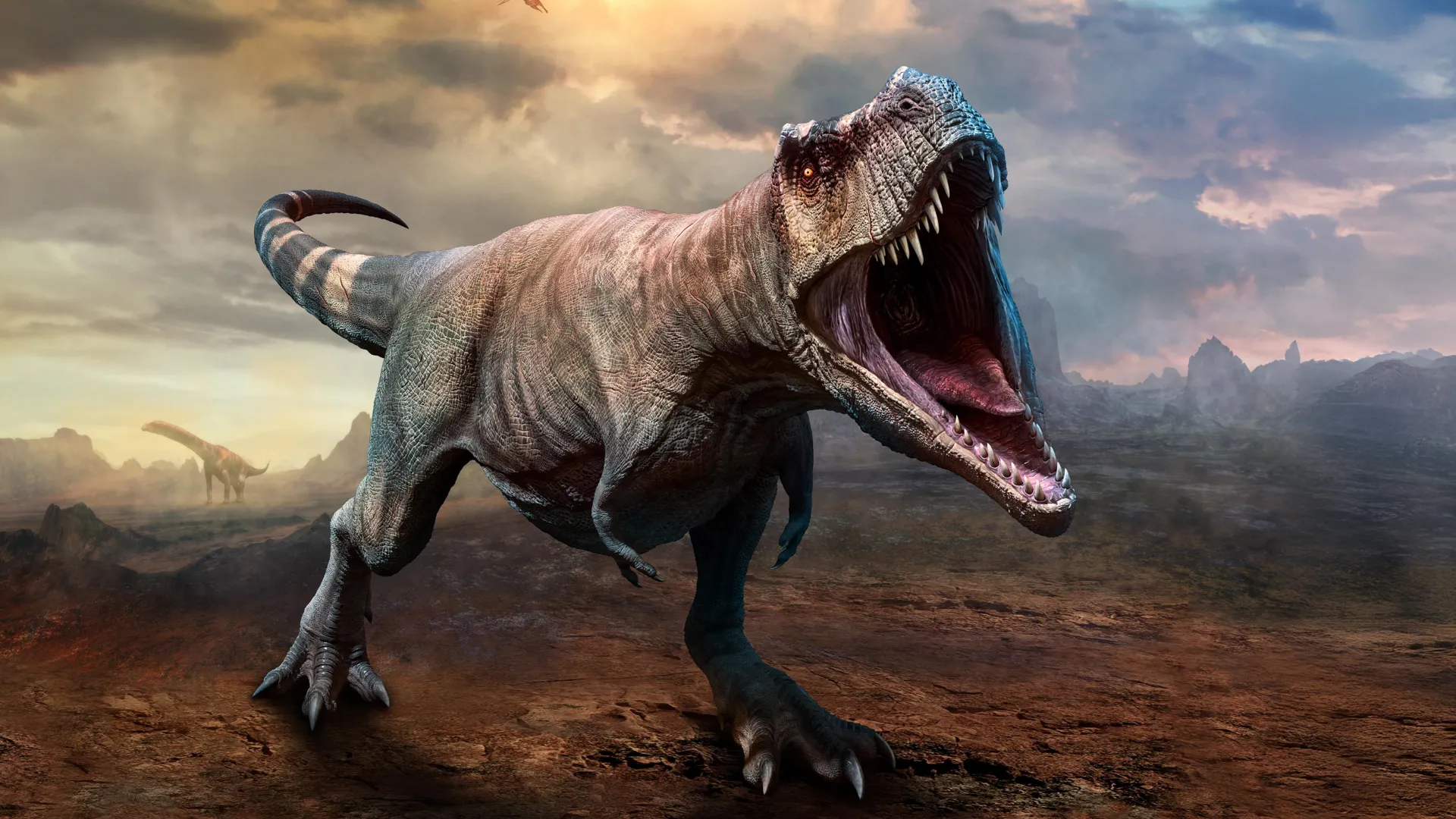
T. Rex Took 40 Years to Reach Full Size, Because Even Dinosaurs Had a Glow-Up Phase
T. Rex took 40 years to reach full size, not 25, thanks to hidden growth rings and a new statistical approach - because even dinosaurs needed a prolonged awkward phase.
For years, scientists believed Tyrannosaurus rex reached its adult size at around age 25. But a major new study suggests the iconic predator may have taken much longer to mature - about 40 years, to be precise, before hitting its maximum size of roughly eight tons. That's a lot of awkward teenage years.
The findings come from an analysis of 17 tyrannosaur fossils spanning a wide range of ages, from young juveniles to massive adults. Researchers say the work, published in the journal PeerJ, provides the most detailed reconstruction yet of how Tyrannosaurus grew throughout its life.
To estimate the age of dinosaurs, paleontologists often examine growth rings preserved inside fossilized bones - similar to annual rings in tree trunks. But this study employed more advanced techniques, including specialized lighting to reveal hidden rings and sophisticated statistical models to combine information from multiple specimens.
"This is the largest data set ever assembled for Tyrannosaurus rex," says Holly Woodward, a professor of anatomy at Oklahoma State University who led the research. "Examining the growth rings preserved in the fossilized bones allowed us to reconstruct the animals' year-by-year growth histories."
Because a cross section of a T. rex leg bone typically preserves information from just the final 10 to 20 years of the animal's life, the researchers combined growth records from multiple individuals of different ages. "We came up with a new statistical approach that stitches together growth records from different specimens to estimate the growth trajectory of T. rex across all stages of life in greater detail than any previous study," explains Nathan Myhrvold, a mathematician and paleobiologist at Intellectual Ventures who led the statistical analysis.
The results indicate that Tyrannosaurus remained in a growth phase about 15 years longer than previously thought. Instead of rapidly reaching adulthood, T. rex appears to have grown at a steadier pace over several decades. According to the researchers, this prolonged growth period may have helped younger tyrannosaurs occupy different ecological niches as they matured. "A four-decade growth phase may have allowed younger tyrannosaurs to fill a variety of ecological roles within their environments," says coauthor Jack Horner of Chapman University. "That could be one factor that allowed them to dominate the end of the Cretaceous Period as apex carnivores."
The study also contributes to an ongoing debate about whether some famous T. rex fossils actually belong to different species. Two particularly famous specimens, nicknamed "Jane" and "Petey," stood out from the rest, with growth patterns differing significantly from the others. The researchers note that a separate recent study by Zanno and Napoli reached a similar conclusion, classifying Jane and Petey as two distinct species of Nanotyrannus.
Another important finding involves the discovery of previously overlooked growth markers inside dinosaur bones. Woodward, Myhrvold, and Horner found that circularly polarized and cross-polarized light can reveal a new type of growth ring. "Interpreting multiple closely spaced growth marks is tricky," Myhrvold says. "We found strong evidence that the protocols typically used in growth studies may need to be revised."
More than a century after Tyrannosaurus rex was first described by scientists, the giant predator continues to reveal new surprises. By combining a larger fossil sample, improved imaging techniques, and innovative statistical analysis, the new research provides one of the clearest views yet of how T. rex developed from a young dinosaur into one of the largest and most formidable land predators in Earth's history. The findings suggest that the king of dinosaurs may have taken far longer to grow up than anyone previously realized - proving that even apex predators can have a slow start.
The Good Times
News in your inbox.
One sardonic roundup, delivered on your schedule. Free. Unsubscribe whenever your tolerance for wit runs out.
Already subscribed but we never reach your inbox? Check your spam folder and hit 'Not spam' (or 'Remove from spam') to bust us out of junk-mail purgatory. You'll be helping everyone else too.
Don't open any of our emails for a month and you'll be automatically removed from the mailing list.
Rewrite Article
Select parts to regenerate with a fresh AI pass. Translations will be updated automatically.
Generate AI Image
Creates a sardonic version of the article image using OpenAI.