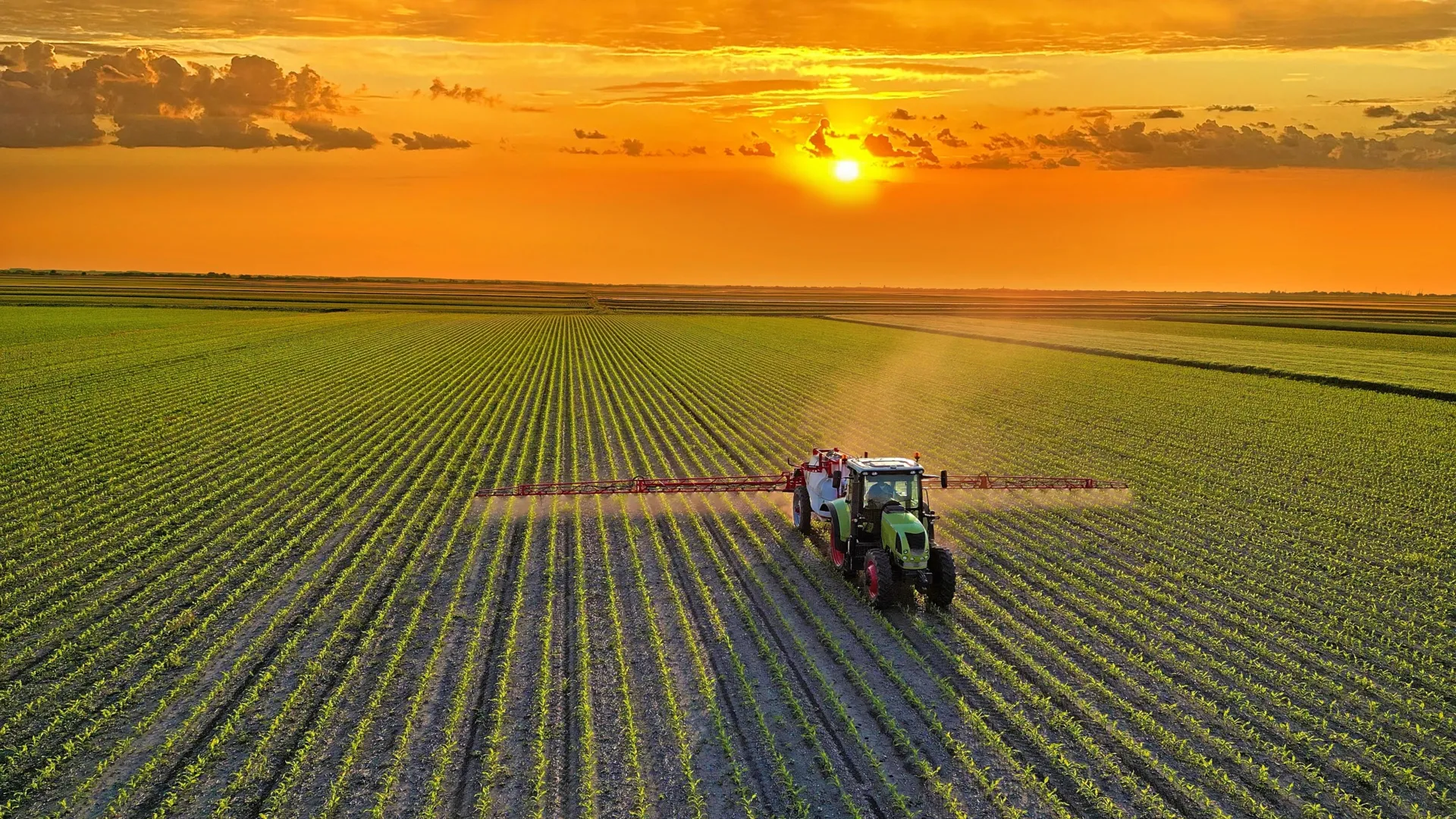
Study Finds That Eating Better Could Make Farming Less Terrible for Planet
Modeling shows that if everyone ate healthier and farms got smarter, we could cut emissions by 85% and reduce farmland by 6%, but someone's going to have to tell the cows.
A new study suggests that if the world collectively decides to eat healthier, stop wasting food, and farm more efficiently, we might actually be able to save the planet without giving up everything we love. According to modeling published in Nature by researchers from the London School of Hygiene & Tropical Medicine (LSHTM), Cornell University, and 10 other modeling teams, such a transformation could reduce global farmland use by 6% compared with current trends by 2050. The total value of livestock production could plummet by 42% ($630 billion) compared with 2020, with ruminant animals - beef cattle, sheep, and goats - taking the biggest hit: a 70% ($274bn) decline and roughly 400 million fewer of them wandering the planet.
Meanwhile, plant-based foods would have a field day. The combined global value of vegetables, fruits, nuts, and legumes could rise by 57% ($890bn). Legumes - beans, peas, lentils, chickpeas - are apparently important sources of protein and fiber and require fewer resources than animal foods. Who knew? The researchers examined a scenario similar to the one proposed by the 2025 EAT-Lancet Commission, which concluded that a worldwide shift to healthy diets could prevent 15 million premature deaths every year. That's a lot of people who would live to see another day, presumably to eat more lentils.
The transformation could also slash agriculture-related net-CO2 emissions from land-use change by 85% by 2050 compared with 2020. Land-use change - clearing forests, converting grasslands, draining wetlands - releases stored carbon. Net emissions account for both release and absorption. So, less deforestation, less carbon. Simple, right?
Dr. Matt Gibson, lead author (started at Cornell, now at LSHTM), said: "Transforming food systems would deliver enormous potential benefits to our health and the environment but, as our results make clear, they would also lead to fundamental changes to global agriculture and affect the lives of millions of farmers and food producers." He urged governments to make difficult decisions rather than use the results as an excuse for inaction. That means confronting powerful groups that profit from the status quo - which, let's be honest, is about as comfortable as a vegan at a barbecue.
Daniel Mason-D'Croz, study co-author from Cornell, said: "We should consider these scenarios not as a forecast of what will happen, but as a useful early guide of where challenges and opportunities may arise." In other words, don't start planning your lentil farm just yet, but maybe don't invest in a cattle ranch either.
The economic effects vary by region. In the United States, total agricultural production value could fall by 21% ($76bn) by 2050, with crop production up 20% ($40bn) and livestock down 73% ($116bn). India, on the other hand, could see total agricultural production value rise by 46% ($198bn), with crop production up 65% ($208bn) and livestock down a mere 8% ($10bn). Europe could see overall value decline by 35% ($190bn), with crop production down 8% ($22bn) and livestock down 66% ($168bn). Because of course it's complicated.
The researchers assumed a costless consumer preference shift toward healthy diets - meaning people just decide to eat better without any financial, cultural, or practical barriers. In reality, healthy foods aren't always affordable or accessible, and dietary choices are shaped by traditions, preferences, income, and attitudes. But hey, we can dream.
The authors argue that bold policy decisions now could help protect vulnerable producers and consumers. Without careful planning, the transition could cause severe economic disruption for communities dependent on livestock. So maybe we should start planning before we're all eating crickets and calling it a day.
The Good Times
News in your inbox.
One sardonic roundup, delivered on your schedule. Free. Unsubscribe whenever your tolerance for wit runs out.
Already subscribed but we never reach your inbox? Check your spam folder and hit 'Not spam' (or 'Remove from spam') to bust us out of junk-mail purgatory. You'll be helping everyone else too.
Don't open any of our emails for a month and you'll be automatically removed from the mailing list.
Rewrite Article
Select parts to regenerate with a fresh AI pass. Translations will be updated automatically.
Generate AI Image
Creates a sardonic version of the article image using OpenAI.