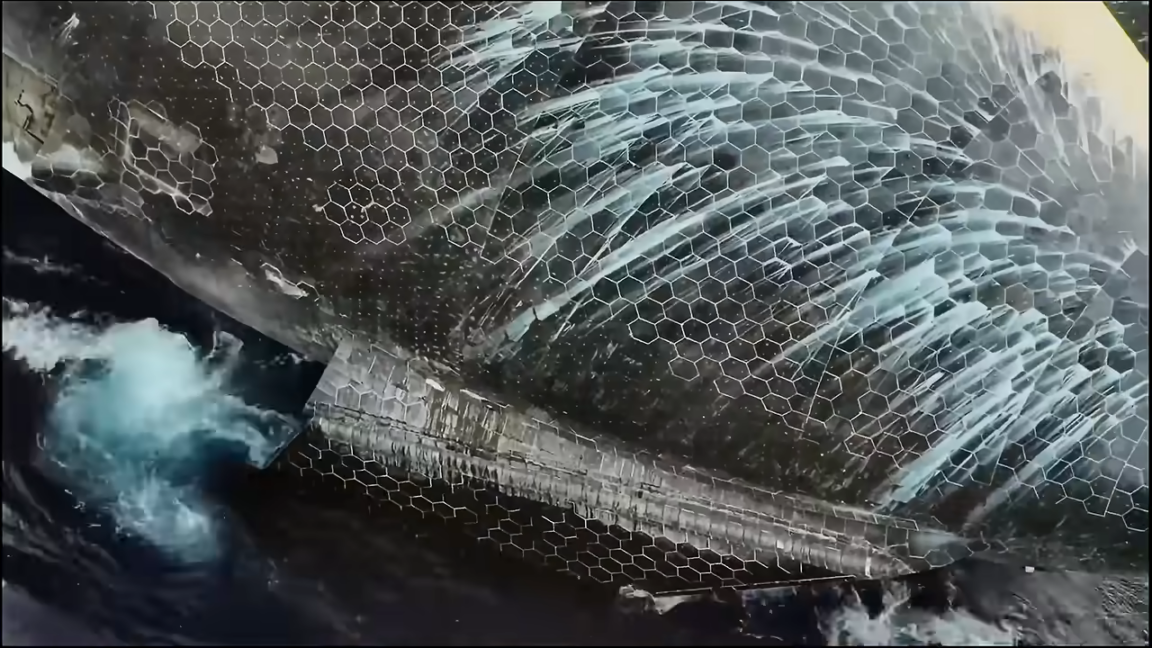
SpaceX’s Starship took another triumphant flight on Friday, demonstrating credible steps toward fulfilling its immense promise. Next time, it might even go orbital, deploy satellites, and get caught by the launch tower like a giant, fiery game of fetch. But beneath all that impressive engineering, a nagging problem remains: the heat shield.
The roughly 18,000 ceramic tiles protecting Starship’s underbelly during reentry are, according to some experts, a dead end for rapid reuse. Dan Rasky, a former NASA engineer who co-invented the material used for Crew Dragon’s heat shield, told Ars that SpaceX’s current thermal protection system is a dead end for missions requiring full and rapid reusability. NASA faced the same issue with the Space Shuttle - thousands of tiles that worked fine but required laborious post-flight inspections, making rapid reuse a pipe dream. SpaceX has an advantage: Starship’s steel structure can handle temperatures up to 800°C, so some tile failures are acceptable. But a new analysis by Rasky, former NASA astronaut Charles Camarda, and Charles Miller (head of NASA’s Trump-Vance transition team) suggests significant challenges remain.
After Flight 13, only a few tiles were lost - good news. But drone footage of the landed Starship in the Indian Ocean showed white streaks across the heat shield, all originating at tile boundaries, suggesting hot gas may have penetrated them. There were also cracked tiles and broken edges. Clearly, the heat shield was good enough for this flight, but the damage means it would require inspection and refurbishment before another launch - hardly the “full and rapid” reuse SpaceX envisions, where each Starship turns around in days or weeks.
SpaceX isn’t ignoring the problem. Elon Musk has repeatedly called the reusable heat shield “the biggest problem that remains” for Starship. The company has invested in new tile materials, standardized shapes, and rigorous testing. But the independent experts argue that SpaceX’s approach is just an incremental step forward from the space shuttle’s tiles, relying on the same fundamental solution. It might be good enough for deploying Starlink satellites, but not for the hundreds to thousands of low-cost launches needed for Moon bases, Mars settlements, orbital data centers, or space-based solar power.
NASA could help - but hasn’t. The agency hasn’t made substantial investments in thermal protection research for vehicles entering from low-Earth orbit in three decades. Miller, who interviewed senior NASA officials, was told nothing is in the basic research pipeline, though some researchers see promising solutions. He recommended NASA create a new initiative for Mach 25 thermal protection research. So far, no dice. Starship’s heat shield may be getting better, but the clock is ticking on its race to rapid reuse.
The Good Times
News in your inbox.
One sardonic roundup, delivered on your schedule. Free. Unsubscribe whenever your tolerance for wit runs out.
Already subscribed but we never reach your inbox? Check your spam folder and hit 'Not spam' (or 'Remove from spam') to bust us out of junk-mail purgatory. You'll be helping everyone else too.
Don't open any of our emails for a month and you'll be automatically removed from the mailing list.
Rewrite Article
Select parts to regenerate with a fresh AI pass. Translations will be updated automatically.
Generate AI Image
Creates a sardonic version of the article image using OpenAI.