SpaceX's Tallest Rocket Yet: Because Why Stop at 'Absurdly Large'?
SpaceX stacks Starship V3, the tallest rocket ever built, because apparently the previous tallest wasn't tall enough to achieve orbital refueling and lunar landings.
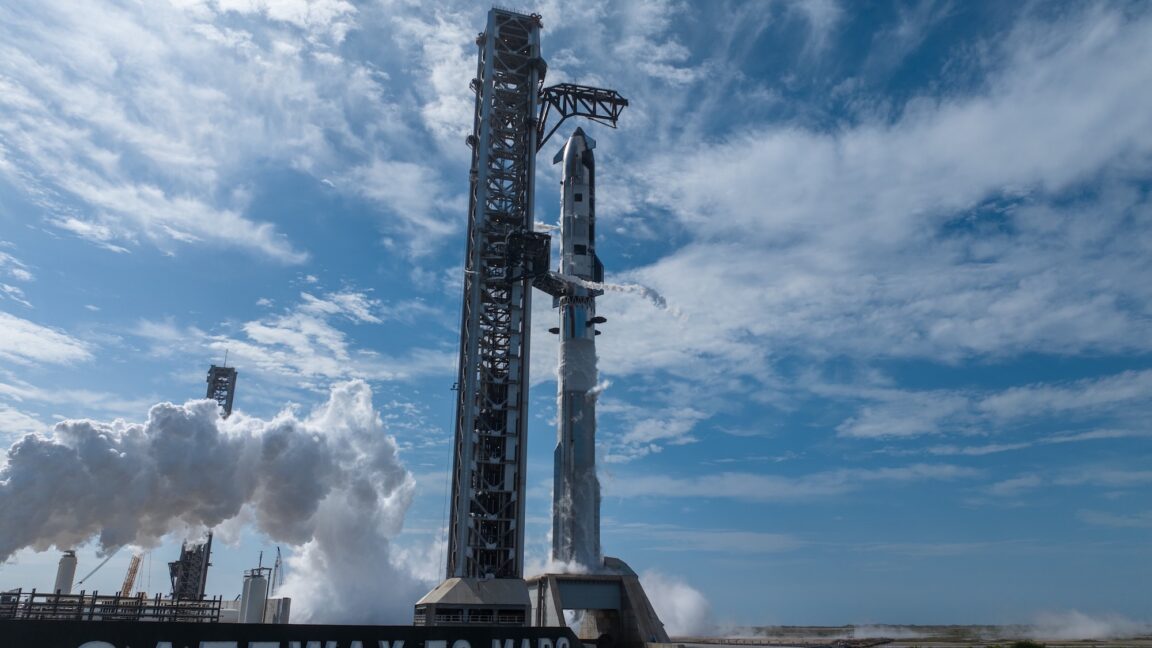
For the third time in three years, SpaceX has performed the ritual of stacking a new, even more enormous Starship on a launch pad in South Texas, a few miles north of the US-Mexico border. This one, dubbed Starship Version 3, is taller and more powerful than its predecessors, because apparently the previous ones just weren't enough to make the neighbors nervous.
The upgrades are numerous, but the headline acts are higher-thrust, more efficient Raptor engines, a new reusable lattice for hot staging (which sounds like a thing you'd order at a fancy BBQ), and three - not four - modified grid fins. Because sometimes, less fin, more fin-esse.
If all goes according to plan - and when has a Starship launch ever gone exactly according to plan? - this is the version SpaceX will use to start experimenting with in-orbit refueling. That's the capability engineers must master before sending ships anywhere beyond low-Earth orbit, like to the Moon to serve as landers for NASA's Artemis program. Starship remains an iterative development program, and new versions are in the pipeline, but V3 should mark a step toward actually using Starships in space, rather than just proving they can get there and get home in a blaze of glory.
But first, SpaceX must actually do that with V3. The company hasn't officially announced a target launch date, though airspace and maritime warning notices suggested a Friday evening launch - until a day-and-a-half delay in preps over the weekend threw cold water on that. Fresh maritime warnings Monday indicate SpaceX is now targeting Tuesday, May 19.
Ground crews stacked the Starship upper stage atop its Super Heavy booster Saturday, assembling a fully stacked V3 for the first time. The rocket stands 408 feet (124 meters) tall - a few feet taller than the previous version. Because when you're already the tallest, why stop? On Monday, the launch team loaded more than 11 million pounds (over 5,000 metric tons) of super-cold methane and liquid oxygen into both stages, after halting a previous fueling attempt Saturday night due to a technical issue. The rehearsal followed a test-firing of the booster's 33 Raptor 3 engines on May 6.
At liftoff, the rocket is expected to produce some 18 million pounds of thrust - about 10 percent more than the previous generation. The scale is staggering: the internal transfer tube that channels methane from the top of the booster to the engine compartment is about the same size as the first stage of SpaceX's workhorse Falcon 9 rocket (roughly 12 feet/3.7 meters in diameter). Yes, a tube inside this rocket is as big as another entire rocket.
The upcoming flight will also mark the first liftoff from a new launch pad at Starbase, about 1,000 feet (300 meters) west of the departure point for all past Starship test flights. This will be the 12th full-scale Starship test flight, and the first since last October, after delays in readying V3 for its first launch.
Like most prior Starship flights, the upper stage will target a controlled splashdown in the Indian Ocean about an hour into the mission. On future flights, SpaceX will attempt to bring the ship back to Starbase for a catch by the launch tower's mechanical arms - as they've already demonstrated with the Super Heavy booster. One change: a more southerly flight path over the Gulf of Mexico, taking the rocket between the Yucatan Peninsula and western Cuba, instead of over the Florida Straits. Because why cause panic in one region when you can cause it in another?
What's left before V3 is ready to fly? Workers must install hardware for the rocket's self-destruct system - pyrotechnics that would blow it up if it deviated from its flight plan. This will require removing the ship from the booster. And a launch license from the Federal Aviation Administration is still pending. So, you know, just the usual bureaucratic hurdles standing between humanity and its tallest, most ambitious firework yet.
The Good Times
News in your inbox.
One sardonic roundup, delivered on your schedule. Free. Unsubscribe whenever your tolerance for wit runs out.
Already subscribed but we never reach your inbox? Check your spam folder and hit 'Not spam' (or 'Remove from spam') to bust us out of junk-mail purgatory. You'll be helping everyone else too.
Don't open any of our emails for a month and you'll be automatically removed from the mailing list.
Rewrite Article
Select parts to regenerate with a fresh AI pass. Translations will be updated automatically.
Generate AI Image
Creates a sardonic version of the article image using OpenAI.