SpaceX Gives Florida's Spaceport a Break, Because Starship Is Finally (Maybe) Coming
SpaceX is dialing back Florida launches to just two a month until Starship shows up, because Falcon 9 has been doing all the heavy lifting for a decade.
For a decade, Florida's Space Coast has been the undisputed heavyweight champion of launch sites, thanks to SpaceX's relentless Falcon 9 cadence. But the party is winding down, at least for a while. A senior SpaceX official confirmed Tuesday that the company is significantly reducing its launch rate from Florida until Starship arrives.
The Falcon 9, SpaceX's trusty workhorse, has been ferrying Starlink satellites to orbit like a cosmic FedEx, primarily from Cape Canaveral Space Force Station and NASA's Kennedy Space Center. Last year alone, there were 165 Falcon 9 launches - about three per week - and roughly 75 percent of those were Starlink missions. That's a lot of internet-in-space, folks.
But this year, the script has flipped. SpaceX has already shifted more launches to its West Coast pad at Vandenberg Space Force Base in California, and that trend is about to accelerate. According to Kiko Dontchev, SpaceX's vice president of launch, the Falcon 9 launch early Tuesday was the last planned Starlink mission from Cape Canaveral until Starship starts flying from Florida. For the rest of the year, and maybe longer, the Florida spaceport's launch rate will plummet from eight or nine per month to a paltry two per month.
It's a stark reminder of how quickly SpaceX's cadence has exploded - just a few years ago, two launches a month was the norm. Cape Canaveral and Kennedy Space Center share the same range on Florida's east coast, so they're effectively one spaceport. The last time Florida didn't lead the world in launches was 2015, a veritable geological era ago in SpaceX time.
"From here on, Starlink missions out of Florida will fly on Starship," Dontchev wrote on X. "The West Coast team will continue regularly launching Starlink from Vandenberg."
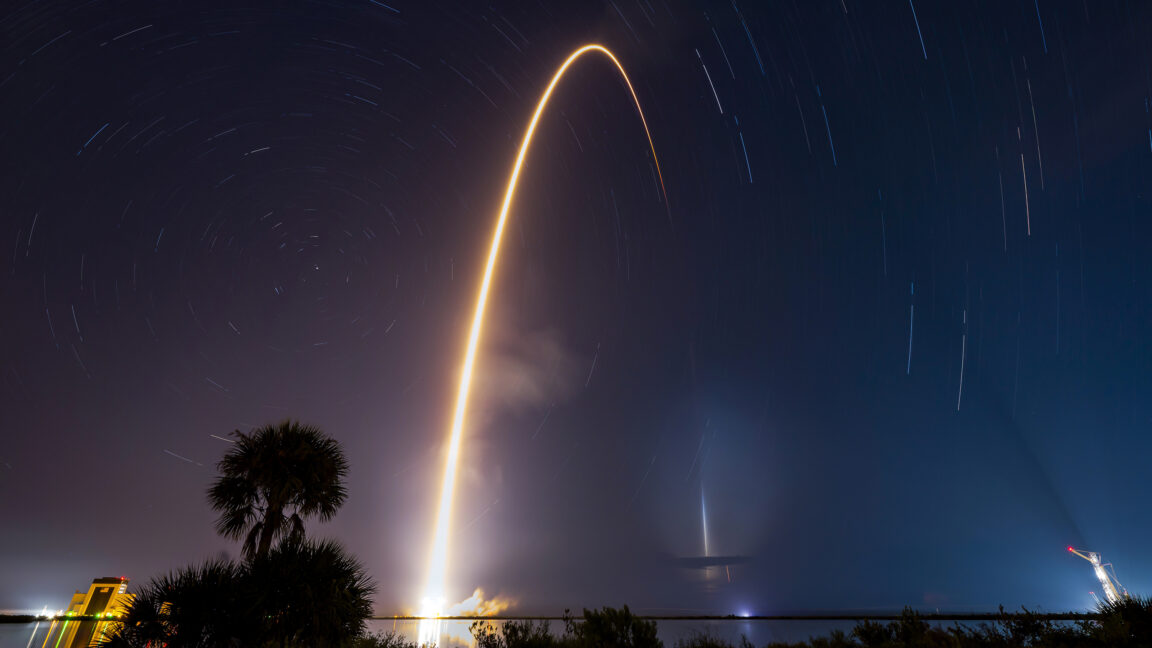
Tuesday's launch was also notable for breaking records: it marked the 37th flight for SpaceX's fleet-leading Falcon 9 first-stage booster. Plus, the pre-dawn timing gave East Coast skywatchers a free light show as the rocket arced northeast.
"Super proud of this incredible team," Dontchev added. "You've made Falcon 9 the most reliable launch vehicle in history. You also helped build the largest low-Earth orbit satellite constellation providing connectivity to millions around the world, and you've set the foundation for what's next."
SpaceX has launched around 260 Starlink missions on Falcon 9 from Florida, but from now on, all Falcon 9 and Falcon Heavy launches from Florida will carry customer payloads. The next one is scheduled for August 30, when a Falcon Heavy will lift off from Launch Complex 39A at Kennedy Space Center with NASA's Nancy Grace Roman Space Telescope. Then, in mid-September, a Falcon 9 will deliver the next four-person crew to the International Space Station.
Eventually, SpaceX plans to phase out Falcon 9 in favor of Starship, at least for commercial missions, which has some customers nervously eyeing the post-2028 launch market. SpaceX still insists it will start launching Starship and Super Heavy boosters from Launch Complex 39A by the end of this year. But with the amount of work remaining and no signs of Starships being transported from the South Texas factory, a mid-2027 debut from Kennedy Space Center seems more realistic.
Why the fuss? Starship is designed to launch up to 60 Starlink Version 3 satellites - bigger, heavier, and more powerful than the V2s currently riding Falcon 9. SpaceX plans to use the next Starship test flight, designated Flight 14, to deploy the first Starlink V3s into low-Earth orbit from Starbase, Texas, as soon as next month. So while Florida's spaceport takes a breather, the Starship era is gearing up to be something else entirely.
The Good Times
News in your inbox.
One sardonic roundup, delivered on your schedule. Free. Unsubscribe whenever your tolerance for wit runs out.
Already subscribed but we never reach your inbox? Check your spam folder and hit 'Not spam' (or 'Remove from spam') to bust us out of junk-mail purgatory. You'll be helping everyone else too.
Don't open any of our emails for a month and you'll be automatically removed from the mailing list.
Rewrite Article
Select parts to regenerate with a fresh AI pass. Translations will be updated automatically.
Generate AI Image
Creates a sardonic version of the article image using OpenAI.