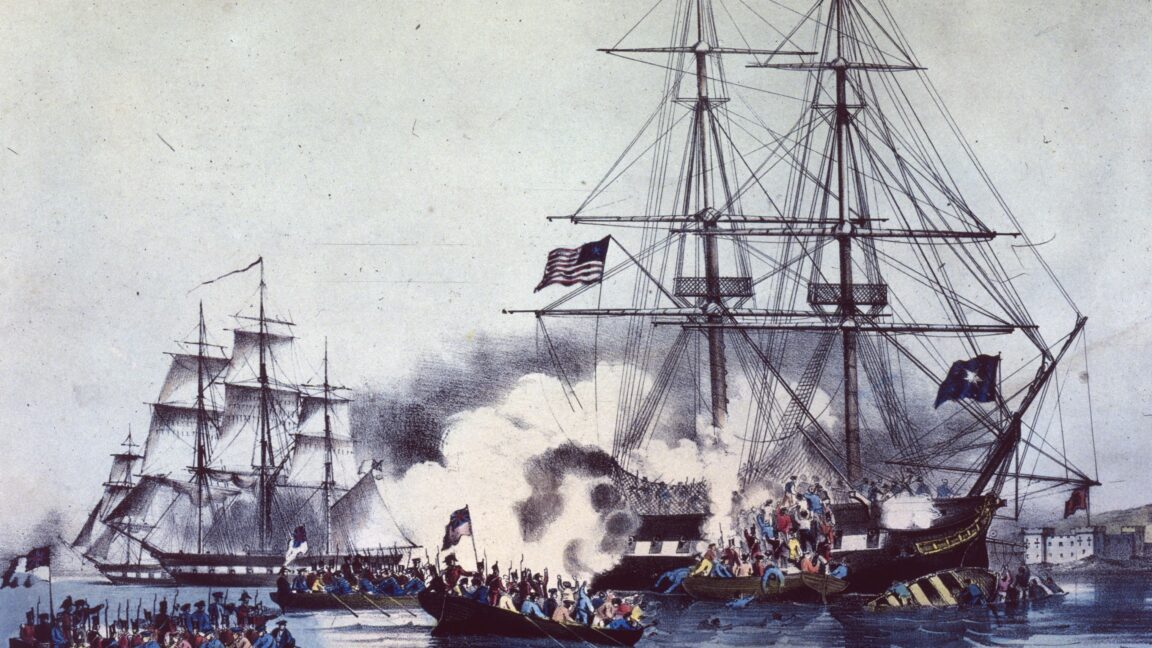
Back in the 1700s, when the US Navy was basically a few guys with rowboats and a dream, President John Adams was a big fan of privateers - private ships given government permission to go blow up enemy vessels. He even signed a letter in November 1799 authorizing a merchant ship to "subdue, seize, and take any armed French vessel" near US waters or, you know, wherever. France did it too. It was the Wild West of the seas, but with more paperwork.
Fast forward 250 years, and privateering is now mostly illegal under international law, though it's still technically in the Constitution. The US hasn't used it since the War of 1812 (unless you count the Confederacy, which we don't). But some modern lawmakers, like Sen. Mike Lee (R-Utah) and Rep. Tim Burchett (R-Tenn.), want to bring it back for drug cartels and cyber warfare. Lee called it "the ultimate in white-hat hacking." Sure, why not.
Now, you might be wondering why a space reporter is talking about this. Well, because space is the new Wild West, and the lines between commercial and military operations are blurrier than a Musk tweet. With Starlink and other private satellites becoming military targets, the question arises: what stops a private space operator from going on the offensive? A letter of marque, apparently.
The US Space Force is already using privately owned satellites in military exercises, though they don't have weapons (unless you count ramming, which is frowned upon). But space-based weapons are coming. The Pentagon's Golden Dome missile defense shield plans to include space-based interceptors, and some defense contractors are developing prototypes with private money.
Last year's National Defense Authorization Act (NDAA) included an amendment saying the Pentagon can't field a privatized missile defense intercept system - it must be owned and operated by the military. President Trump signed it in December, but nobody's talked about it much since.
During a nomination hearing for the next Space Force chief, Sen. Jack Reed (D-RI) brought up the issue, noting that "we don't lease M4 rifles." Lt. Gen. Doug Schiess, the nominee, agreed: weapon systems that can harm people or equipment need to be "completely owned by the Space Force." He mentioned hybrid models where contractors operate government-owned satellites, but with a military member as mission director.
The Space Force is about to get a massive cash infusion - the Trump administration requested $71.1 billion for fiscal year 2027, up nearly 80 percent from 2026. Lawmakers are eyeing $50-60 billion. So the question of who controls space weapons is more relevant than ever. Schiess promised "Guardian control" over those systems. Because nothing says "space peace" like a budget that could fund a small planet.
The Good Times
News in your inbox.
One sardonic roundup, delivered on your schedule. Free. Unsubscribe whenever your tolerance for wit runs out.
Already subscribed but we never reach your inbox? Check your spam folder and hit 'Not spam' (or 'Remove from spam') to bust us out of junk-mail purgatory. You'll be helping everyone else too.
Don't open any of our emails for a month and you'll be automatically removed from the mailing list.
Rewrite Article
Select parts to regenerate with a fresh AI pass. Translations will be updated automatically.
Generate AI Image
Creates a sardonic version of the article image using OpenAI.