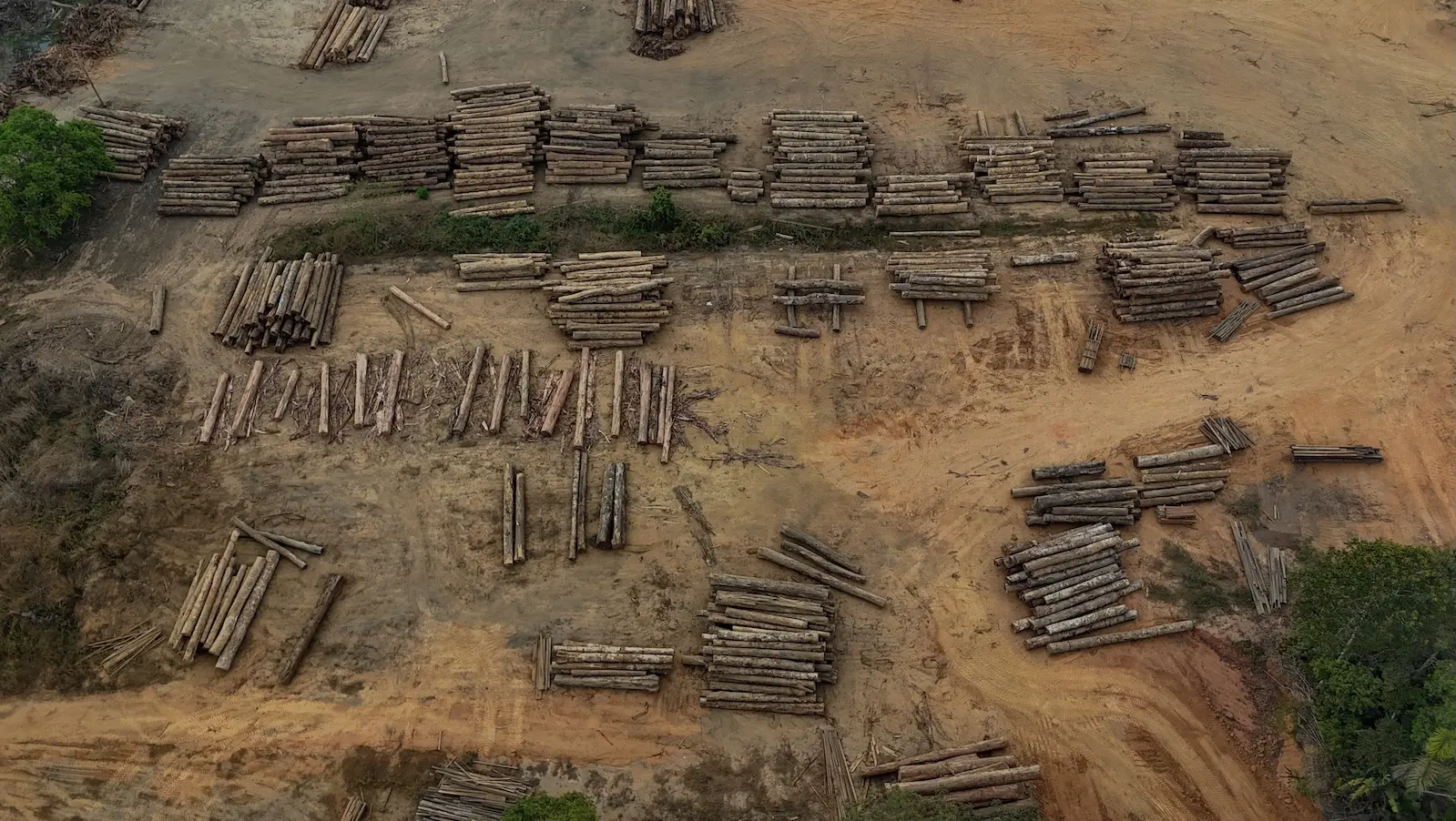
Brazil's Amazon Deforestation Hits Decade Low, But Experts Say 'Hold Your Celebration'
Brazil's Amazon deforestation hits decade low, but experts warn the soy moratorium collapse and JBS's backtracking could reverse gains faster than a sloth on a treadmill.
Brazil's national space agency recently reported that deforestation in the Brazilian Amazon has hit its lowest point in a decade, prompting headlines and a collective pat on the back for President Luiz Inácio Lula da Silva, who promised to eliminate illegal deforestation by 2030. Since taking office in 2023, Lula's administration has beefed up environmental policies, including increased policing and remote monitoring of forest lands, to make the country's beef industry more transparent.
But before you break out the confetti, environmental experts warn that some of this progress could be undone faster than you can say "soybeans." In January, several agrifood groups ditched the Amazon Soy Moratorium, a voluntary trade agreement that had been remarkably effective at curbing deforestation for soy cultivation. The pact prohibited members from buying soy grown on lands deforested after July 2008. Now that the moratorium has fallen apart, researchers have crunched the numbers and, in a new paper published in Science, predict that the Amazon could lose 1.4 million hectares - roughly 2 million soccer fields - to deforestation over the next 10 years.
Before the moratorium, soy was a major deforestation driver. In Mato Grosso, Brazil's top soy-producing state, a quarter of soy production from 2001 to 2005 came from clearing forests. After a Greenpeace campaign, public and private sectors created the moratorium, and "people generally followed it," said Lisa Rausch, a co-author of the Science paper. "Land deforested after 2008 was no longer valuable to soy traders."
Ane Alencar, a director at the Amazon Environmental Research Institute (IPAM), called the moratorium a "very important private policy mechanism." Without it, she warns that lands deforested after 2008 - currently used for cattle - will be converted to soy, and cattle ranching will move to new frontiers, likely causing more deforestation.
The timing is also lousy: private commitments from major food groups to clean up supply chains are flagging. This month, JBS, the world's largest meat producer, quietly walked back its promise to achieve net-zero deforestation by 2040. Last year, the company's chief sustainability officer admitted the pledge was "purely aspirational." Alencar believes the private sector still has a role, noting that companies like JBS are "very reactive to public opinion," so maybe more campaigns are needed to shame them into responsibility.
Elsewhere, Colombia passed a first-of-its-kind law to increase traceability in its beef industry, requiring government agencies to work with cattle ranchers and supply chain players to ensure no illegal deforestation. Rausch called it a strong signal but noted that much remains to be seen.
Brazil also has its Forest Code, which limits clearing for agriculture and imposes fines and embargoes on illegally deforested land. However, Rausch's paper found that 20% of soy farms in the Amazon have embargoes for illegal deforestation. "The economic incentives for deforestation are still there," she said. Unless new measures are introduced, "this will be a temporary drop, and it will creep back up for sure."
Alencar finds the future "worrisome," especially with Lula up for reelection against Flávio Bolsonaro, son of former president Jair Bolsonaro. She fears that all the progress could be in danger if the government becomes more anti-environmental.
The Good Times
News in your inbox.
One sardonic roundup, delivered on your schedule. Free. Unsubscribe whenever your tolerance for wit runs out.
Already subscribed but we never reach your inbox? Check your spam folder and hit 'Not spam' (or 'Remove from spam') to bust us out of junk-mail purgatory. You'll be helping everyone else too.
Don't open any of our emails for a month and you'll be automatically removed from the mailing list.
Rewrite Article
Select parts to regenerate with a fresh AI pass. Translations will be updated automatically.
Generate AI Image
Creates a sardonic version of the article image using OpenAI.