Scientists Unveil 'Flonduran' Coral, the Caribbean's Most Confusingly Named Hope
Scientists introduce 'Flonduran' corals - a hybrid of Florida and Honduran elkhorn - to Dry Tortugas in a desperate attempt to outrun climate change by cross-breeding.
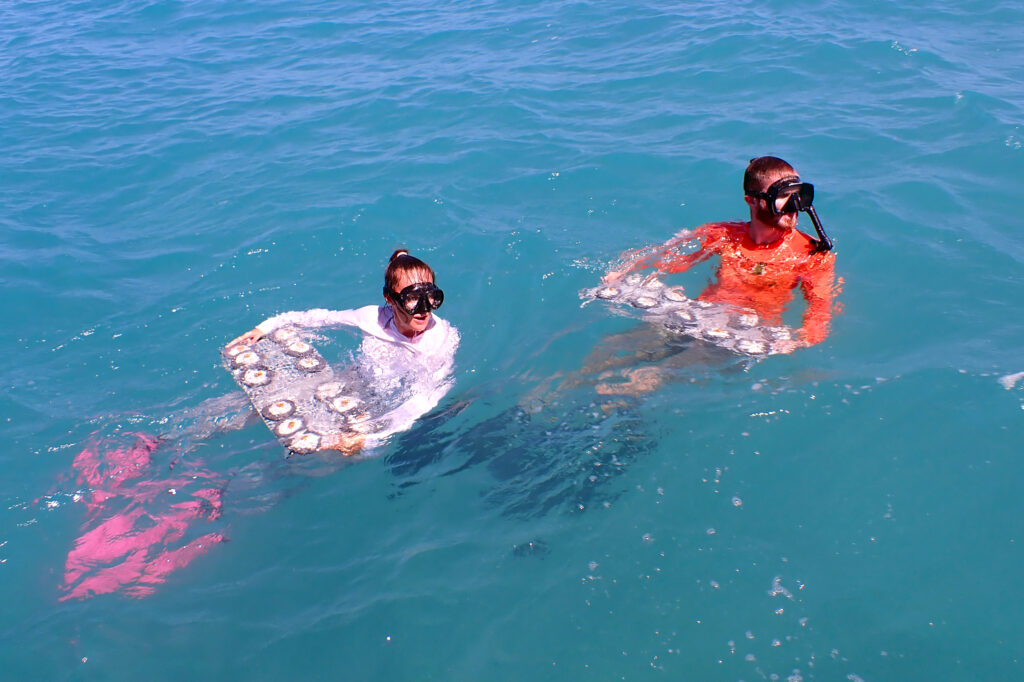
Nearly three dozen young lab-grown elkhorn corals were outplanted onto reefs in Florida’s Dry Tortugas National Park this spring, including a group of “Flondurans” - marking the first time this experimental cross-breed of Florida and Honduran elkhorn corals was introduced to the remote park about 70 miles from Key West. “These babies have been raised on land since conception,” said Bailey Marquardt, a doctoral student at the University of Miami Rosenstiel School of Marine, Atmospheric and Earth Science, who led the effort of moving the corals to the ocean in April.
The outplanting effort is part of a pioneering initiative to test if cross-breeding Florida’s elkhorn corals with more heat-resilient variants from other places in the Caribbean can help improve the threatened species’ ability to withstand rising ocean temperatures. Prior to 2023, elkhorn corals remained a prominent and important reef-building species in Florida and the Caribbean. Their large, branching colonies created complex three-dimensional structures that provided critical habitat for fish, lobsters and other marine life. They also formed much of the reef crest that helped protect Florida’s coastlines by absorbing and dissipating waves before they reached shore. But halfway through 2023, an unprecedented marine heatwave swept through Florida’s coastal waters for months, causing a mass coral bleaching event that wiped out nearly all of the state’s elkhorn colonies, along with other reef-building species like staghorn corals. “Almost every single elkhorn coral that was still alive on Florida’s coral reef died,” said Keri O’Neil, senior scientist and director of the Coral Conservation Program at The Florida Aquarium in Apollo Beach.
Since then, scientists have determined elkhorn corals are functionally extinct in the Florida Keys and Dry Tortugas, meaning too few healthy, reproductively active colonies remain to sustain the species through natural reproduction. To give the species a viable chance of recovery, Andrew Baker, a marine biologist and professor at the University of Miami’s Rosenstiel School, who directs the Coral Reef Futures Lab, began looking beyond Florida’s borders for new sources of genetic diversity. He said he had heard of a particularly resilient reef in Tela Bay along Honduras’ Caribbean coast. Locals refer to it as a “rebel reef,” with elkhorn corals thriving not only in very warm, but also very polluted waters plagued by nutrient-filled agricultural runoff from nearby oil palm plantations. Baker wanted to see if such resilient corals could be cross-bred with Florida’s elkhorn to produce a new generation of more heat-tolerant colonies that might be able to survive the next heat wave.
In 2024, he led a team of scientists from the University of Miami and Tela Marine - a marine research center and public aquarium in Tela, Honduras - to collect and export some of these elkhorn colonies to Florida. Back home, Baker teamed up with O’Neil at The Florida Aquarium to attempt something that had never been done before in the U.S: breed elkhorn corals from different countries. During carefully controlled spawning events, the researchers collected eggs and sperm from both Florida and Honduran corals and fertilized them in laboratory tanks, producing the first generation of what would become known as “Flonduran” corals. For O’Neil, the successful cross-breeding effort in the lab represented an important step toward helping corals adapt to a rapidly warming ocean. “We have to incorporate as much of the genetic diversity in the species as possible to try to find the corals that will live through climate change,” she said.
But to do that, the Flondurans need to be put to the test in a natural environment. Last year, 35 Flonduran babies were outplanted off the coast of Miami near Key Biscayne, where many of them still seem to be doing well, Baker said. This year, Marquardt is leading efforts to plant at least 300 more elkhorn colonies throughout Florida, starting in Dry Tortugas. In April, Marquardt and a team of other scientists and divers transported the two-year-old corals - half Flondurans and half bred exclusively from Florida parent colonies - in coolers, by car and boat to Dry Tortugas National Park. There, they attached the corals side by side on cinder blocks at several reef sites. “This is a critical step in field-testing measures to help reefs adapt to increased ocean temperatures,” Baker said. “By testing these Flonduran and Floridian corals side-by-side on different reefs, we can begin to identify suitable source populations for future breeding efforts.” Over the next several months, the scientists will continue to monitor their growth and ability to survive what is expected to be a very hot summer, Marquardt said. “There’s a lot of anticipation around how these corals will perform,” she said. “If it turns out that these corals are no more heat resistant than Florida’s, that means we kind of have to go back to the drawing table.”
The Good Times
News in your inbox.
One sardonic roundup, delivered on your schedule. Free. Unsubscribe whenever your tolerance for wit runs out.
Already subscribed but we never reach your inbox? Check your spam folder and hit 'Not spam' (or 'Remove from spam') to bust us out of junk-mail purgatory. You'll be helping everyone else too.
Don't open any of our emails for a month and you'll be automatically removed from the mailing list.
Rewrite Article
Select parts to regenerate with a fresh AI pass. Translations will be updated automatically.
Generate AI Image
Creates a sardonic version of the article image using OpenAI.