Scientists Infect 5,300 Elms With Deadly Disease in Hope Some Survive to Save the Species
Scientists deliberately infect thousands of elms with Dutch elm disease in a last-ditch effort to breed resistant 'super trees' that could restore a once-dominant species.
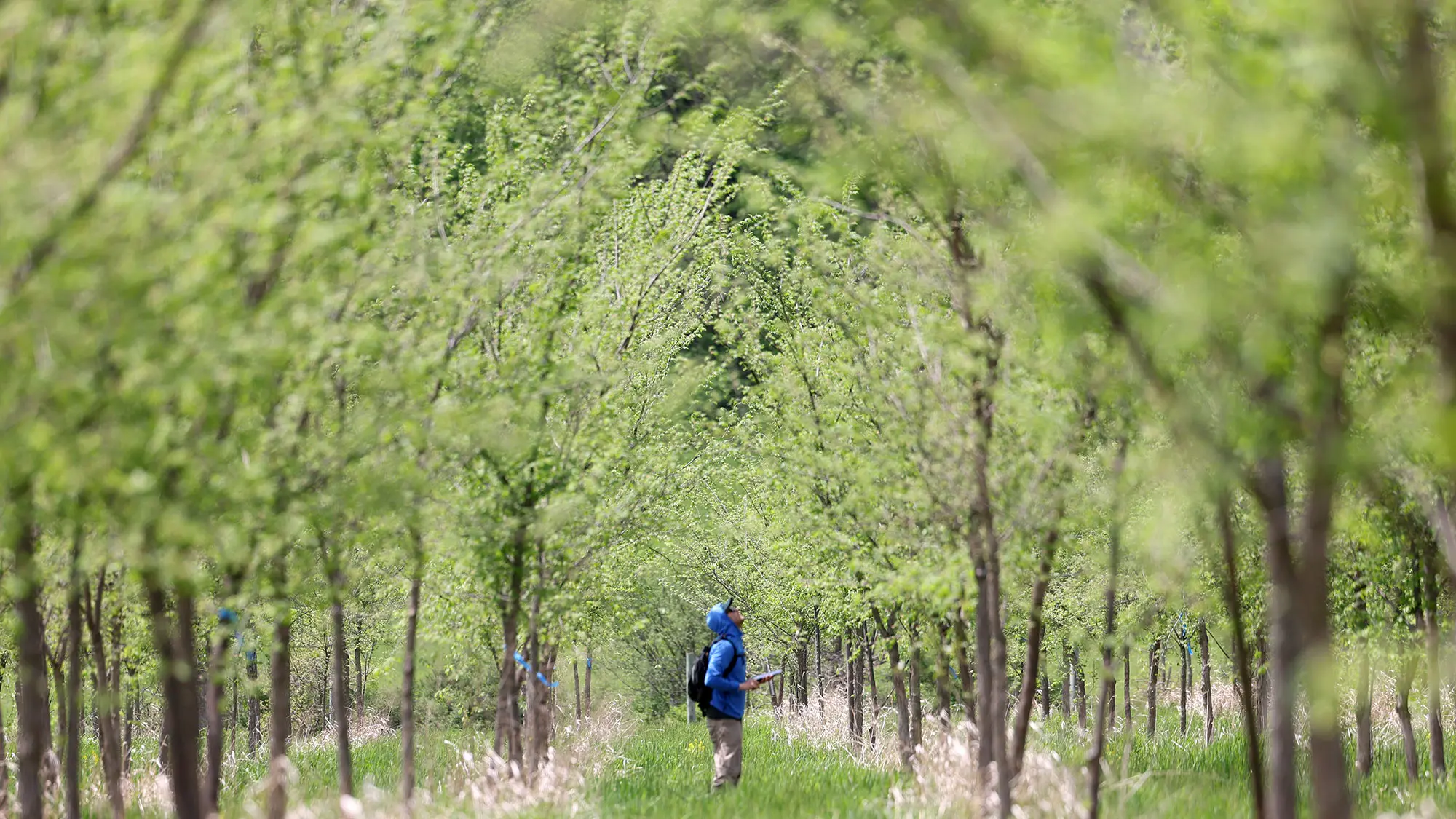
After more than a decade of tender loving care, it was time to give 5,300 American elms in Vermont a death sentence - or at least a very serious illness. Gus Goodwin, director of science and technology advancement at the Nature Conservancy in Vermont, knelt down, drilled a hole into the first tree, and injected 2 teaspoons of a solution containing roughly 100,000 spores of the fungus that causes Dutch elm disease (DED). The plan: infect nearly all the saplings, save a few watered controls, and see which ones survive. The ones that do could become the foundation for the largest, healthiest, most genetically diverse population of disease-tolerant elms North America has seen in over a century.
American elms aren't just pretty shade trees - though they are that, with cathedral-like canopies and golden autumn leaves that Thoreau admired. They also help mitigate flooding, which climate change is making more frequent. Vermont alone could avoid $1 billion in property damage over the next century by bolstering its floodplains with elms. But DED, a fungal disease spread by bark beetles, has killed tens of millions of elms since arriving in North America in the early 1900s. The tree mounts an immune response that clogs its own water vessels, essentially starving it to death. Death can come in as little as a year.
Past efforts to breed resistant elms have been largely disappointing. Between 1937 and 1965, scientists tested 21,000 seedlings - only 16 survived, and many couldn't pass along resistance. The current project is more systematic: researchers are crossing known survivors like Valley Forge and the 7-foot-wide Damon from Massachusetts, then cloning the most resistant progeny into a seed orchard of "super trees." About 1 in 100,000 elms is truly tolerant, but there's no clear genetic marker, so old-fashioned crossbreeding is the only option.
"I feel like we should warn them and apologize because we're torturing them," said Leila Wilson, a Forest Service ecologist, as she prepared to inject another young elm. "But they're serving the greater good." In a few weeks, trees without resistance will show wilting, discolored leaves, or sprout epicormic shoots. The researchers will then know if their plan might work. "We're at a really exciting milestone," said Goodwin, who gets satisfaction watching the app icons turn from red to green as each tree is injected. The fate of the American elm - and the creatures like double-toothed prominent moths that depend on it - hangs in the balance.
The Good Times
News in your inbox.
One sardonic roundup, delivered on your schedule. Free. Unsubscribe whenever your tolerance for wit runs out.
Already subscribed but we never reach your inbox? Check your spam folder and hit 'Not spam' (or 'Remove from spam') to bust us out of junk-mail purgatory. You'll be helping everyone else too.
Don't open any of our emails for a month and you'll be automatically removed from the mailing list.
Rewrite Article
Select parts to regenerate with a fresh AI pass. Translations will be updated automatically.
Generate AI Image
Creates a sardonic version of the article image using OpenAI.