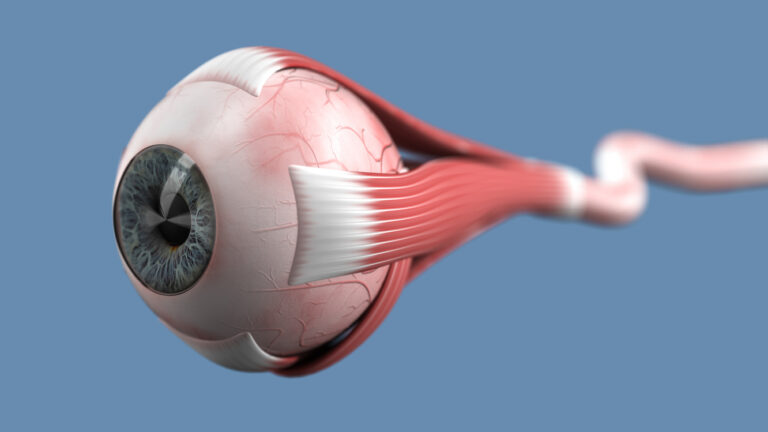
Scientists Build a Cozy Little Incubator for Dead Eyeballs, Hoping to Make Eye Transplants a Thing
Researchers have built a device that keeps dead eyeballs alive, potentially paving the way for functional eye transplants - because who wouldn't want a second chance at seeing?
Transplanting a whole human eye is not for the faint of heart - or the faint of surgical skill. The procedure is difficult, and once an eye leaves its owner, it starts to degrade faster than a milk carton left out in the sun. When surgeons gave it a go a few years ago, the transplanted eye couldn't see. But researchers think they've cooked up a solution: a device that keeps freshly harvested eyeballs alive using a technique called perfusion, which feeds them oxygen and nutrients like they'd get if they were still in your head. If it works, we might finally be looking at viable eye transplants.
"It's really cool," says Shannon Tessier at Massachusetts General Hospital, who studies perfusion of other organs but wasn't involved in this work. "It could be a new frontier for retina preservation."
The device, dubbed the Eye-in-a-Care-Box (ECaBox), was developed by Pia Cosma at the Centre for Genomic Regulation in Barcelona and her colleagues. It pumps oxygen-rich fluid through the artery that normally supplies the eye with blood. The eye sits on a little "bed," excess fluids drain away, and the whole thing is sealed to maintain just the right temperature and pressure - with a clear window so scientists can peek at the eyeball while it's chilling.
The team started with pig eyes, which look a lot like human eyes and are easier to come by (they got theirs from a local slaughterhouse). Pig eyes left out at room temperature degenerated quickly - cells shrank, structure went haywire. Even cooling them to 4°C (39°F) didn't help; they fell apart within 24 hours. But eyes in the ECaBox did much better. After 24 hours, they were "significantly more viable" than the unlucky ones left to rot. The perfused eyes also responded to light, suggesting they might technically be able to see if transplanted. Untreated pig eyes lost that ability immediately, but it came back after about 15 minutes of perfusion. A few treated eyes kept going for 10 hours or more.
Cosma and her colleagues described the work in a preprint that hasn't been peer-reviewed yet, and they declined to comment. (Probably busy not talking to journalists.)
After the pig-eye success, the team moved on to human eyes. They collected 12 eyes from six deceased donors, putting one eye from each pair in the device and leaving the other out. Again, the perfused eyes did better - their retinas were preserved.
The researchers hope the ECaBox could offer a new way to study eye treatments without experimenting on live animals. And with some tweaks, it might eventually maintain and revive donated human eyes for whole-eye transplantation. Whole-eye transplants have been tried before, mostly in animals, with limited success. In May 2023, a team at NYU Langone transplanted an eye along with part of a face to a man who had lost much of the left side of his face in a high-voltage electrical accident. He recovered well but couldn't see out of the new eye.
We won't know if ECaBox-treated eyes could do better until someone actually transplants them, says Tessier. In the meantime, Cosma and her team plan to use a newer version of their device to collect more human eyes for research. "We are planning to develop a portable, surgery-room ECaBox to minimize [degradation] in heart-beating donor eyes, when they become available," they write. Because nothing says "medical breakthrough" like a portable eyeball spa.
The Good Times
News in your inbox.
One sardonic roundup, delivered on your schedule. Free. Unsubscribe whenever your tolerance for wit runs out.
Already subscribed but we never reach your inbox? Check your spam folder and hit 'Not spam' (or 'Remove from spam') to bust us out of junk-mail purgatory. You'll be helping everyone else too.
Don't open any of our emails for a month and you'll be automatically removed from the mailing list.
Rewrite Article
Select parts to regenerate with a fresh AI pass. Translations will be updated automatically.
Generate AI Image
Creates a sardonic version of the article image using OpenAI.