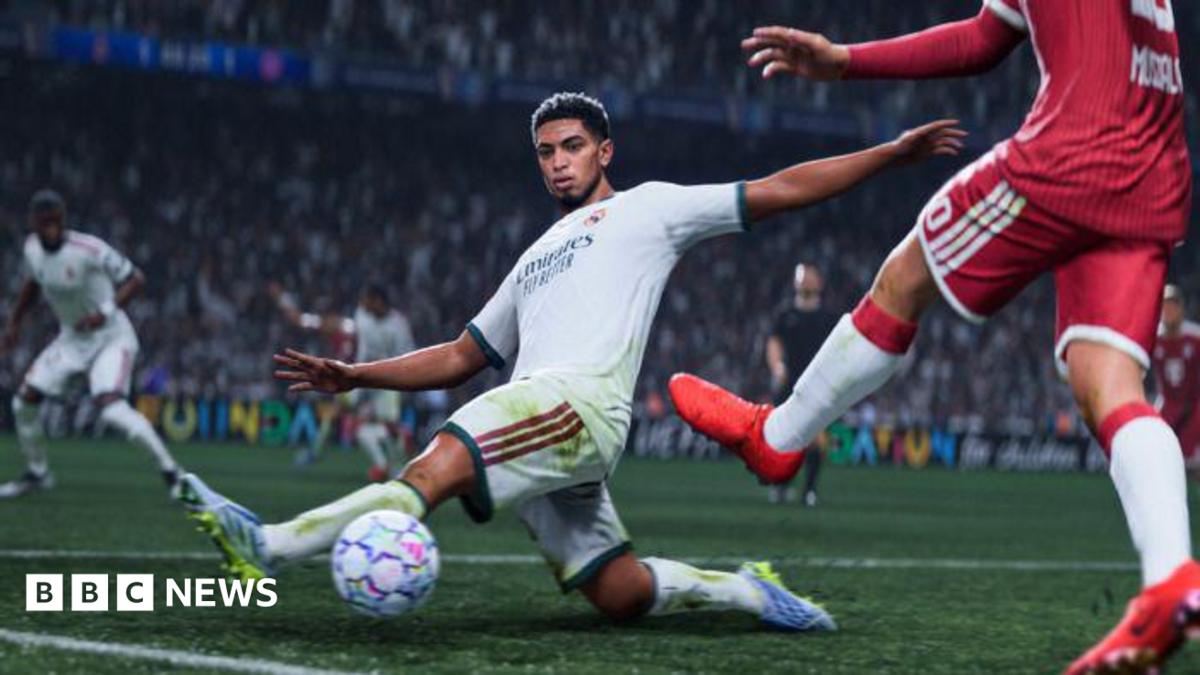
The sale of gaming giant Electronic Arts (EA) for $55bn (£41bn) to a group of buyers including Saudi Arabia's Public Investment Fund (PIF) has been finalised. The American company, known for best-selling games such as EA FC (formerly Fifa), The Sims, and Mass Effect, is now going private, meaning its shares will no longer be traded on a stock exchange. The investors include Affinity Partners, led by President Donald Trump's son-in-law, Jared Kushner, because every deal needs a touch of family drama.
This is thought to be the largest leveraged buyout in history, which is a fancy way of saying they borrowed a lot of money to buy it. PIF has already put $36bn into the deal, but it needs to borrow $20bn from investment bankers JPMorgan to close it, with EA taking on the debt. How this debt will affect EA has been a source of much speculation, with Bloomberg's Jason Schreier predicting "mass layoffs, more aggressive monetization, and other big cost-cutting measures." Christopher Dring of Game Business noted that private equity firms are "typically aggressive in their management of companies," so expect a very hands-on approach.
The deal has caused concern among fans of EA's games, particularly those like The Sims that champion inclusivity and LGBT+ relationships. In Saudi Arabia, consensual same-sex sexual conduct can be punishable by death or flogging under interpretations of Sharia law, which has led to protests from advocacy group Players Alliance HQ. They worry that creative decisions could be influenced, leading to themes like free speech, gender, and LGBTQI+ being "reduced or fully censored."
PIF, a £514bn pot of money used by the Saudi government to invest in ventures like Newcastle United, now owns a significant chunk of the gaming world. The deal is the second-biggest acquisition in gaming history, after Microsoft's $69bn purchase of Activision Blizzard. EA's CEO Andrew Wilson, who will retain his position, said the firm plans to "create transformative experiences to inspire generations to come," which is a bold claim for a company that might be about to be squeezed for cash.
George Osborn, author of "Power Play: Video Games, Politics and the Battle for Global Influence," said the deal is an "appealing" financial opportunity for PIF, given EA's longevity and "seemingly evergreen" live-service games. Last year EA generated $7.5bn in revenue, and Battlefield 6 broke records with over 7 million copies sold in its first three days (though layoffs still followed, because that's the industry). But Osborn stressed that the value is "not purely economic" - it's about "owning a soft power asset that is quietly entrenched in the sporting community." From Newcastle United to the Esports World Cup, Saudi Arabia has been investing heavily in sports, and this deal extends that reach to billions of gamers. Critics call it sportswashing, but the Saudi government denies it. Osborn says, "What is clear is that a state seeking to shape perceptions now owns an asset with proven reach to billions of people. How it uses it in the years to come is something we should watch closely."
PIF is controlled by Crown Prince Mohammed bin Salman, whose government has been accused of human rights violations, including a UN report that found it responsible for the death of journalist Jamal Khashoggi. But hey, at least the virtual dollhouse is now part of the family.
The Good Times
News in your inbox.
One sardonic roundup, delivered on your schedule. Free. Unsubscribe whenever your tolerance for wit runs out.
Already subscribed but we never reach your inbox? Check your spam folder and hit 'Not spam' (or 'Remove from spam') to bust us out of junk-mail purgatory. You'll be helping everyone else too.
Don't open any of our emails for a month and you'll be automatically removed from the mailing list.
Rewrite Article
Select parts to regenerate with a fresh AI pass. Translations will be updated automatically.
Generate AI Image
Creates a sardonic version of the article image using OpenAI.