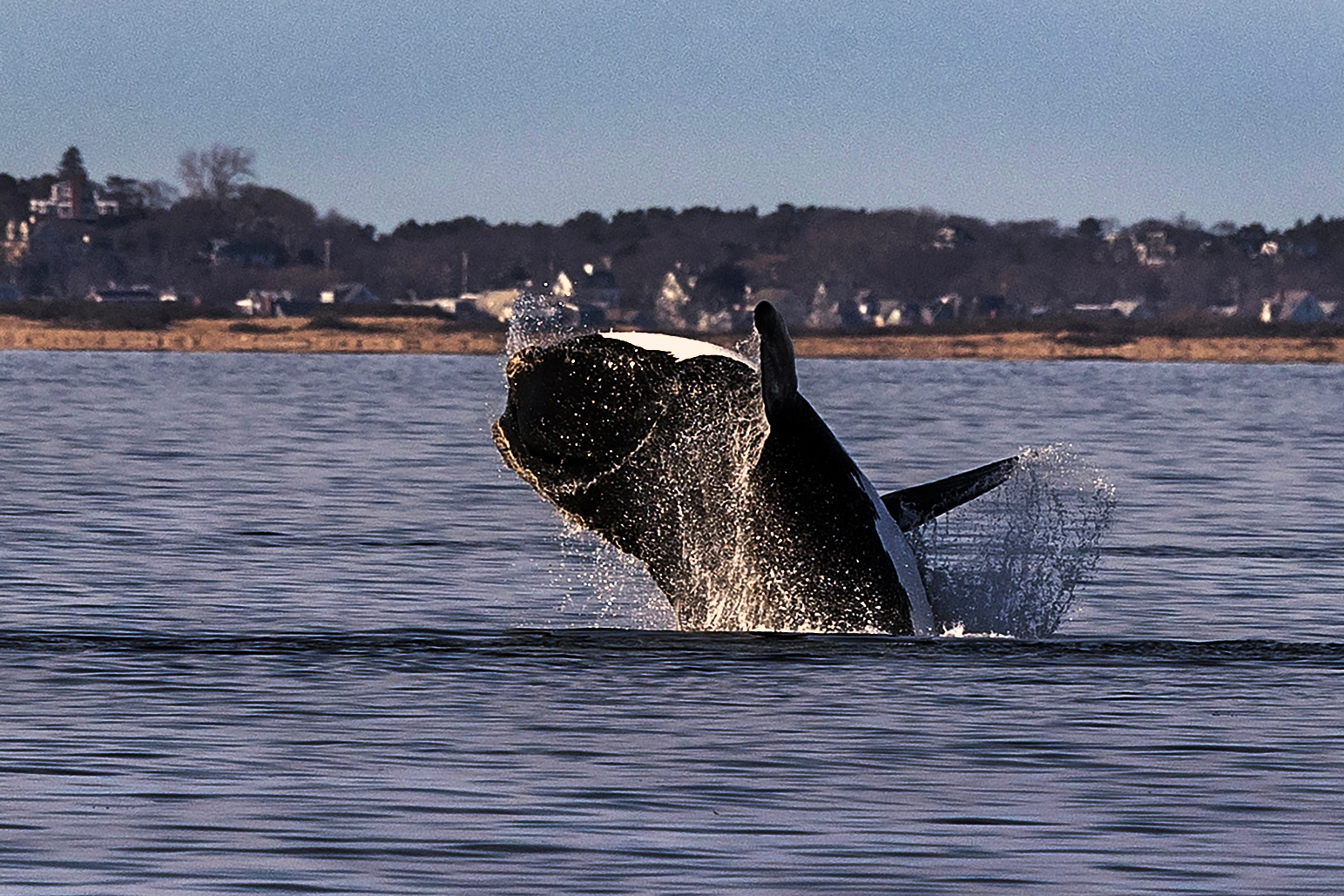
Right Whales Have a Baby Boom, But Let's Not Throw a Party Just Yet
North Atlantic right whales had their best calving season since 2009 with 23 newborns, but one good year doesn't undo decades of ship strikes, fishing gear, and climate chaos.
North Atlantic right whales, once hunted to the brink because they were literally called the "right" whales to kill (conveniently floating and staying close to shore - rude of them), are still trying to recover. This year, however, brought a rare bit of good news: 23 new calves were born, the most since 2009. Amy Warren, scientific program officer at the New England Aquarium, manages the North Atlantic Right Whale Identification Catalog, which tracks over 800 individuals dating back to 1935. Each whale is identified by white patches on their heads called callosities - collections of whale lice that, despite the ick factor, are basically just enjoying a spa day on dead skin. The lice are white, the whale's skin is black, and the contrast creates unique patterns, like a crustacean-assisted ID card.
But here's the catch: the population is still under 400, and these whales face new threats from humans. After whaling was banned in 1932, their numbers slowly climbed from an estimated 20 to 50 individuals. Then technology improved: stronger fishing gear, bigger and faster boats, and climate change shifting their food supply. As their prey moves, whales wander into unprotected areas. "We need years and years of these very high calf counts, and years and years with no whales dying from human-caused injuries," Warren says, adding that two juveniles died from human causes just this January. Meanwhile, birth rates have been erratic - a year with zero calves, another with only five. This year's 23 is the fourth-highest on record, but as Warren puts it, "One good year isn't going to save a species."
Warren, who has loved whales since childhood, notes that researchers know each whale individually - their names, parents, grandparents, and even personalities. Some whales always show up in the same spot; others are nomads. "To see that individuality is really interesting, and it's relatable," she says. But the takeaway is clear: don't pop the champagne. The whales need sustained efforts - slower ships, less fishing gear, and a lot more good years. As Warren says, "Don't stop, don't fall back thinking we fixed everything. It's not that simple."
The Good Times
News in your inbox.
One sardonic roundup, delivered on your schedule. Free. Unsubscribe whenever your tolerance for wit runs out.
Already subscribed but we never reach your inbox? Check your spam folder and hit 'Not spam' (or 'Remove from spam') to bust us out of junk-mail purgatory. You'll be helping everyone else too.
Don't open any of our emails for a month and you'll be automatically removed from the mailing list.
Rewrite Article
Select parts to regenerate with a fresh AI pass. Translations will be updated automatically.
Generate AI Image
Creates a sardonic version of the article image using OpenAI.