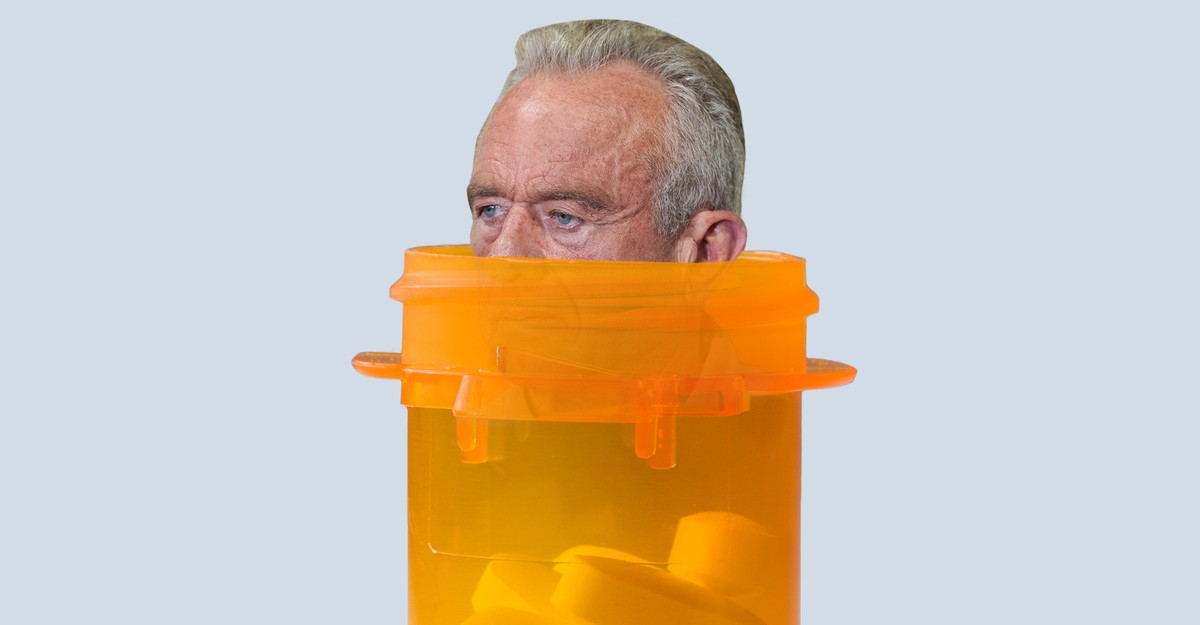
Robert F. Kennedy Jr., the nation's Health and Human Services secretary, has a new hobby: convincing Americans that their antidepressants are basically poison. Without credible evidence, he's suggested SSRIs might cause school shootings and announced plans to discourage prescribing and encourage de-prescribing. Because nothing says 'evidence-based policy' like vibes.
About 17 percent of American adults take an antidepressant, and many of them - including actual patients of actual psychiatrists - are not thrilled. One patient who tried quitting Zoloft multiple times only to have depression return told his doctor he couldn't fathom why the nation's health secretary would want to yank his meds.
To be fair, Kennedy has a point about overprescribing. Some people get antidepressants they don't need or stay on them too long. An independent task force recently suggested more attention to tapering. But when Kennedy talks de-prescribing, specifics are scarce. He says he's not telling anyone to stop, just to 'make the right decision' with their doctor - which is about as helpful as saying 'get better.'
Antidepressants work well for moderate to severe depression - you know, the kind where you can't get out of bed or think life isn't worth living. For everyday distress like a soul-sucking job or grief, they're about as useful as a chocolate teapot. Yet some providers prescribe them anyway, leading to unnecessary side effects and confusion about efficacy.
A 2010 meta-analysis found the most severely depressed get the biggest benefit; for mild depression, the drug-placebo difference is near zero. No national data prove rampant overuse, though. A 2014 study found 40 percent of antidepressant prescriptions lacked a documented psychiatric diagnosis, but SSRIs are legitimately used for pain, smoking cessation, and insomnia. And the 17 percent figure aligns with actual psychiatric illness burden: 7 percent with major depressive disorder, 4 percent with PTSD, etc.
Side effects like decreased libido and weight gain occur in a small proportion of users and are often transient. Kennedy's crusade risks a harmful overreaction to a limited problem while ignoring a bigger crisis: undertreatment. The 2023 National Survey on Drug Use and Health found roughly one in three adults with major depression received no treatment. Barriers include not knowing where to go, thinking they can manage, or cost - and stigma, which Kennedy's rhetoric only worsens.
Depression is serious: about half of those with an episode go on to chronic illness, and lifetime suicide risk is 2 to 9 percent. Many patients need SSRIs long-term, like antihypertensives for high blood pressure. Kennedy has likened antidepressant dependence to heroin addiction, but antidepressants don't get you high or require escalating doses. Withdrawal symptoms, per the largest study, tend to be mild and brief.
Kennedy's preference for psychotherapy, exercise, and 'real food' over medication is fine in theory, but this author has seen triathletes on strict diets become suicidally depressed. Taking an antidepressant after trying lifestyle changes isn't a character flaw - it's recognizing that disease has a biological basis. Sometimes you need the damn pill.
The Good Times
News in your inbox.
One sardonic roundup, delivered on your schedule. Free. Unsubscribe whenever your tolerance for wit runs out.
Already subscribed but we never reach your inbox? Check your spam folder and hit 'Not spam' (or 'Remove from spam') to bust us out of junk-mail purgatory. You'll be helping everyone else too.
Don't open any of our emails for a month and you'll be automatically removed from the mailing list.
Rewrite Article
Select parts to regenerate with a fresh AI pass. Translations will be updated automatically.
Generate AI Image
Creates a sardonic version of the article image using OpenAI.