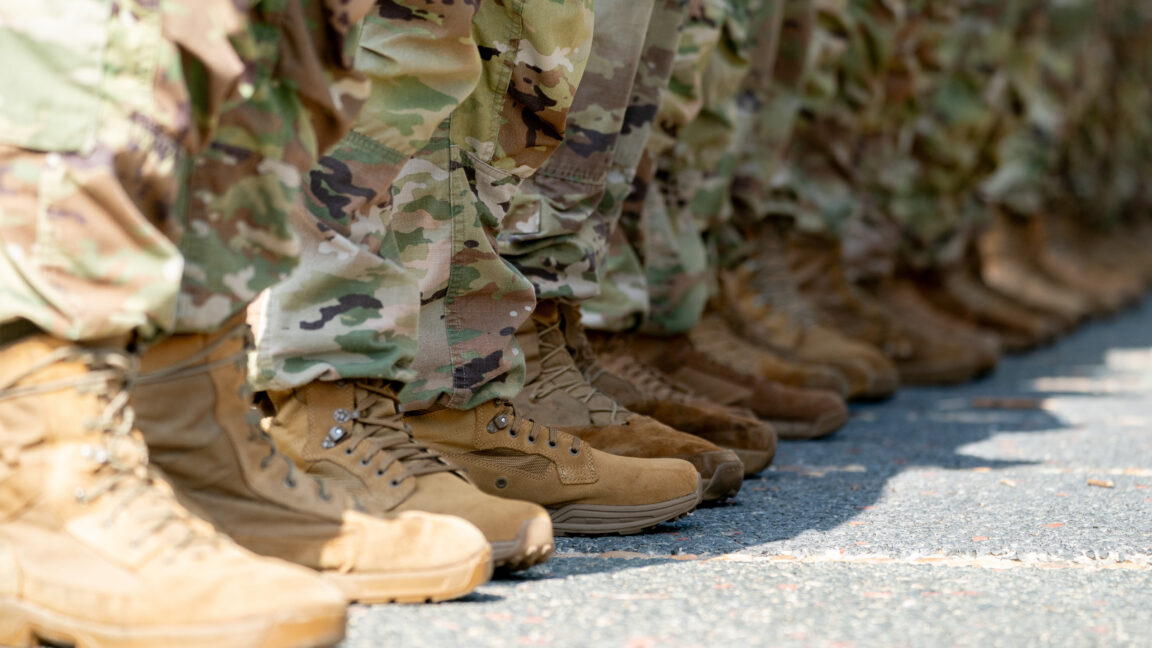
Pentagon Plans to Test Every Soldier Over 30 for Low T; Doctors Say Not So Fast
Defense Secretary Hegseth wants mandatory testosterone screening for troops over 30, but endocrinologists warn of diagnostic pitfalls, questionable benefits, and real risks - including the possibility that many soldiers don't need it.
Defense Secretary Pete Hegseth announced Wednesday that all active duty and reserve personnel aged 30 and older will now be required to undergo mandatory screening for testosterone deficiency during yearly health assessments. Those under 30 can also request screening. In a social media video, Hegseth framed the initiative as a way to “optimize your performance, your resilience, and your long-term health,” insisting it’s not about “artificial enhancement” and that troops can decline treatment.
But endocrinologists are not exactly doing push-ups over this plan. The Endocrine Society quickly issued a statement noting that “there is insufficient evidence to support a general recommendation to perform population-level screening for hypogonadism in asymptomatic men.” Professor Bradley Anawalt, chief of medicine at the University of Washington Medical Center, summed it up more colorfully: “This is a great big fat ‘Oh, no.’ We’re turning the clock back on rational healthcare.”
Why the skepticism? For starters, true hypogonadism - caused by conditions like Klinefelter syndrome or pituitary tumors - affects maybe 1 percent of men. But many other factors can temporarily lower testosterone: sleep deprivation, stress, obesity, medications, and aging. Testing is also a minefield. Not all labs use CDC-certified assays, and reference ranges vary wildly - Anawalt recalled a patient diagnosed with low T based on a normal result of 489 ng/dL because the lab considered 700 ng/dL the minimum. Hormone levels fluctuate, testing must be done fasting in the morning, and most standard tests measure total testosterone, not the more relevant free testosterone. Overweight men (BMI 27 or higher) often have low total T but normal free T.
Even if a correct diagnosis is made, treatment isn’t always warranted. First-line therapy for obesity-related low T is weight loss. For someone with sleep deprivation, it’s rest. And for a 50-year-old soldier with borderline low T? “Most of these men are not going to have any substantial benefit,” Anawalt said. TRT does carry risks: it shuts down sperm production (potentially thwarting family plans), can cause high red blood cell counts, acne, enlarged prostate, sleep apnea, and a miserable withdrawal syndrome when stopped. The TRAVERSE trial found TRT didn’t raise cardiovascular risk in high-risk men but did signal an increased risk of blood clots in the lungs.
As for Hegseth’s talk of “optimization,” a 1996 trial found that six times the normal TRT dose improved strength - but the authors themselves warned that such use has “potentially serious adverse effects.” The Endocrine Society is blunt: “Boosting testosterone is NOT approved by the FDA to help improve your strength, athletic performance, physical appearance, or to treat or prevent problems associated with aging.”
So while the Pentagon may be aiming for a High-T military, the medical community is suggesting a high degree of caution.
The Good Times
News in your inbox.
One sardonic roundup, delivered on your schedule. Free. Unsubscribe whenever your tolerance for wit runs out.
Already subscribed but we never reach your inbox? Check your spam folder and hit 'Not spam' (or 'Remove from spam') to bust us out of junk-mail purgatory. You'll be helping everyone else too.
Don't open any of our emails for a month and you'll be automatically removed from the mailing list.
Rewrite Article
Select parts to regenerate with a fresh AI pass. Translations will be updated automatically.
Generate AI Image
Creates a sardonic version of the article image using OpenAI.