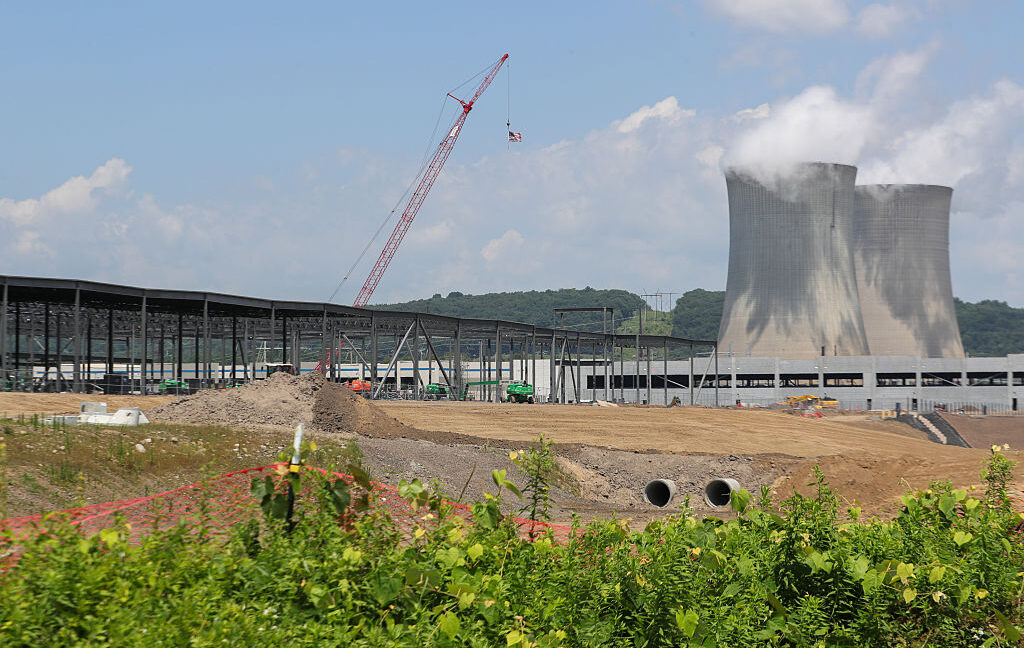
NRC Drops 'As Low As Reasonably Achievable' Standard, Replaces It With Basically the Same Thing
NRC proposes to replace 'as low as reasonably achievable' with a new standard that achieves the same thing, saving the nuclear industry $9.5 million a year and disappointing anyone who hoped for actual deregulation.
In a move that will neither excite nor surprise anyone who has ever watched government bureaucracy in action, the Nuclear Regulatory Commission (NRC) has proposed a new rule that changes how it regulates radiation exposure - by keeping the science entirely intact and swapping out some terminology that was apparently causing confusion.
The proposed rule, dropped just before the July Fourth holiday like a hot potato no one wanted to deal with, keeps the linear non-threshold (LNT) model, which holds that any amount of radiation can cause harm, and simply replaces the old standard of ALARA (as low as reasonably achievable) with a "graded approach" that sounds suspiciously similar. The NRC estimates this will save the industry a whopping $9.5 million a year - or about $150,000 per nuclear plant, which is roughly the cost of replacing a few leaky pipes.
This comes after years of complaints from pro-nuclear advocates that ALARA was too vague and subjective, leading to endless cycles of dose reduction that ignored cost. The NRC acknowledged the problem, noting that "the reasonableness test... has gradually become an expectation that if a means of dose reduction is available, regardless of its reasonableness... it should be applied without further consideration." So they're ditching the word "reasonable" in favor of "optimization," which they also define as a form of ALARA. Clear as mud.
Despite an executive order from the Trump administration calling LNT "irrational" and lacking "sound scientific basis," the NRC decided to stick with it, stating that "no consensus-supported, regulation-ready alternative model to the LNT model exists at this time." Translation: We checked, and hormesis - the idea that a little radiation is good for you - still doesn't hold up. Sorry, radioactive smoothie enthusiasts.
The new rules also update monitoring equipment requirements, because technology has advanced since the last update. So organizations currently in compliance will stay that way without lifting a finger, and those hoping for a nuclear renaissance will have to look elsewhere for their miracle cure. The NRC has essentially said, "We hear you, but we're going to keep doing what we're doing, just with different labels."
The Good Times
News in your inbox.
One sardonic roundup, delivered on your schedule. Free. Unsubscribe whenever your tolerance for wit runs out.
Already subscribed but we never reach your inbox? Check your spam folder and hit 'Not spam' (or 'Remove from spam') to bust us out of junk-mail purgatory. You'll be helping everyone else too.
Don't open any of our emails for a month and you'll be automatically removed from the mailing list.
Rewrite Article
Select parts to regenerate with a fresh AI pass. Translations will be updated automatically.
Generate AI Image
Creates a sardonic version of the article image using OpenAI.