Nigeria's Boat Disaster Playbook: Officials Promise Change, River Says LOL
Nigeria's rivers keep claiming lives as officials promise life jackets and safety rules that nobody enforces, leaving families to grieve and wonder if anyone's actually listening.
The script is getting a bit stale in Nigeria: boat sinks, officials cluck about regulations, nothing happens, another boat sinks. This week's installment features a capsized wooden canoe in Jigawa state, with 40 people aboard - mostly female farmers and laborers. Twenty-three have been rescued, but nine bodies have been pulled from the river so far. Last month, 12 died on the River Benue, including a pregnant woman and six children. Earlier this year, 14 perished in Gumbi, Kebbi state, returning from a wedding. Total for 2025 so far: over 55 dead, with many bodies still missing.
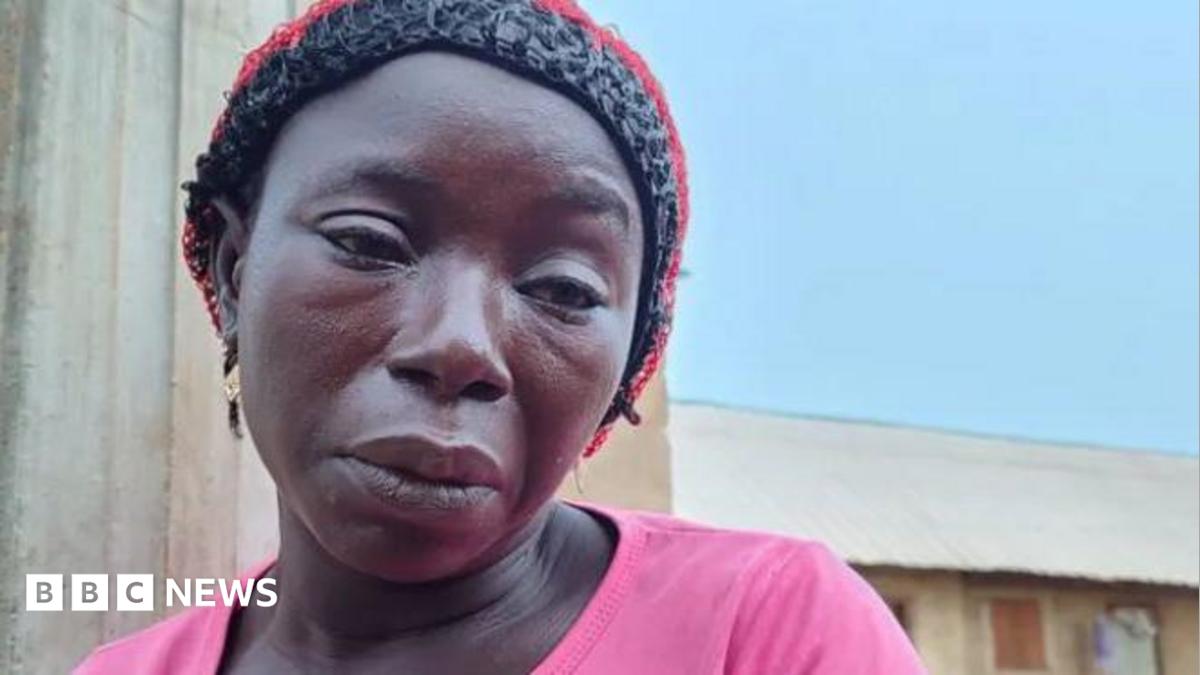
For rural Nigerians, rivers are the practical - and often only - way to travel, given the lack of bridges and decent roads. So they climb into rickety wooden boats that have all the structural integrity of a wet paper bag. Isiyaka Bello lost his wife last year when her boat went down in Kebbi. 'It seems like just yesterday,' he told the BBC. 'She left behind four children, and I am still struggling to adjust to raising them on my own. Whenever I pass by a large body of water, all I think about is her.'
The reasons for the carnage are painfully predictable: no life jackets, no enforcement, no training, and boats that look like they were built by someone who hates boats. Mallam Sala Altine, the guy officially responsible for keeping people safe on Shiroro Lake in Niger state, says there's a critical shortage of life jackets. 'Our boats usually carry well over 100 passengers. But most of the time, we can only provide life jackets for 10 people,' he explains. 'We want to make it a rule that everyone who boards a boat must wear a life jacket. But we can't enforce it because we don't have any to give them.' The government promised more after a 13-death accident, but - shock - 'what we eventually received was very little.'
As one local observer puts it: 'These are not acts of fate. They are the predictable consequences of systemic negligence.' But Ibrahim Husseini, a director at Niger state's emergency agency, insists the government does provide life jackets - people just don't want to wear them. 'We have people who are born and raised in riverine communities who take it for granted that this is the life they are used to,' he says. 'Sometimes it is difficult to force them to wear life jackets.' Meanwhile, women, who often can't swim, are the ones attending weddings and markets, making them particularly vulnerable.
The National Inland Waterways Authority (Niwa) declared life jackets obligatory last year after a 32-death accident. They also said boats can only pick up passengers at registered terminals. These rules were already in the Water Transport Code, passed in January 2023. They are routinely ignored. 'Any regulation is as good as its implementation,' notes Timothy Iwuagwu, president of the Institute of Safety Professionals of Nigeria. He points out that most boat operators aren't trained or licensed, boats are overloaded, and life jackets - when available - are often of poor quality and worn incorrectly.
Then there's the obstacle course beneath the water: tree stumps from years of logging. At low tide they're visible; at high tide, they're boat-killing ninjas. Husseini blames poor dredging but says removing stumps is Niwa's job, not his. The boats themselves are ancient wooden vessels that look like they've been on the water since before Nigeria was a country. Minister of Marine and Blue Economy Adegboyega Oyetola admitted last year: 'The time has come for a decisive break from outdated practices. Wooden boats have served their time, but they cannot be the future of water transport in Nigeria.' He appealed to state governments to push for safer fiber and aluminum boats.
But there is a glimmer of hope - or at least a case study in how not to fail. Lagos, the sprawling coastal city where a third of the area is water, used to have frequent boat accidents, with 92 deaths between January 2018 and October 2023. Then the state government did something radical: they provided new boats and life jackets, hired water guards at every jetty, trained and licensed operators, and set up a rapid rescue system. Result: only one death in 2024, six in 2025, and zero so far this year. Abdulbaq Balogun of Lagos Ferry Services says the water guards now alert control rooms at the first sign of trouble, and rescue boats deploy 'in record time.' Many passengers now demand life jackets before boarding - a concept that seems alien elsewhere.
Replicating Lagos nationwide will take time, money, and the political will to do more than hold press conferences after each disaster. Singer Aminu Bagwai survived a 2006 river tragedy that killed 36 people, including a bride on her way to her husband's house. He wrote a hit song about it, but 18 years later, he's still watching the same tragedy unfold. 'I still think about it every day, and it is sad I still see boat accidents happen leading to loss of lives. My prayer at the time was that ours would be the last one.' Spoiler: it wasn't.
The Good Times
News in your inbox.
One sardonic roundup, delivered on your schedule. Free. Unsubscribe whenever your tolerance for wit runs out.
Already subscribed but we never reach your inbox? Check your spam folder and hit 'Not spam' (or 'Remove from spam') to bust us out of junk-mail purgatory. You'll be helping everyone else too.
Don't open any of our emails for a month and you'll be automatically removed from the mailing list.
Rewrite Article
Select parts to regenerate with a fresh AI pass. Translations will be updated automatically.
Generate AI Image
Creates a sardonic version of the article image using OpenAI.