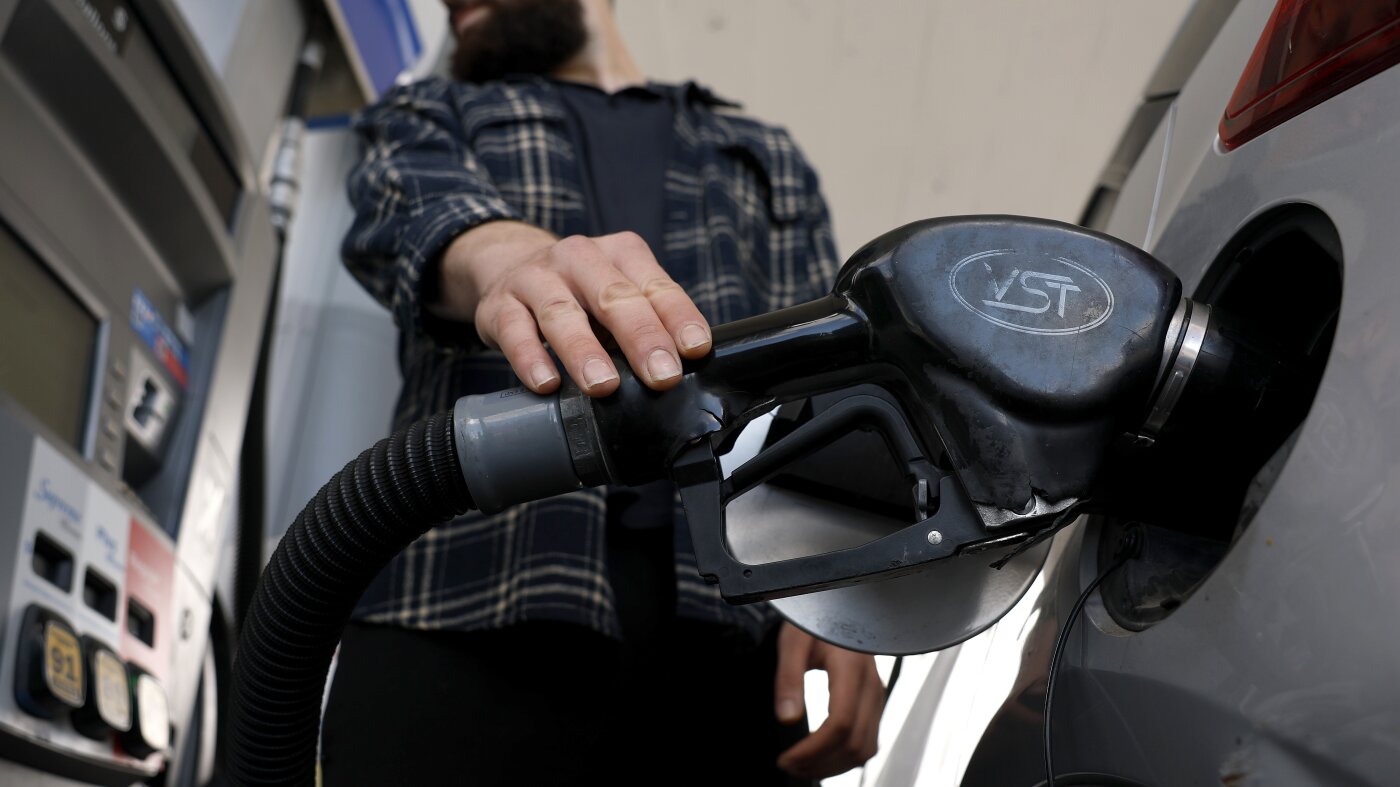
National Average Gas Hits $4.55, Americans Respond by Driving More
Gas is $4.55 a gallon, 45 million Americans are driving anyway, and California's governor is feuding with Chevron while EV savings calculators get a workout.
The national average for a gallon of gasoline has hit $4.55, according to AAA - a four-year high that arrives just in time for one of the busiest travel weekends of the year. AAA estimates a record 45 million Americans will hit the road anyway, because apparently nothing says 'financial pain' like a holiday tradition.
In California, where gas has topped $6 a gallon, Governor Gavin Newsom is engaged in a very public spat with Chevron, telling residents to avoid its stations. Chevron, which moved its headquarters out of California in 2024 after complaining about state regulations, has retaliated with placards blaming state policies for the high prices. Newsom's office counters that unbranded gas comes from the same refineries and meets the same standards - just without the fancy logo.
So what can drivers do? Experts suggest driving efficiently: smooth acceleration, soft braking, and slowing down. Underinflated tires, heavy cargo, and roof racks also hurt fuel economy. Consumer Reports' deputy auto editor Jonathan Linkov notes that if premium gas is only 'recommended' rather than 'required,' you can safely use regular - unless you're driving an esoteric supercar, in which case you probably aren't worrying about gas prices.
High prices have many pondering electric vehicles, but the sales data is mixed. New EV sales remain depressed after the abrupt end of a $7,500 federal tax credit last fall. Used EV sales showed some acceleration in March, per CarGurus and Cox Automotive, while iSeeCars.com saw no appreciable shift. Kevin Roberts of CarGurus says online shopping interest tends to precede actual sales, especially for a big purchase like a vehicle.
Janelle London of the nonprofit Coltura estimates that an average driver doing 15,000 miles a year saves $1,800 annually by switching to electric; a high-mileage driver doing 25,000 miles saves about $3,000. Yale Climate Connections mapped the cost of charging versus gasoline: In North Dakota, driving an EV feels like paying less than a dollar a gallon; in California, it's more like $2.70. The extremely lazy calculation? Multiply your home electricity cost per kWh by 10 - at the national average of $0.17/kWh, that's like $1.70 a gallon.
Transit ridership has not spiked, despite high gas prices. Transit app data shows ridership steady or slightly down for the week ending April 4, likely due to Easter. Stephen Miller of Transit notes that people only shift significantly to public transit if gas prices stay high for a long time.
Jerick White of Houston bought his first e-bike in March, citing unbearable car costs. He works from home and lives close to errands, making biking reliable. 'I feel like a kid again,' he says, plus he avoids traffic.
Finally, Julie and Vince Rossi sold their house to live full-time in a 22,000-pound RV and are now on a cross-country trip from Arizona to Virginia. Diesel costs even more than gasoline and has risen faster since the war began, so they've doubled their fuel budget and cut spending on museums and amusement parks. 'If we want to continue this lifestyle, we either look for the lowest prices or we need to cut spending somewhere else,' Julie says. Priorities.
The Good Times
News in your inbox.
One sardonic roundup, delivered on your schedule. Free. Unsubscribe whenever your tolerance for wit runs out.
Already subscribed but we never reach your inbox? Check your spam folder and hit 'Not spam' (or 'Remove from spam') to bust us out of junk-mail purgatory. You'll be helping everyone else too.
Don't open any of our emails for a month and you'll be automatically removed from the mailing list.
Rewrite Article
Select parts to regenerate with a fresh AI pass. Translations will be updated automatically.
Generate AI Image
Creates a sardonic version of the article image using OpenAI.