Mangroves, the Unsung Heroes of Coastal Defense, Are Making a Surprising Comeback (Because Humans Finally Stopped Messing With Them)
After decades of being cleared for fish farms and condos, mangrove forests are making a comeback - thanks to better protection, sharper satellites, and the 2004 tsunami serving as a very dramatic teachable moment.
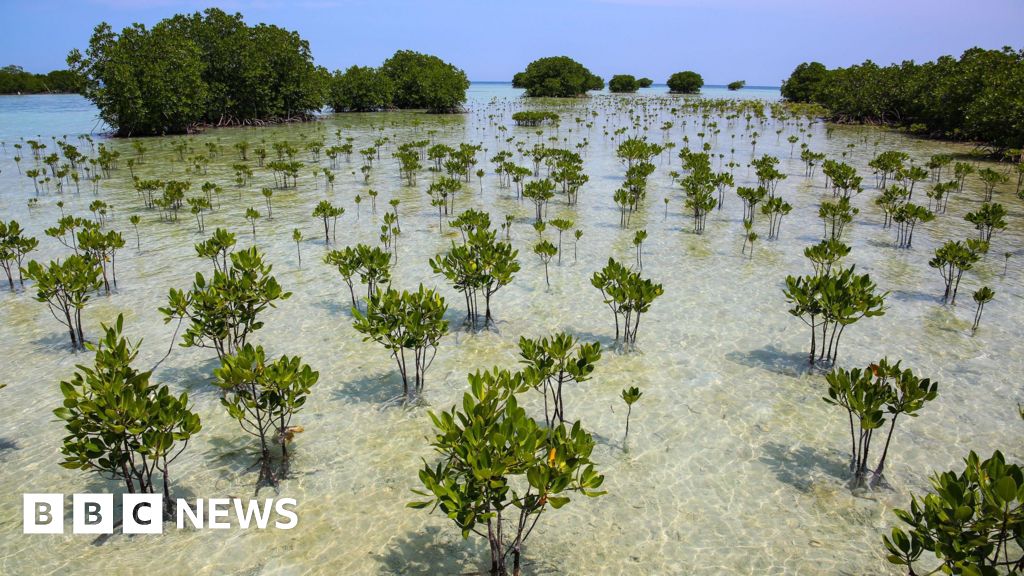
For decades, the world's coastal mangrove forests were in a state of emergency, getting cleared en masse for fish farms and beachfront properties. But a new study reveals that since 2010, these swampy trees have been staging an unexpected comeback - gaining more territory than they lose, largely because humans have stopped chopping them down as aggressively and have started paying attention to their obvious benefits.
The 2004 Indian Ocean tsunami, it turns out, was a public relations turning point for mangroves. Islands protected by these tangled-root ecosystems survived the disaster far better than those without, convincing some governments and communities to ease up on the deforestation. Indonesia, one of the most mangrove-dense nations, saw felling for fish farming slow significantly after that catastrophe. Myanmar had a similar awakening after Cyclone Nargis in 2008, followed by a national logging ban in 2016.
Mangroves are the environmental equivalent of a Swiss Army knife: they store up to five times more carbon dioxide than land-based forests, slow down waves to protect coastal communities from storm surges and tsunamis, and provide a nursery for fish and marine life that would otherwise be lunch for larger predators. That they were being bulldozed for shrimp farms was always a bit like trading a functioning fire extinguisher for a novelty ashtray.
From the 1980s to 2010, over 12,000 square kilometers of mangroves - an area roughly the size of Jamaica - were cleared across Asia, Africa, and the Americas. The new study, using sharper satellite imagery from Landsat, finds that total net losses since the 1980s have now dropped to around 849 square kilometers. That's still a lot of trees, but it's a massive improvement from losing an entire Jamaica.
Lead author Dr. Zhen Zhang from Tulane University credits natural regeneration as the key factor: once people stop cutting mangroves down, the forests tend to bounce back on their own. Technology also helped - the higher-resolution satellite data captured new tree growth that earlier studies missed, making the recovery look even more impressive.
But don't pop the champagne just yet. Some of the new mangrove growth in countries like Brazil has been fueled by nutrient runoff from deforestation and mining upstream - a classic case of 'good news for mangroves, bad news for the watershed.' As co-author Dr. Pete Bunting from Aberystwyth University put it: "This is good news for mangroves… but it is only really good news if it is not a complete mess upstream."
And not everywhere is celebrating. West and Central Africa remain hotspots of destruction, with the Niger Delta singled out as "the poster child for mangrove pollution impact," thanks to oil pipelines slicing through the forest like a bad haircut. Tropical cyclones also continue to wipe out swaths from Australia to the Caribbean.
Still, the overall trend is hopeful: since the 1980s, the proportion of closed-canopy mangroves - the richest, most carbon-dense type - has grown by nearly 20%. "We are moving in the right direction because you can see a very clear trend of decreased loss rate," Zhang told the BBC. Which, in the world of climate news, is about as close to a standing ovation as you're going to get.
The Good Times
News in your inbox.
One sardonic roundup, delivered on your schedule. Free. Unsubscribe whenever your tolerance for wit runs out.
Already subscribed but we never reach your inbox? Check your spam folder and hit 'Not spam' (or 'Remove from spam') to bust us out of junk-mail purgatory. You'll be helping everyone else too.
Don't open any of our emails for a month and you'll be automatically removed from the mailing list.
Rewrite Article
Select parts to regenerate with a fresh AI pass. Translations will be updated automatically.
Generate AI Image
Creates a sardonic version of the article image using OpenAI.