
For roughly 27 years living in Trenton, New Jersey, Kim Booker didn't think much about lead. Then community meetings by the East Trenton Collaborative taught her that the city's industrial past left lead-laden pipes and paint everywhere. Her three-bedroom home was old, the paint was chipping, and her late grandmother and sister both had Alzheimer's - which researchers have linked to lead exposure. She wanted to know if she was being poisoned.
With few free, comprehensive testing options available, Booker connected with Sean Stratton, a doctoral student in public health at Rutgers University, in late 2023. Stratton was sampling lead for his dissertation. He tested Booker's paint, yard, and water. The results: lead levels in her yard exceeded 450 parts per million - above the EPA's hazard level - and she had low but detectable lead in her bloodstream. Without Stratton, she wouldn't have known.
"The city shouldn't rely on a student to do this work," Stratton said. Over two years, he's tested soil, water, or paint in more than 140 Trenton homes, assembling the clearest picture yet of a crisis permeating the state. Last July, the EPA added East Trenton to the Superfund National Priorities List after finding widespread soil contamination. Despite that, no comprehensive door-to-door testing has followed. Residents rely on Stratton.
But Stratton defended his dissertation in February and graduates in May, leaving uncertain who - if anyone - will continue. Community groups worry the neighborhood could lose its only accessible source of household testing. "We don't want to stop working together," said Shereyl Snider of the East Trenton Collaborative. "I don't see it ending, but I don't know how we can continue unless we have big supporters."
New Jersey has some of the highest legacy lead burdens in the country, with an estimated 350,000 lead service lines - top 10 nationally. The state has received over $100 million in federal funds for pipe replacements, but that doesn't address legacy soil contamination, interior lead paint, or proactive household screening. The testing system is a patchwork: blood screening through health departments, water sampling via Trenton Water Works, and occasional EPA assessments - rarely functioning as a coherent whole. The state health department inspects home paint surfaces only after a child is poisoned. Children must test for lead at ages 1 and 2; older kids and adults pay their own way. Trenton Water Works provides water test kits for pre-1986 homes, but residents coordinate with private labs and pay $20 to $100. No agency reliably tests soil unless the EPA steps in. Results can take weeks. One resident, Amber DeLoney-Stewart, never got her home inspection results from the city even after blood tests showed her child was lead-burdened.
"It just doesn't ever seem to be enough," Stratton said. "It's very siloed."
Stratton's work reflects a broader pattern: communities turn to university researchers when government monitoring is limited. In Atlanta, a graduate student's soil-testing project at Emory University uncovered elevated lead levels, prompting a federal investigation. Last year, UCLA offered free soil testing to wildfire-affected residents. These efforts often depend on temporary research projects - ending when students graduate or grants run out.
Stratton's research has been supported by two grants, one from the National Institute of Environmental Health Sciences and another from the federal government. As the Trump administration cuts billions in grant money, Rutgers' Environmental and Occupational Health Sciences Institute saw some grants rescinded. Stratton's somehow made the cut, even with "environmental justice" in their titles. Brian Buckley, the institute's executive director, said further budget cuts mean fewer opportunities for future research. "We've been playing dodge the bullet," he said.
Stratton didn't originally set out to investigate lead. After graduating from Rutgers with a bachelor's in environmental science in 2015, he worked in environmental consulting. Then Flint, Michigan, switched its water supply, triggering a crisis that exposed over 140,000 people to dangerous lead levels. A friend asked Stratton to test his New Jersey water; results came back at more than 78 parts per billion - over five times the EPA's action level. Stratton began digging into public records and noticed his own town of East Brunswick wasn't testing the correct homes. He filed public records requests across the state. "I started arguing with the DEP," he said, referencing the New Jersey Department of Environmental Protection. "And then I decided I needed to go back to school, because I felt like I needed to get more credibility." A DEP spokesperson said East Brunswick's plan follows federal rules; when higher-risk homes aren't available, utilities can test lower-risk ones to meet sample sizes.
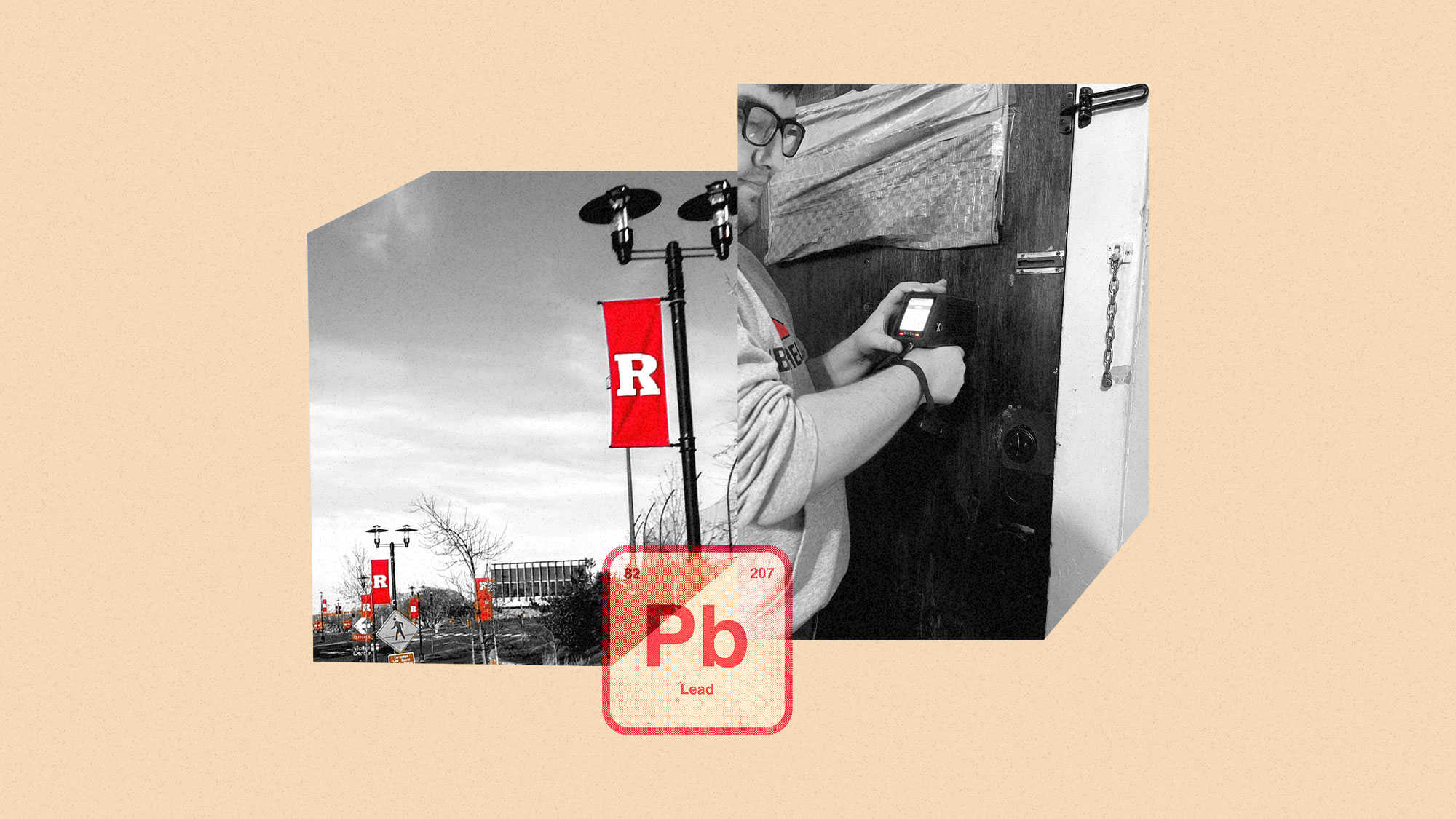
Spurred by what he learned, Stratton ran for State Assembly as the Green Party candidate in 2017. He lost, but returned to Rutgers for a master's in public health and then a doctorate. His doctoral project had three objectives: verify whether Trenton residents are exposed to lead, determine the source, and uncover how to reduce exposure. He used an X-ray fluorescence gun to scan walls, dropped off water vials for morning samples, and collected soil from yards. Then he drove back to the Rutgers lab, ran tests, and provided residents with full results, next steps, medical info, and his phone number.
In late February, Stratton presented his findings. Most homes had lead - in dust, paint, or pipes. All homes measured for floor dust had detectable lead, with 86 percent exceeding the EPA's action level. Homes without lead-based paint were still at risk from legacy lead dust outside, from gasoline, atmospheric aerosols, coal, and ceramics manufacturing. He found that running the tap for five minutes - a common recommendation - wasn't enough to flush lead. He suggested expanding guidelines to include reduction strategies like water filters.
A week later, he welcomed over 30 people to a Rutgers classroom for a presentation. He handed out 3D-printed urban maps of East Trenton to collaborators. Among attendees were Snider and Anthony Diaz of the Newark Water Coalition.
The EPA's Superfund listing means a cleanup is coming - slowly, and only for the soil, not pipes or paint. A remediation plan hasn't been developed. In a state dotted with Superfund sites that have languished for decades, residents know what a long wait looks like.