
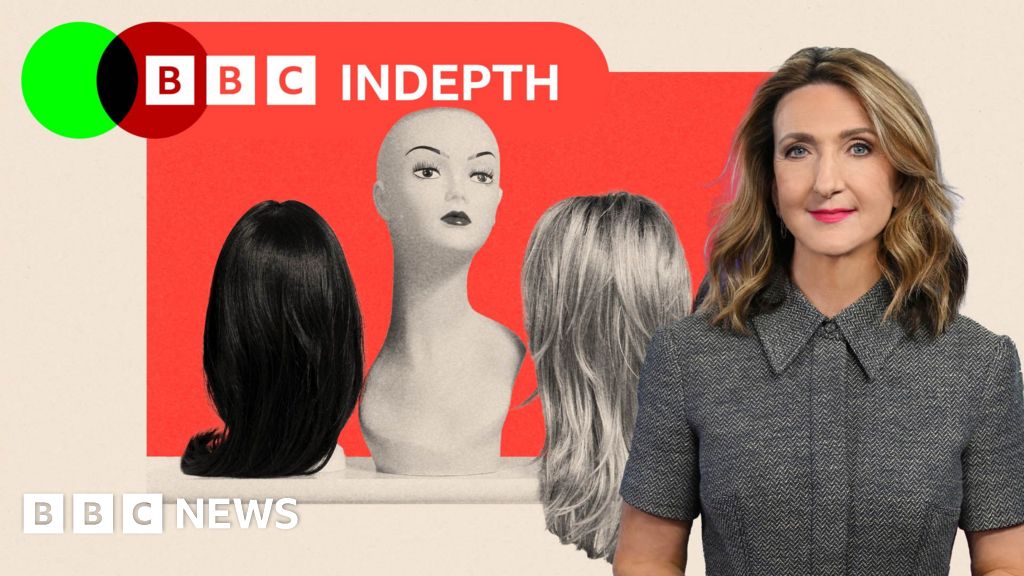
I recall the exact moment my hair decided to abandon ship. I was kneeling over a hotel bathtub, washing up before a friend's 40th birthday party, seventeen days after my first chemo session for breast cancer. I'd convinced myself I might be one of the lucky ones - then the water turned dark with strands of brown hair swirling around the plug hole. "Oh wow," I said, because honestly, I hadn't expected my scalp to stage such a dramatic exit.
During chemo, I'd worn a cold cap - the freezing helmet designed to preserve hair. It doesn't work for everyone. Losing my hair, it turns out, felt worse than losing a breast through mastectomy. Without it, I wasn't me. I had no idea until it started falling out that my hair was part of my identity.
Now, scientists in Japan believe they're a step closer to changing that reality for millions. Researchers led by Prof Takashi Tsuji call it a "major breakthrough": they've recreated the full cycle of hair growth in mice - hair grows, falls out, and grows back again naturally. While transplanted hair can already grow, recreating follicles that behave like natural hair - repeatedly shedding and regrowing over time - has been far trickier.
For women with hair loss from cancer, alopecia, or ageing, this hints at something once thought impossible: reversal. It affects millions globally; studies suggest around one-third of women will experience hair loss at some point. So why is the emotional impact still underestimated, and what does our reaction reveal about identity, control, and self-perception?
Across history, hair has rarely been just hair. In Ancient Egypt, pharaohs and noblewomen wore embellished braided wigs to show power. In the Middle Ages, women's long hair signified femininity and virtue. Men in the 17th century donned periwigs - long, voluminous curls - to denote wealth. By the 1920s, bobbed hair represented female independence and rebellion. "Hair shapes our identity," says psychiatrist Sylvia Karasu. "It is a biological, physiological and social marker of stages of our life."
Hair is also tied to dignity. Forcible removal has been used to strip identity: in German concentration camps, heads were shaved; after France's liberation in 1944, women accused of collaborating had their heads shaved publicly as punishment. Robert Capa's iconic photo The Shaved Woman of Chartres shows a young mother with a swastika painted on her forehead, walking through a jeering crowd.
If hair carries such weight, it's no surprise scientists have spent years studying why losing it feels devastating. For my podcast with the Future Dreams charity, And Then Came Breast Cancer, I interviewed women about their hair. Again and again, they said it wasn't about vanity. Nicky Elkington, a hairdresser, was determined not to lose hers during chemo: "It's not a vanity thing… it's your identity and I didn't want to look like I had cancer." The worst thing anyone could say was, "It's only hair, don't worry."
School nurse Natasha Anderson loved experimenting with her hair - "one week having a big afro, then hair extensions." It was her culture. Facing chemo, she asked her brother to shave it off. "I felt liberated… it was more painful and upsetting seeing it just falling out."
One of the hardest parts of cancer is the lack of control - over diagnosis, treatment, side effects. Shaving hair before it falls out becomes a way to reclaim some control. What surprised me was how often concern about hair loss was dismissed as superficial. "Why are you worried about your hair? You're alive." It's a legitimate question. But surviving illness and grieving part of your identity aren't mutually exclusive. As Karasu said, losing hair is a "marker of being a sick person."
Between 50% to 75% of my hair fell out during chemo. I remember sitting in a wig salon in Richmond as owner Amy Holt gently brushed my tangled, falling-out hair. I just cried. According to Diane Trusson, a medical researcher at the University of Nottingham, hair loss on top of a diagnosis is "a double whammy."
Getting a wig was important - I could carry on presenting a daily TV news programme without distracting viewers. Amy made one with real hair from women who donated or sold it. Seeing it felt surreal: the colour, cut, length matched my own. Emotions were volatile - tears one moment, elation the next because it let me resume my routine.
Yet scientists still don't fully understand hair loss biology. Claire Higgins, a tissue engineering professor at Imperial College London, says studies have struggled for funding, especially for women. "The women side is definitely under researched." Much work has focused on male hair loss, partly because men are more likely to get transplants, making scalp samples easier to access. "Men and women are often tackled the same because people assume it is the same, but I don't think it should be."
Large genetic studies identified genes linked to male pattern baldness - all done on men. Recent German research on female pattern hair loss expected overlap. "But there wasn't," Higgins says. Male and female hair loss may be caused by different things (though scientists aren't sure what those causes are). "We know cells are lost in the follicles but we don't know if they die or migrate away."
That's why Tsuji's work matters. His team identified a "novel third cell type" called a hair follicle regenerative-supporting cell. For a long time, scientists believed two key cell types were responsible: epithelial stem cells (creating the follicle) and dermal papilla cells (telling hair when to grow). But those cells can't grow hair in a lab - only when transplanted into skin. The new cell supports development, growth, and regeneration. "In simple terms," Tsuji says, "our study identified a [cell] which supports the development, growth and regeneration of hair follicles." He calls it "a major breakthrough" for treating alopecia.
Higgins, not involved with the study, agrees it's significant. Previous research only created partial follicles. "No one had managed to get fully cycling hair follicles like this before. That's a really big step." The follicles could repeatedly grow, shed, and regrow hair naturally.
The study was only on mice, mostly using cells from their whiskers. Translating to humans remains difficult because human hair growth is far more complex. Still, Tsuji is hopeful: "We believe we are now much closer than before."
Last year, I saw a social media post with a close-up of Catherine, Princess of Wales, captioned "that's a bad wig." I found it cruel. None of us knows her treatment or whether she wore a wig. If someone had said that about me during chemo, I'd probably have wanted to hide indoors.
Hair loss through illness isn't chosen - it's imposed. That's why it's so hard to accept. And it matters, because hair is never really just hair. For many of us, it's identity, privacy, control, confidence. So forgive me when I say that's why hair matters so much.