
Indigenous lands from Canada to Ecuador to Nepal are getting walloped by catastrophic storms, fires, and floods - often overlapping, because climate change apparently never got the memo about pacing itself. Yet despite the ongoing destruction, Indigenous peoples keep demonstrating they have the knowledge and skills to respond, if only global powers would stop being weird about letting them.
Even as scientists and policymakers increasingly acknowledge Indigenous expertise in climate response, the key role of Indigenous governance within those knowledge systems has gotten noticeably less respect. That's according to a new report from Land Is Life, which highlights the global success of Indigenous climate adaptation and resilience amid escalating crises. The report says supporting Indigenous governance through legal recognition, financing, and partnerships - none of which are happening at scale - is the best way to reduce climate disaster risk worldwide.
"We show that it's not that they are only the most impacted, but they are already implementing effective solutions," said Luisa Castañeda Quintana, executive director of Land Is Life, a global nonprofit dedicated to Indigenous self-determination. "When it comes to adaptation, we don't really need to create new structures or systems. We just need to see what is working."
The report adds to an expansive body of research showing that Indigenous self-determination, land stewardship, and cultural knowledge and practices are proven climate solutions. Released today, it offers dozens of examples. In Kenya, Indigenous Endorois and Tugen women cultivated drought-resistant varieties of sorghum, millet, and other key foods that provided some of the region's only harvests in years with severe drought. In Brazil, the Coordination of Indigenous Organizations of the Brazilian Amazon - the nation's largest regional Indigenous network - helps organize fire management and response, provides training, and mobilizes response teams.
The report draws on detailed case studies and more than 200 survey responses from 46 countries spanning six ecosystems: forests, mountains, drylands, freshwater systems, grasslands, and coastal. Castañeda Quintana said a broad global study was essential to show that climate change and environmental disasters are not limited by national or even ecological boundaries, and responses must transcend borders. It also is essential to recognize that disasters do not arrive one at a time. More than 80 percent of survey respondents said they face two or more at once, and over 90 percent reported rising frequency.
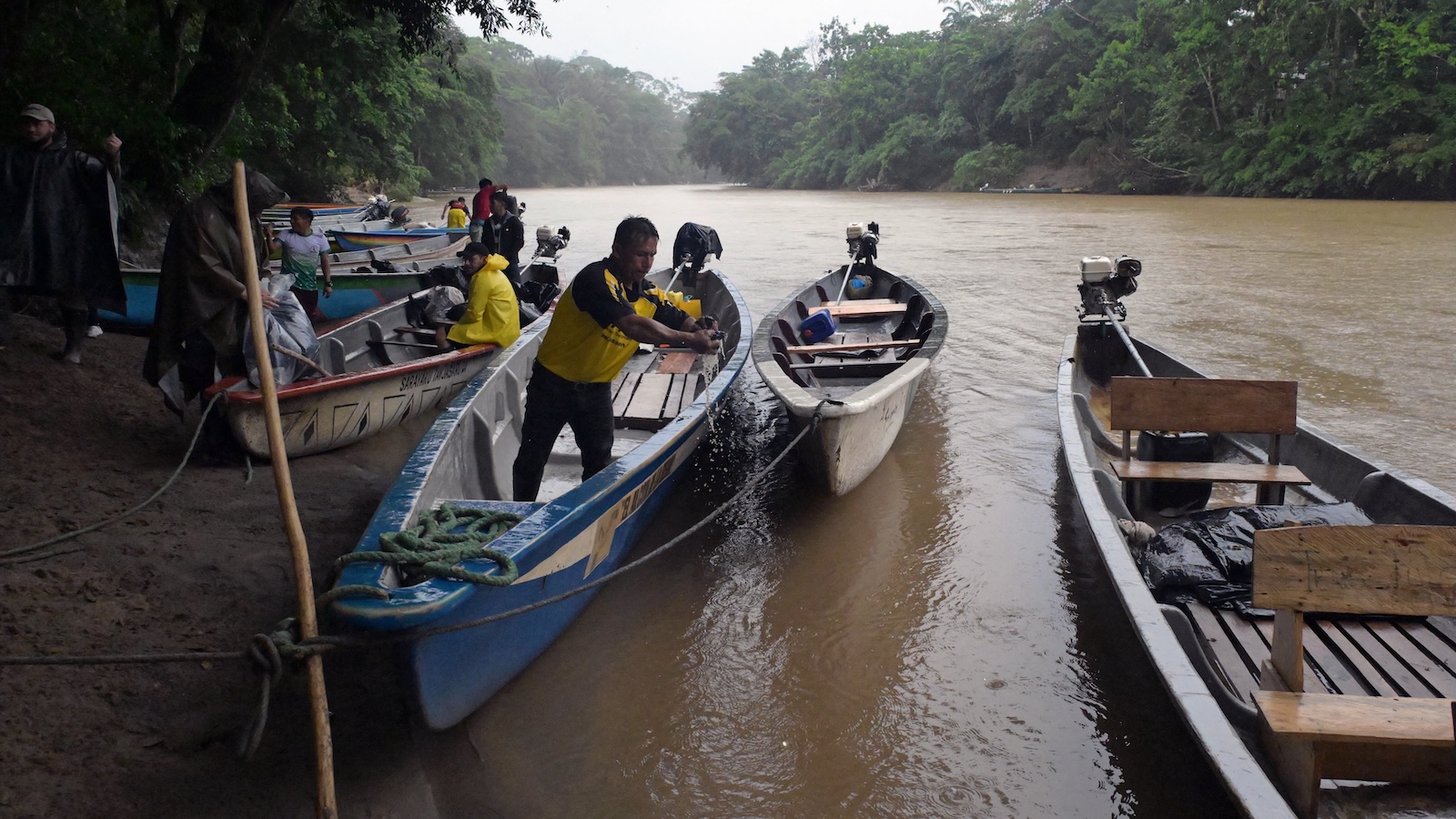
For example, in 2019, the Kichwa People of Sarayaku in the Ecuadorian Amazon faced devastating floods along the Bobonaza River that destroyed crops and homes. Daniel Santi, president of the community - roughly 1,600 people inhabiting more than 500 square miles - said his people responded effectively because of strong governance structures already in place. In other words, self-determination and governance allowed them to decide how best to prepare for and respond to a crisis. "This organization makes it possible to confront any problem and any threat," Santi said.
The report argues that the combination of Indigenous governance and knowledge is what makes these adaptation strategies so effective. Knowledge rooted in the land can be put into action immediately - Sarayaku elders, for instance, noticed rain and lightning patterns at the river's headwaters that signaled possible flooding and warned the community. Sarayaku structure includes clear decision-making processes, mechanisms to address urgent needs like housing for families with destroyed homes, and dedicated representatives to communicate status updates and needs with external authorities. According to Santi, these responses are guided by minga, a Kichwa term for solidarity and collective responsibility.
But many countries do not legally recognize Indigenous peoples or their governments, refuse to use Indigenous languages for emergency alerts, and continue to criminalize Indigenous culture. Those conditions can weaken the impact of Indigenous knowledge and governance. Santi believes Indigenous peoples have a lot to teach the world about adapting and responding to climate change, but communities like his need support as it continues to accelerate. He is calling for greater legal protections for Indigenous land and authority, as well as resources and partnerships that embrace Indigenous knowledge and decision-making.
In Peru's Ausangate Regional Conservation Area, Quechua communities joined a conservation organization to document environmental indicators, improve community monitoring, and pursue other efforts combining Indigenous knowledge with Western research. According to the report, this is an example of how productive partnerships increase resilience.
The report also found other shortcomings in many of the world's mitigation and adaptation strategies: climate initiatives that focus on short-term benefits, rejecting Indigenous self-governance and imposing external authority on communities, and drawing on or celebrating Indigenous knowledge without supporting the people who provide it.
Despite growing evidence that Indigenous land stewardship is effective and that direct financing for Indigenous communities helps global climate adaptation, funding and legal security remain insufficient. "It's always the lack of resources and the lack of access to funding that makes it so difficult for us to work, especially when climate change makes us the most vulnerable," said Anisha Buda, from the Kaike Magar community and a program officer at the national Indigenous Women Forum in Nepal.
Rather than outlining a specific template for Indigenous governance, the report urges governments, philanthropists, and policymakers to foster conditions that allow Indigenous communities to thrive. Flexible and direct funding is one key condition. Land Is Life released the report during New York Climate Week specifically to call out the need for more direct financing for Indigenous communities. Despite billions of dollars pledged around the world, barely any is earmarked for Indigenous peoples - and even when it is, Indigenous leaders say they still don't receive it.
"It's also so frustrating, right?" said Buda. "Because there are so many projects that are supposed to be for Indigenous peoples, but they are implemented by non-Indigenous organizations and non-Indigenous peoples."
With the U.S. and European countries pulling back billions of dollars from climate commitments in recent years and wars in Iran and Ukraine stretching global resources, Indigenous leaders worry they will be left even further behind. "We are in a moment where resources are scarce," said Gisela Hurtado, the report's author. "Where can we put the little money that we have? Where can we put it to make it much more effective? And for me, for the report, the idea is put it into what already is working."
As the climate continues to change and the world experiences escalating impacts, Hurtado says the Indigenous responses outlined in the report offer a way forward. "What they are seeing in the territories, we're going to see it also in the future," Hurtado said. "They are the ones that are much more connected with the Earth to know what is going to happen in the future."