
In a waterfront factory in Iceland, workers in hairnets and blue overalls are sorting freshly caught cod and haddock while machines turn them into fillets, mostly bound for Europe. It's a scene of industrious normalcy, but the fish on those conveyor belts are at the heart of a political knife-edge that has the whole country on tenterhooks.
Visir fishing boss Pétur Pálsson fears that joining the European Union would cost Iceland jobs and drive factories abroad. "If we are in the EU, they will be the ones who make the policy," he says, with the weary resignation of a man who has watched many a politician try to sell him on bureaucracy.
On Saturday, voters in this island nation of almost 400,000 people will decide whether Iceland should resume talks on joining the EU. Polls suggest the result is too close to call - one recent poll puts the Yes vote ahead by 51.3% to 48.7%, while an earlier one had the camps neck and neck. "It's impossibly [hard] to predict," says Eirikur Bergmann, professor of politics at Bifröst University. "Both camps are throwing everything they have at it."
Supporters argue that closer European ties could tame Iceland's volatile currency and soaring cost of living. Opponents say sovereignty and control over "priceless" fishing waters are at stake, and they'd rather keep going it alone. This fault line has divided Icelanders for decades, but after winning a snap election in 2024, Prime Minister Kristrún Frostadóttir's centre-left government pledged to hold a referendum by 2027. Russia's war in Ukraine, sharpening Arctic rivalries, and US President Donald Trump's tariff threats and designs on Greenland have accelerated that timetable.
"Things have been moving very rapidly with respect to geopolitical challenges," Finance Minister Daði Már Kristófersson tells the BBC, pushing Iceland's place in the world "up the agenda." Iceland lies high in the North Atlantic, adjacent to the strategic GIUK gap, where Russian maritime activity is closely watched by the West. It is a founding member of Nato, yet has no military of its own - a quirk that makes security a delicate dance.
Kristófersson's Liberal Reform party is a leading voice behind the Yes campaign. He argues that EU membership would strengthen Iceland's security and trade position, and shield it from much bigger powers. There's also the economic case: "We see the opportunity of joining the EU and adopting the euro as a very significant benefit to Icelandic companies and to the Icelandic general public," he says.
A Yes vote would kickstart negotiations with Brussels, but a second referendum would have to greenlight any final membership deal, and all 27 EU members would have to agree too. A No vote would shelve talks for the time being. Some Icelanders are expected to vote Yes precisely because this isn't the final say. "We have to know what's in the package from the EU," says Reykjavik resident Anna Ragnarsdottir. "If we say no, we won't ever know."
Although outside the EU, Iceland is part of the European Economic Area (EEA) along with Norway and Liechtenstein, so it's in the single market and the Schengen border-free zone. Reykjavik opened EU accession talks two years after the devastating 2008 global financial crisis, but abandoned them in 2013. Fishing was the biggest obstacle then, and remains a dealbreaker today.
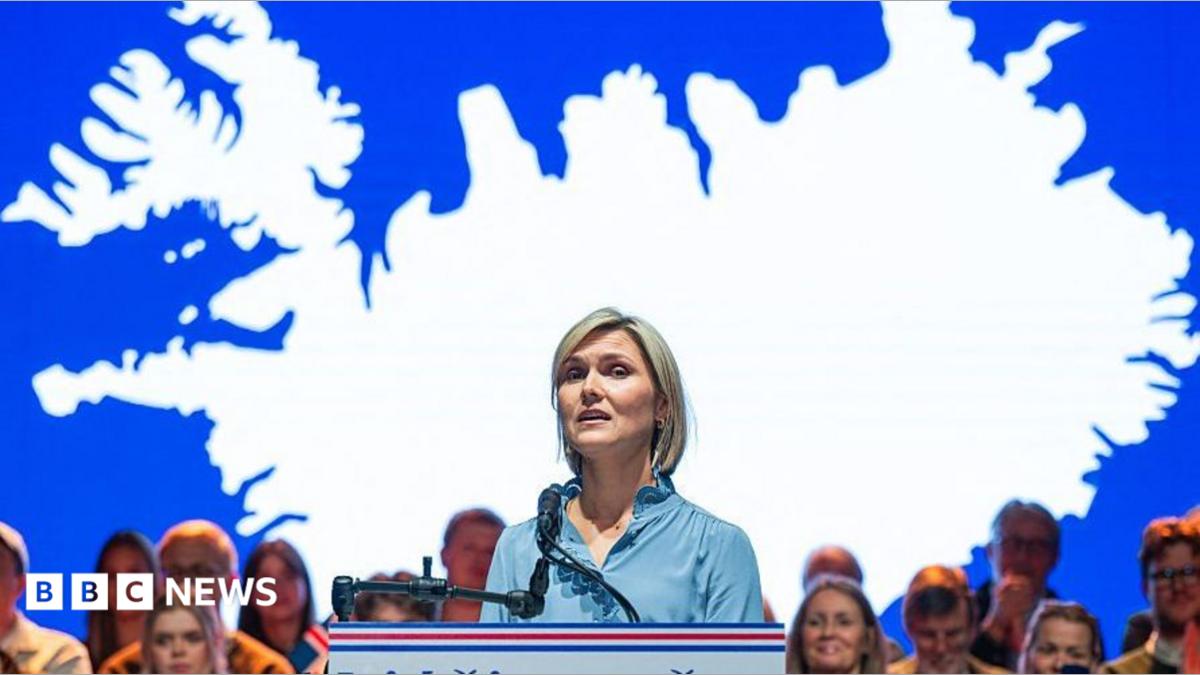
Fish and marine industries account for almost 40% of Iceland's exports, and many No voters worry that under the EU's common fisheries policy they could cede control of their lucrative fishing grounds. Opposition leader Guðrún Hafsteinsdóttir, who leads the No campaign, vows Iceland's waters will never be shared. Fishing is inseparable from Iceland's culture and political identity, and no politician could ever make that concession, says Prof Bergmann. "They'd be expelled from the country."
Iceland's government intends to carve out a "special arrangement" to protect fishing and agriculture, and the finance minister says they are confident of getting "some exemptions." Non-EU member Norway succeeded in 1994 even though it did not complete the process, he notes, while EU states Finland and Sweden secured special terms for agriculture in the far north. But Eurosceptics doubt a carve-out is possible. The head of the Icelandic Farmers' Association, Margrét Ágústa Sigurðardóttir, is unconvinced: "No member state has been granted a permanent opt-out." She fears EU policies will focus on "the interests of 450 million consumers, rather than the specific needs of a country of 400,000 people."
When the BBC visited the airbase at Keflavik this month, fighter jets were taking off, and the Stars and Stripes was flapping alongside the Belgian tricolour and Nato flags. With no military, Iceland's security relies on its Nato allies and a 1951 defence pact with the US. However, Trump's repeated comments on taking over Greenland, and the risk of a weakened Nato alliance, have added to Iceland's concerns. Officials point to Russia's maritime activities in waters close to Iceland as the main security issue, and in June Icelandic authorities said a Russian intelligence ship was tracked passing through Iceland's Exclusive Economic Zone.
There was disbelief among Icelanders when Trump mistakenly referred to their country four times in his speech at Davos, when he meant Greenland. The new US ambassador had to apologise when he joked that Iceland could become the 52nd US state. The "special relationship" is unchanged, emphasises Daði Már Kristófersson. Yet, the finance minister believes "an additional pillar is important," and the government signed a defence partnership with the EU in March.
Geopolitics, perhaps surprisingly, has been largely absent from Iceland's public debate. For Snærós Sindradóttir of the European Movement in Iceland, that's frustrating. The referendum is happening now "100% [because of] security matters," she says. Giant red letters spelling "JA!" (meaning yes) fill the windows at the group's campaign office.
The Yes camp says EU membership offers greater financial stability, while adopting the euro could curb the country's stubbornly high inflation. Since breaking away from Denmark in 1944, Iceland has transformed from a poor island into one of Europe's most affluent nations. But prices in Iceland were 84% higher than the EU average, according to analysis by the academic union Viska, and interest rates have climbed to 8%. "We get higher salaries, and it goes straight to the cost of everything," Sindradottir complains. "It's like a dog chasing its own tail constantly."
In downtown Reykjavik, the high cost of living and sovereignty are what people care about most. "The biggest problem right now is for the generation who are trying to buy their own housing," says Adolf Fridriksson, 62. "The mortgage rates are terrifying." Meanwhile, Helga, 22, believes joining the EU will be too costly: "The fishing industry, and everything else, should be in our control."
Saturday's result is being watched closely across Europe. If the Yes vote wins, Icelandic officials say talks with Brussels will take "months, not years," as 11 of the 35 areas of negotiation were already finalised when they were broken off. Leaders are taking note in neighbouring Norway, a traditionally Eurosceptic country and a fellow member of the EEA. But support for joining the EU is growing there too. Gaining a rich and stable new member in Iceland would be a welcome win for EU enlargement, says Hallgrímur Oddsson, head of the EU-Iceland think-tank European Currents. "But a No vote could also be perceived as a loss."