Hyundai Workers Strike Over Fear of Being Replaced by Robots That Haven’t Even Started Working Yet
Hyundai workers strike over plans to deploy humanoid robots that could undercut wages, marking the first major labor pushback against the latest wave of robotic automation.
Thousands of unionized Hyundai auto workers in South Korea have started walking off the job early after negotiations with the automaker broke down over plans to deploy humanoid robots. The partial strike at Hyundai’s Ulsan complex is being called “the car industry’s first factory stoppage addressing humanoid robots” by The Wall Street Journal. Workers ended day and night shifts two hours early from July 13 to July 15 and plan four-hour strikes from July 20 to 22 after 15 rounds of talks failed.
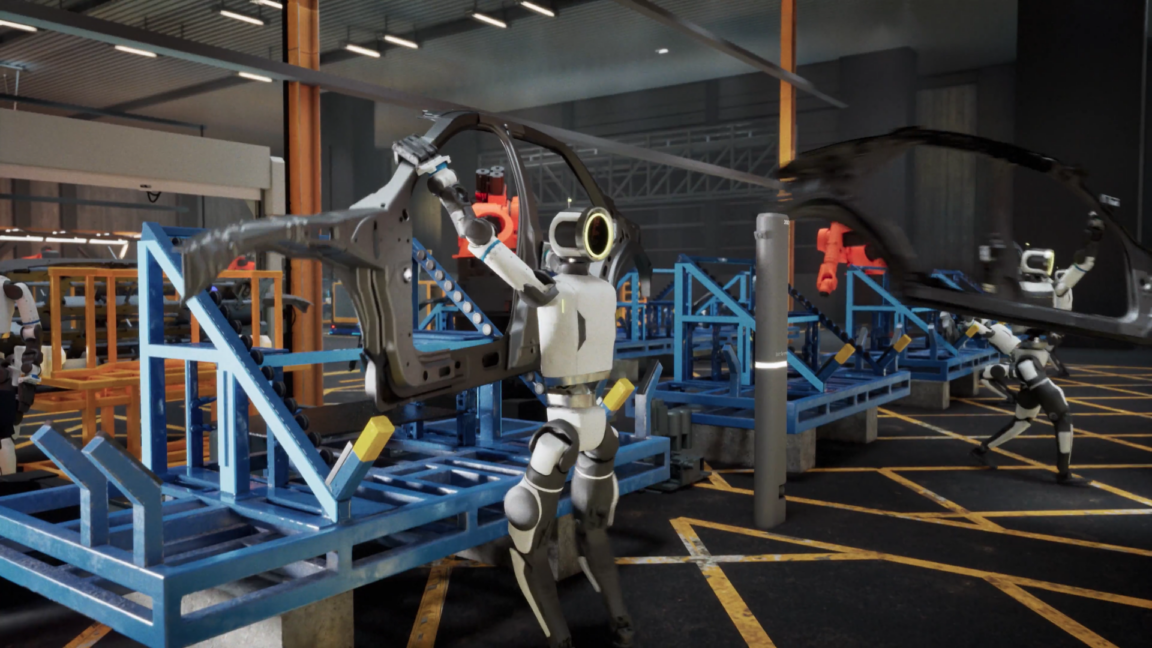
The union pushback began when Hyundai Motor Group unveiled the latest version of the Atlas humanoid robot - a 6-foot-tall, 100-pound-lifting Boston Dynamics creation that Hyundai is about to fully own. Hyundai wants to deploy 25,000 Atlas robots across its plants, starting with US factories in 2028. Each Atlas costs about $130,000 but could pay for itself in two years, according to Samsung Securities analyst Esther Yim. If the price drops to $100,000, Macquarie’s James Hong suggests its operational cost could fall below the US federal minimum wage of $7.25 - significantly undercutting a typical auto worker’s salary.
The Hyundai Motor union, representing over 39,000 South Korean workers, is demanding fixed salaries to protect against automation-driven hour reductions, raising the retirement age from 60 to 65, and bigger bonuses. Hyundai isn’t alone: Tesla is developing its Optimus robot, BMW is testing Figure AI’s humanoids in South Carolina, and Chinese automakers like BYD are also experimenting. The global auto industry already had over 1 million industrial robots by 2021, accounting for one-third of all robots worldwide.
Hyundai plans to first deploy Atlas at Metaplant America in Georgia - already the most automated US auto factory with 850 robots and 300 automated guided vehicles. Boston Dynamics’ Spot robot is already sniffing for defects there. Atlas will start by sorting parts, but Hyundai insists humans are still needed for soft parts like hoses and carpets. The company has committed to hiring 8,100 workers at the Georgia plant by 2031 as part of a $2.1 billion incentive deal with the state.
But unions aren’t reassured. The United Auto Workers, which is trying to organize the Georgia plant, recently criticized General Motors for installing 50 robot arms after laying off 1,300 workers. UAW President Shawn Fain warned against “the threat of humanoid robotics and mass automation” at the union’s June 2026 convention. Whether humanoid robots will actually prove cheaper than humans remains to be seen, but workers aren’t waiting around to find out.
The Good Times
News in your inbox.
One sardonic roundup, delivered on your schedule. Free. Unsubscribe whenever your tolerance for wit runs out.
Already subscribed but we never reach your inbox? Check your spam folder and hit 'Not spam' (or 'Remove from spam') to bust us out of junk-mail purgatory. You'll be helping everyone else too.
Don't open any of our emails for a month and you'll be automatically removed from the mailing list.
Rewrite Article
Select parts to regenerate with a fresh AI pass. Translations will be updated automatically.
Generate AI Image
Creates a sardonic version of the article image using OpenAI.