Feds Rewrite Grazing Rules to Let More Cows Eat Public Lands, Public Opinion Optional
BLM proposes letting more livestock graze public lands while making it harder for non-ranchers to object; tribes and conservationists are not thrilled.
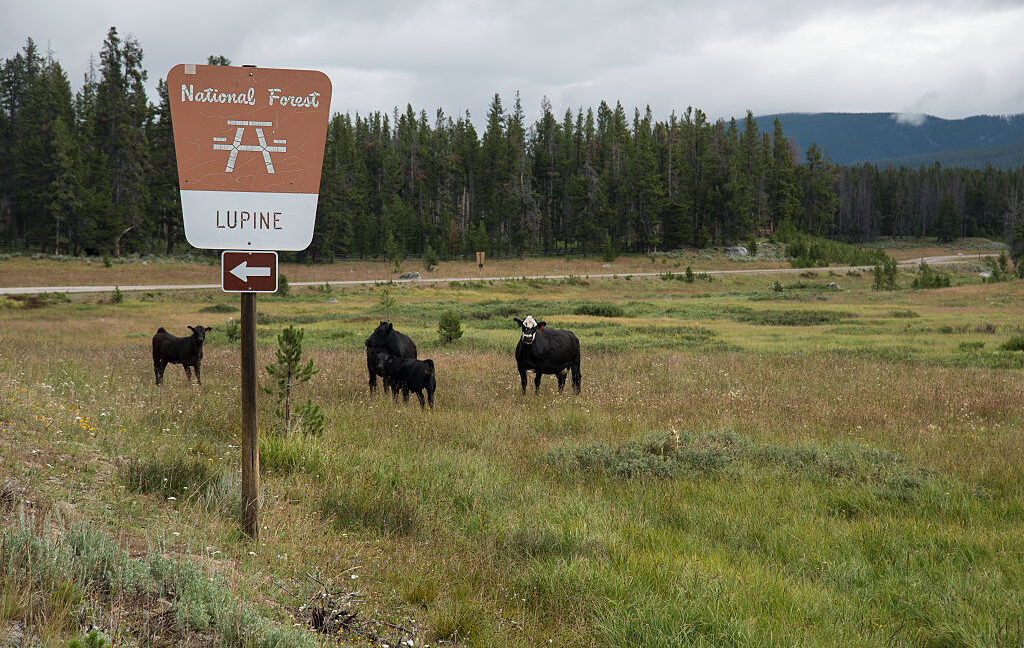
The federal government is overhauling its nearly century-old system for managing livestock grazing on 155 million acres of public lands in the West - an area twice the size of New Mexico - and the new rules are about as subtle as a stampede. The Bureau of Land Management's proposed updates, the first since 1995, aim to increase the number of cattle, sheep, and other livestock on those lands while simultaneously making it harder for the public to have a say in the matter.
Even though rangeland management experts agree that overgrazing has degraded public lands, the BLM's draft regulations would expand the practice and limit public participation. Under the new rules, the agency would strictly define who qualifies as 'interested public,' requiring a 'cognizable' interest - a term the BLM declined to define, but which environmentalists interpret as 'ranchers only.' The proposal also eliminates many steps where the public could observe and comment on permit decisions.
'They're clearly trying to reduce involvement of anyone other than ranchers,' said one BLM employee who works on rangeland management and requested anonymity for fear of being branded a cow-hater.
The BLM did not respond to questions about the proposed regulations, which were released in May and will return for further review in mid-July after a public comment period - assuming the public can figure out how to comment. In a June news release, the agency said the update 'reflects the Trump administration’s priority to reduce unnecessary regulatory burdens, promote productive working lands and strengthen local economies.'
ProPublica and High Country News spoke to multiple current and former BLM employees, who acknowledged some benefits: the regulations would require ecological impact studies for all public land uses, not just livestock; allow informal handling of low-level violations; clean up code inconsistencies; and offer more flexibility in range management. But critics say the downsides outweigh the upsides.
Tim Canterbury, president of the ranching trade group Public Lands Council, called the update 'a massive step forward,' claiming the old rules were rooted in the 'cattle free by ’93' movement. Other groups, like the Western Watersheds Project, predict 'considerably more places where cows and sheep are going to be and more damage.'
The livestock industry had a hand in the rewrite from both outside and inside the Interior Department. The National Cattlemen’s Beef Association and Public Lands Council met with Interior and Agriculture secretaries in the spring, pushing for a 'Grazing Action Plan.' Meanwhile, Native American tribes and conservation groups say they were shut out of the process.
Karen Budd-Falen, a high-ranking Interior Department official and longtime grazing advocate, received an ethics waiver to work on grazing policy despite potential conflicts of interest. In a December discussion with Sen. Cynthia Lummis, Budd-Falen said the new regulations would go back to the Reagan era and declared, 'I am so excited about these regulations.'
Tribes that manage bison herds fear losing permits to ranchers who worry about disease transmission. The Trump administration has already revoked permits for American Prairie, a conservation group that uses bison to restore ecosystems. The new rules mandate that public lands livestock operations be 'production-oriented,' potentially eliminating permits for ecological restoration.
The regulations also make it easier for ranchers to continue harmful practices by automatically pausing agency decisions during appeals. 'That effectively invites everyone to appeal to avoid the decision,' said law professor Mark Squillace. 'That is a disaster.'
Nada Culver, former BLM deputy director under Biden, noted that the most text in the proposal is devoted to explaining 'why the public no longer gets to participate in pretty much every step of the process.' The administration has also prioritized restocking vacant areas, with Budd-Falen promising that 'every single vacant allotment will be filled by a rancher' by the end of next year.
The Good Times
News in your inbox.
One sardonic roundup, delivered on your schedule. Free. Unsubscribe whenever your tolerance for wit runs out.
Already subscribed but we never reach your inbox? Check your spam folder and hit 'Not spam' (or 'Remove from spam') to bust us out of junk-mail purgatory. You'll be helping everyone else too.
Don't open any of our emails for a month and you'll be automatically removed from the mailing list.
Rewrite Article
Select parts to regenerate with a fresh AI pass. Translations will be updated automatically.
Generate AI Image
Creates a sardonic version of the article image using OpenAI.