
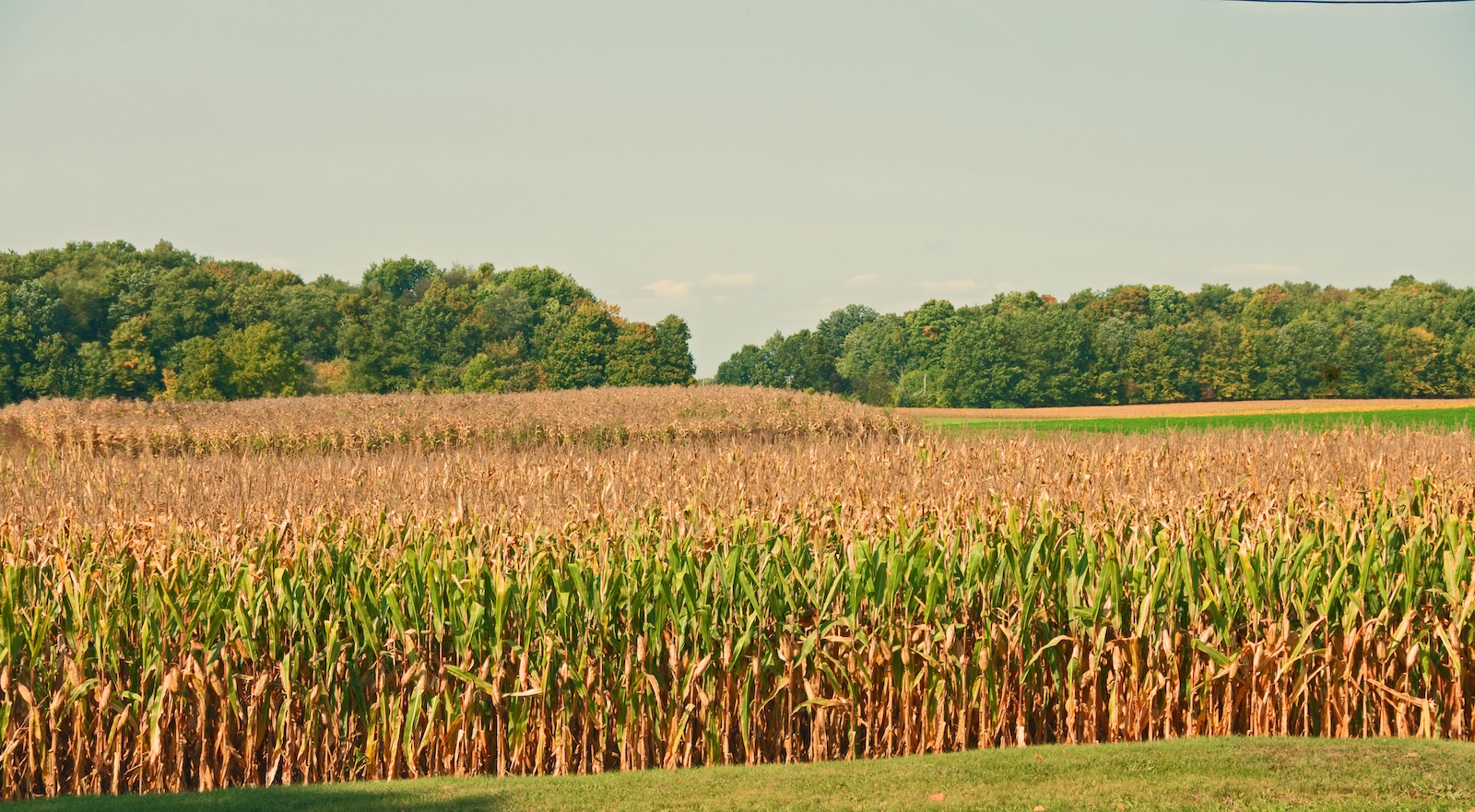
John Boyer grew up on his family's 131 acres of rolling fields of corn, oats, and wheat near East Jordan, Michigan. The farm had changed hands outside the family several times before Boyer rebought it in 2018, driven by an obligation to keep development at bay and preserve the area's community of family farms.
"For any farmer, everything's personal," Boyer said. "Every piece of property, every stone you pick up, you spend countless hours out there."
As millions of farmland acres across the country are expected to change hands in the coming decades, farmers are wrestling with whether - and how - to preserve their land amid rising values, a shifting climate, and a younger generation that'd rather do literally anything else. In Michigan, the number of acres devoted to farming has declined, as it has nationwide. In 2022, an estimated 9.5 million acres - about a quarter of the state - were farmed, a roughly 3 percent dip from 2017, according to the latest federal farm census. Family-owned farmland decreased by nearly 470,000 acres in that same five-year span, while leased or rented farmland increased by nearly 30,000 acres.
Despite these shifts, conservation programs have gained ground: Michigan saw an additional 22,000 acres protected in easements between 2017 and 2022, per the USDA, mirroring a national trend.
"It's a matter of trying to figure out what exactly is going to be the best fit for everybody's situation. And there's a lot of pressure. There's a lot of money," said Jon LaPorte, a farm business management educator with Michigan State University Extension.
That money is considerable: Michigan farmland was valued at about $6,800 per acre last year, up 7.8 percent from 2024 and outpacing the national average increase of 4.3 percent, according to the USDA.
Northern Michigan farmers are already feeling climate change - extreme precipitation, crop disease, temperature swings - but some say it's relatively easier to handle than elsewhere. "As the world climate changes, this area could become more and more important for food production and food security," said Dave Skornia, a farmer in Boyne City. "So, you got to have land."
For Boyer, the answer was a conservation easement. He sold the future development rights of his 131 acres to the Little Traverse Conservancy, a nonprofit that holds those rights even if the land transfers to his kids or another owner. It's a tough call, said Joe Graham, the conservancy's CFO, because land is usually a farmer's greatest asset - retirement fund, college fund, all rolled into one. "We're offering them another alternative," Graham said. "We're offering a way to capture some of the equity and the value they have in that land without having to sell it and see it leave their ownership."
Of the conservancy's 30,000 acres protected in easements across five counties, about 6,000 are farmland. Interest is growing, but the financial trade-off - easements pay less than an outright sale - can give farmers pause. "There can be a question of timing: 'Is this the right thing to do? What might we be foregoing later?'" Graham said.
Boyer wants to prevent his land from being chopped up and sold off in parcels "to make a quick buck." Once an acre is paved over for houses or strip malls, it's rarely farmed again. "Then suddenly a productive farm field or ground is gone, and it's gone for generations," he said. "It's gone forever."
Rebecca Carlson, a fourth-generation cherry and apple grower at Overlook Orchards in Northport, also fears land division. Aging farmers splitting land among kids can "break up multigenerational farms," she said, especially as younger folks choose other careers. She and her husband expanded their farm from about 200 acres to 1,300 acres over eight years, buying some land and leasing the rest, mostly from family farmers without successors.
"In order to be successful in farming, in some cases, it's one of those, 'Go big or go home,' with the climate of farming today," Carlson said.
About 39 percent of Michigan's agricultural land is leased, mirroring the national average, per the 2022 USDA census. Carlson's leases run 30 years and cost less than owning outright since she skips property taxes and insurance. "It's a great way to maintain your … farm and grow your farm," she said. "They don't make land anymore."
But leasing has quirks: A 2026 MSU survey found high lease rates and finding suitable land were top concerns. LaPorte noted that relationships matter as much as contracts. "You might have a great relationship where you never worry a single day about whether or not you're going to have the property a year from now," he said. "Other cases, there's some differences in terms of what each party's goals are that kind of create that sense of anxiety about, 'Is this going to last long-term?'"
In the Midwest, farmland values are holding steady or rising even as farm incomes dip nationally. Howard Halderman, president and CEO of Halderman Companies, which deals in farm real estate in Indiana, Michigan, and Ohio, credits tax-deferred exchanges - landowners can defer capital gains taxes by buying other property. "That's where a lot of your farmland value gets support. Are there other buyers out there that keep a floor under it?" he said. "If you're looking to buy farmland, that might be frustrating. However, if you're a farmer that owns a lot of farmland and you like to keep your asset values on your balance sheet higher, it's a good thing."
And then there's the clean energy angle. Michigan's push for a cleaner grid has renewable developers eyeing farmland for wind turbines, battery storage, and solar panels. "From a landowner's perspective, they've got bills to pay the same as a farmer, and they're looking at situations of, 'Where can I get the most value?'" LaPorte said. "And if they struggle to find an interested farm, they might be willing to go into some of these long-term agreements that you see into wind turbines, solar."
Solar currently occupies just 0.09 percent of USDA prime farmland in Michigan - less than suburban sprawl or golf courses, per the Solar Energy Industries Association. But local opposition is fierce. In Wexford County, early plans for solar panels on nearly 1,500 acres of farmland sparked concerns about encroaching on productive fields.
Enter agrivoltaics, the practice of combining solar panels with farming. Panels can shade livestock or crops, and leases with developers can offset declining farm incomes, said Charles Gould, a bioenergy educator with MSU Extension. It doesn't have to be an either-or. "If we can do both on the same acre of land, why wouldn't we?" Gould said. "We want to preserve the family farm. This is a very powerful tool."