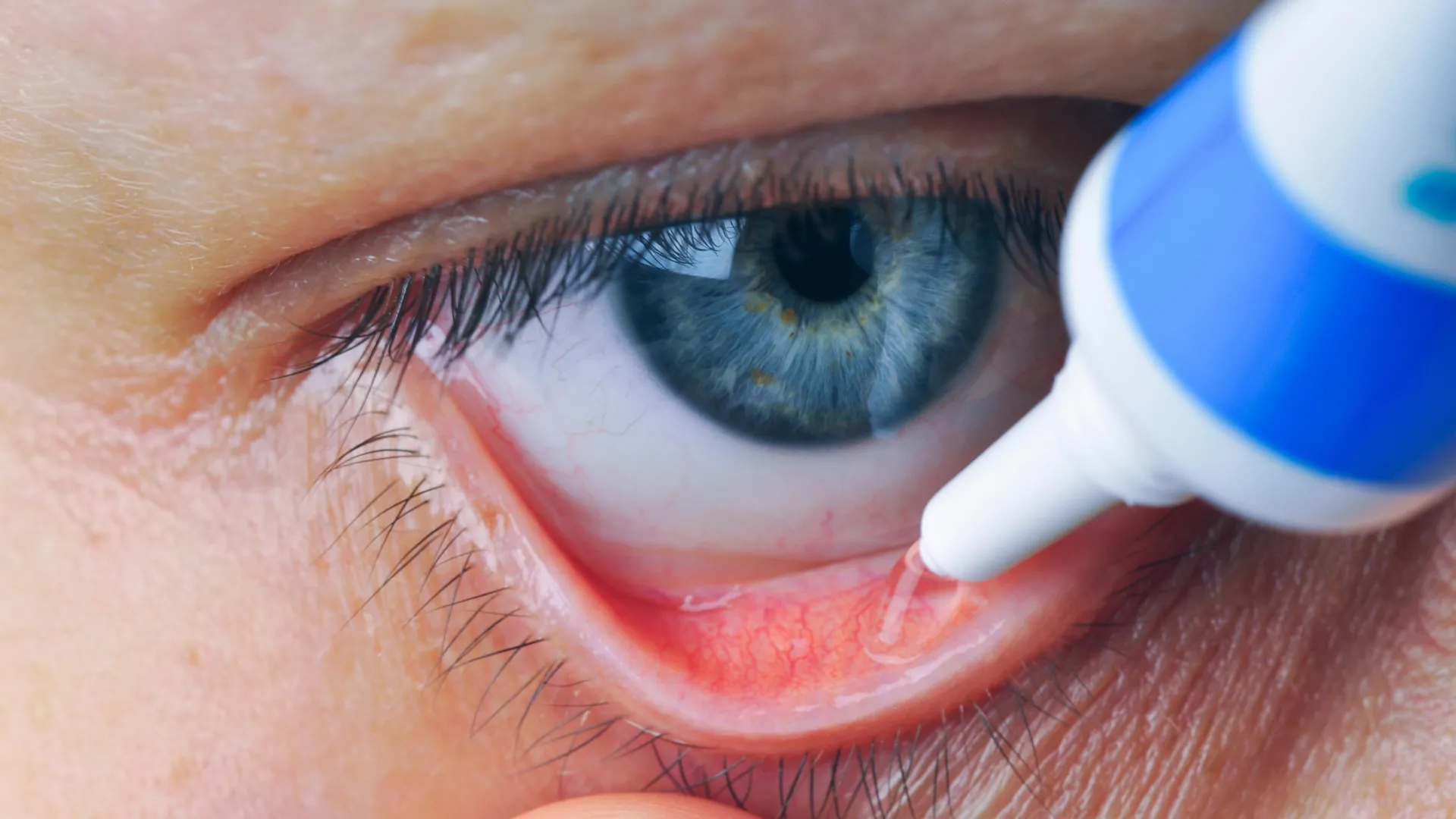
In a development that will surprise no one who has followed vision research over the past decade, scientists have managed to restore sight in blind mice using a set of experimental eye drops. The mice, presumably, are thrilled. The rest of us can only hope the treatment works as well in humans, because the alternative - stumbling through life with a cane and a guide dog - is getting old.
The research, led by the Institute for Bioengineering of Catalonia (IBEC), targets photoreceptor degeneration, the culprit behind age-related macular degeneration (AMD) and retinitis pigmentosa (RP). These two conditions alone affect about 200 million people worldwide and represent a leading cause of visual impairment and blindness. And let's not forget the US$400 billion annual economic burden, because nothing says 'quality of life' like a price tag.
The new approach uses photoswitchable small-molecule drugs, dubbed prosthe6, which can be delivered via injection or even eye drops. No gene therapy, no implanted devices - just a molecule that changes shape when hit by light, essentially acting as a stand-in for the photoreceptors that have called it quits. The compounds target ON bipolar cells in the retina, which normally receive signals from photoreceptors but are left in the dark when those cells die. By attaching to a protein called mGlu6, the molecules reactivate the visual circuit, allowing the retina to respond to light again.
In tests, blinded zebrafish larvae regained their optokinetic reflex - which is fancy for 'they could track moving stripes,' and blind mice with models of AMD and RP spontaneously began avoiding brightly lit areas, a behavior that requires a functioning visual system. The effect kicked in at illumination levels comparable to a cloudy day or indoor lighting, meaning no need for laser beams or special goggles. Two compounds, prosthe6-12 and prosthe6-15, were particularly promising, working both when injected and when applied as eye drops.
'These molecules do not cure blindness, because they do not address the cause of photoreceptor degeneration,' said Pau Gorostiza, ICREA Research Professor at IBEC and co-leader of the study, in a statement that should reassure anyone worried about overpromising. 'But they are remarkably effective at restoring sight, and they do so using a very simple and potentially patient-friendly approach.'
The team, which includes collaborators from the University of Alcalá (UAH), the Institut de Química Avançada de Catalunya (IQAC-CSIC), the University of Barcelona (UB), the Institute Ramón y Cajal of Health Research (IRYCIS), the Autonomous University of Barcelona (UAB), and the Fundació Eduard Soler, published the findings in the Journal of the American Chemical Society (JACS). The work builds on more than a decade of research and follows the first-ever clinical trial of a photopharmacological drug for vision restoration, suggesting the field is inching toward real-world use.
The prosthe6 technology is patented, and the team is now studying its safety and formulation, with an eye toward extending the duration of restored vision. They're also working with Eyelumina, a spin-off company in formation, to secure investment for translational development and future clinical trials.
'Turning this into a therapy is a long and laborious process,' Gorostiza admitted. 'But the results show that there is a realistic possibility of restoring high-quality vision with drugs, non-invasively, reversibly and with a mechanism that is independent of the specific retinal disorder or genetic mutation to reach a majority of patients.'
If the approach pans out in humans, it could offer a widely accessible and affordable alternative to current vision-restoration technologies, particularly for those with advanced retinal degeneration who currently have no effective options. The project received early funding from the patients' foundation Fundaluce (2016), CaixaHealth (Drug4sight, 100010434), the Government of Catalonia (Innovadors, Producte, and Peris programs), and CIBER-BBN (valorization program). Rosalba Sortino, a former PhD student at the University of Barcelona and co-first author, was awarded the Extraordinary Doctoral Prize for the 2023-24 academic year for her thesis on this work. So, yes, the mice are seeing again, and the scientists are getting prizes. All in a day's work.
The Good Times
News in your inbox.
One sardonic roundup, delivered on your schedule. Free. Unsubscribe whenever your tolerance for wit runs out.
Already subscribed but we never reach your inbox? Check your spam folder and hit 'Not spam' (or 'Remove from spam') to bust us out of junk-mail purgatory. You'll be helping everyone else too.
Don't open any of our emails for a month and you'll be automatically removed from the mailing list.
Rewrite Article
Select parts to regenerate with a fresh AI pass. Translations will be updated automatically.
Generate AI Image
Creates a sardonic version of the article image using OpenAI.