
Shopkeeper Yusuf Ali, 34, still battles memories of his time as a child soldier on the streets of Mogadishu. He got involved in the Islamist insurgency nearly 20 years ago, and while the city's urban landscape is healing, the psychological scar tissue remains stubbornly untreated.
When Ali was 14, the Union of Islamic Courts (UIC) seized power, bringing a sense of stability to a country wrecked by clan warfare since President Siad Barre's regime collapsed in 1991. But Washington viewed the UIC with hostility, accusing it of ties to al-Qaeda. Its military youth wing was called al-Shabab, meaning "The Lads" - which sounds almost charming until you remember the whole "terrorism" thing.
In December 2006, thousands of Ethiopian troops invaded Somalia under the cover of American drones, toppling the courts after just six months. The invasion was deeply unpopular and met with fierce opposition from al-Shabab and its allies, including a coalition of splinter groups called the Muqawama, or "Resistance."
At the time, Ali lived in Huriwaa, an impoverished district in northern Mogadishu. He had lost his father at age one - killed during the infamous "Battle of Mogadishu," when Somali fighters clashed with US soldiers after the downing of two Black Hawk helicopters. Growing up without his dad was hard, but the guerrilla warfare during the Ethiopian invasion changed him forever.
"At night, I'd often hear a buzzing sound. I was in secondary school and didn't realise it then, but these were planes surveilling our neighbourhood," Ali told the BBC. By spring 2007, heavy shelling and bombardment hit densely populated civilian neighbourhoods suspected of sheltering insurgents. One night, shells struck his neighbour's house. "Our house shook and I felt like the soil under my feet had moved - then I started hearing screams." Frantic residents struggled to lift the rubble. "Someone aimed a torch and I saw blood stains and a body lying nearby. A young girl that looked around my age, but she wasn't moving. I've seen death, but nothing prepared me for that night."
The family fled to the Elasha Biyaha district, a refuge for hundreds of thousands. But many young people were eager to return to the city and fight those referred to as "Gaalo" - a Somali term meaning infidels used for non-Muslims. "From the sermons at the mosque that called on people to defend their country from the Gaalo, everyone was fired up," Ali said. This drew him to Muqawama, which included former army commanders. "They trained us in small arms fire… We practised hit-and-run attacks."
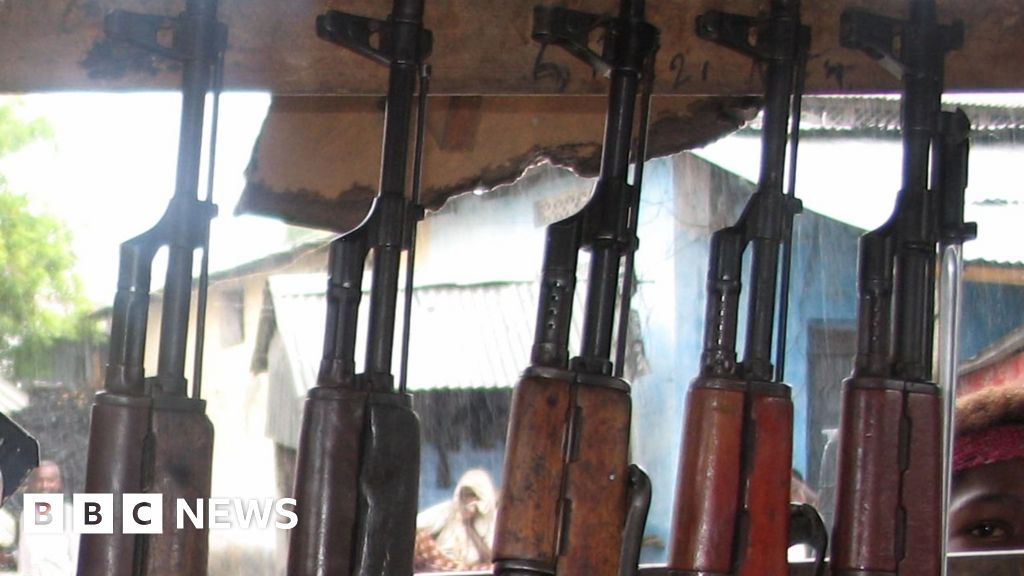
By age 16, Ali was in Mogadishu with other young combatants engaged in urban warfare. They were given guns - but not paid - and ate together. Some of those he was trained to kill were also young, including Somali soldiers allied to the transitional government who were fighting alongside Ethiopian troops. "Street by street, from windows and doorways, we were firing on Ethiopian soldiers and the Somali soldiers with them," he said. "At times I'd find myself shooting… and as we advanced and noticed a dead [Somali] soldier was around my age, I paused but then would keep moving because the fighting was so intense. It was either killed or be killed - and this was a cause we were willing to die for."
From 2007 to 2009, Mogadishu was largely reduced to rubble. Ethiopia, backed by the US, faced growing international scrutiny over its intervention as accusations of war crimes intensified. The Ethiopian army eventually withdrew, and the Islamist militants splintered and turned against each other. One moderate faction joined the interim government against the hardliners. Ali found himself questioning if it was a war worth fighting: "Some of the men I fought alongside were now fighting their former comrades. My mother and siblings wanted better for me."
In 2009, Ali was smuggled to Johannesburg, where he worked in his uncle's shop for five years. But xenophobic attacks in South Africa - often targeting foreign-owned outlets - drove him home to Mogadishu. He found a city rebuilding itself: a functioning airport, paved roads, restaurants, street lighting. Politically, though, it was a mess. Al-Shabab had morphed into a powerful hardline group controlling large swathes of the country, imposing strict dress codes and banning music. It had a large spy network inside the city and organised frequent targeted assassinations. "No-one trusted each other. No-one dared to speak about politics publicly. Your own neighbours could be spying on you and you wouldn't even know it."
Ali felt partly to blame: "We fought to defend our country, people and religion but only made things worse on them all these years later." Now married with a four-year-old son, he is constantly reminded of the battles. "I still recognise some of the houses I had shot my gun from and wonder if the current family living there knows about the blood stains that once covered their home." He has never had any counselling or other help - nor have other ex-child soldiers he knows who have become drug addicts. "In Somalia, we don't talk about our problems," he said. "I try to find peace through prayer. We pray and keep things to ourselves. This is the culture here and is the reason why many people are hurting but most don't realise it."
Ilyas Adam, a human rights legal consultant with the Coalition of Somali Human Rights Defenders, said such mental anguish is widespread among young Somalis. "The normalisation of violence in some areas means that trauma often goes unrecognised and untreated, making it a silent but pervasive crisis." He noted that PTSD can be as debilitating as combat, with long-term effects including chronic mental health conditions, social exclusion, and increased risk of re-recruitment.
A 2021 World Health Organization report said Somalia's mental health services were almost non-existent - with no community-based services. A WHO official quoted two years later said there were only 82 mental health professionals in the whole country. Armed groups continue to recruit children in Somalia, with more than 2,800 cases recorded by the UN between 2021 and 2024. The use of children in combat - some as young as eight - was mainly by al-Shabab, though the UN report found 101 cases in government forces.
Mursal Khalif, an MP and head of the Ministry of Defence's Child Protection Unit, said efforts to stop recruitment can face resistance - "some even viewed it as a Western agenda." But he said things are improving slowly with initiatives like vocational schools for former child soldiers. Yet in Huriwaa, where Ali lives once more, there are no state services. Government officials and international employees rarely venture into the neighbourhood, and if they do, it's under tight security.
At sunset, the call to prayer echoes as Ali heads to his local mosque - the site of a deadly raid in 2008 by Ethiopian forces who abducted 41 children suspected of being insurgent trainees. After an outcry, the children were all freed, but for Ali the mosque remains a reminder of the outrages of the past and what appears to be Somalia's "never-ending cycle of violence." The government is still battling al-Shabab, while this week government forces and opposition fighters exchanged gunfire in Mogadishu in a row over delayed elections. "The fighting is still ongoing, people are suffering and two decades later, more countries than ever before have troops deployed in Somalia."