EVs Cost More to Insure Because They're Basically Giant, Fragile iPhones on Wheels
New crash tests reveal that minor EV prangs can lead to £4,000 repair bills and write-offs, thanks to glued-together components and expensive batteries - but manufacturers are slowly learning to make them fixable.
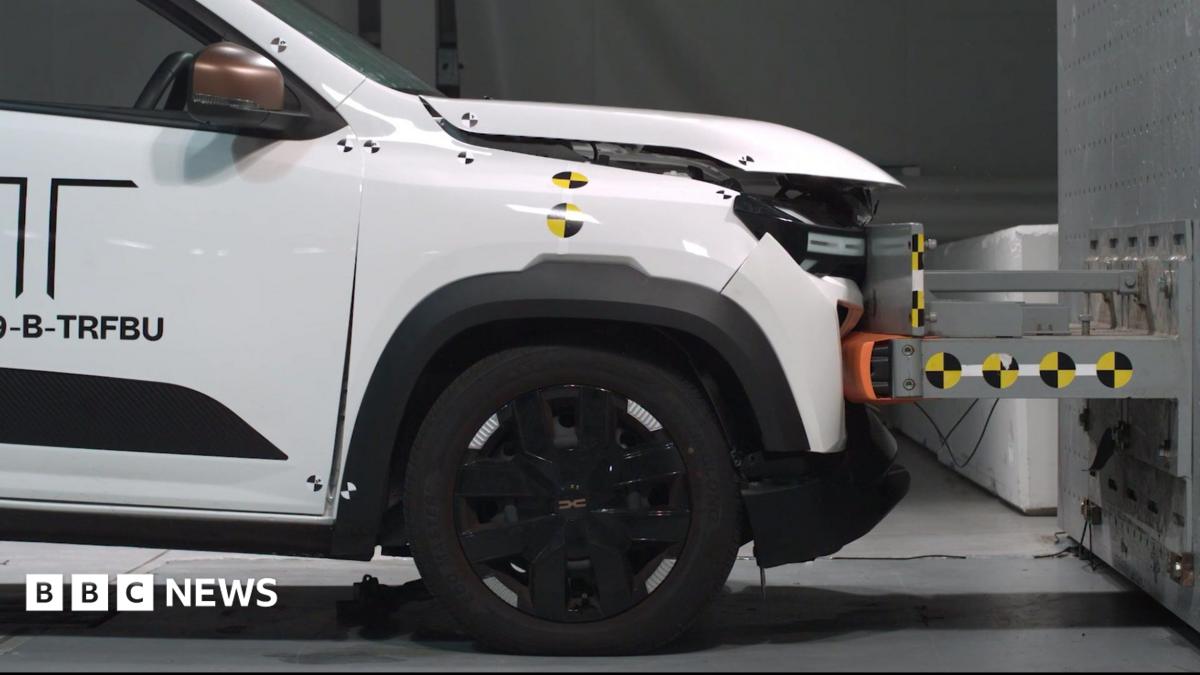
In a crash-test lab outside Newbury, a Dacia Spring gently taps a barrier at 6mph. No dramatic wreckage, no flying glass - just the kind of fender-bender that makes you mutter under your breath in a car park. But flip up the bonnet, and the damage tells a different story: the high-voltage charging port, inverter, and cabling are wrecked, with repairs estimated at £4,000. Thatcham Research, working for insurers, says that kind of bill means the car is likely to be written off for what, in a petrol car, would be a minor inconvenience.
Thatcham's tests aim to understand why EVs attract higher insurance premiums - on average, 30% more expensive to repair and 14% longer to fix than petrol or diesel models, translating into 10-25% higher insurance costs. The Society of Motor Manufacturers and Traders reports that EVs now make up almost one in three new car sales in the UK as of June. But Ian Plummer of Autotrader notes that "the wider context remains fragile" due to policy uncertainty and external pressures. Steve Fowler of Carblah puts it bluntly: "It's absolutely crucial electric vehicles become cheaper to insure."
The root cause, according to principal advanced technologies engineer Dan Harrowell, is the obsessive weight-saving integration of components - glued together rather than bolted, so you can't replace a single part; you replace the whole system. In one workshop example, a nearly-new EV with minor scratches on the battery casing's protective cover would require a full battery replacement, which, given the battery represents about 40% of the car's value, essentially writes off the vehicle.
Add to that the surge of Chinese EV makers, whose home-market labour rates are low enough that they don't bother designing for easy repair. Stuart Masson of The Car Expert points to shortages of parts and technicians, meaning longer workshop times and more expensive loaner cars - all feeding into higher premiums. Still, progress is being made: the latest EV models have repair costs only 18% higher than conventional cars, and Thatcham has drawn up a blueprint for manufacturers to simplify repairs. Renault, parent of Dacia, says it's working on making battery pack repairs more feasible. So there's hope - as long as you don't bump into anything.
The Good Times
News in your inbox.
One sardonic roundup, delivered on your schedule. Free. Unsubscribe whenever your tolerance for wit runs out.
Already subscribed but we never reach your inbox? Check your spam folder and hit 'Not spam' (or 'Remove from spam') to bust us out of junk-mail purgatory. You'll be helping everyone else too.
Don't open any of our emails for a month and you'll be automatically removed from the mailing list.
Rewrite Article
Select parts to regenerate with a fresh AI pass. Translations will be updated automatically.
Generate AI Image
Creates a sardonic version of the article image using OpenAI.