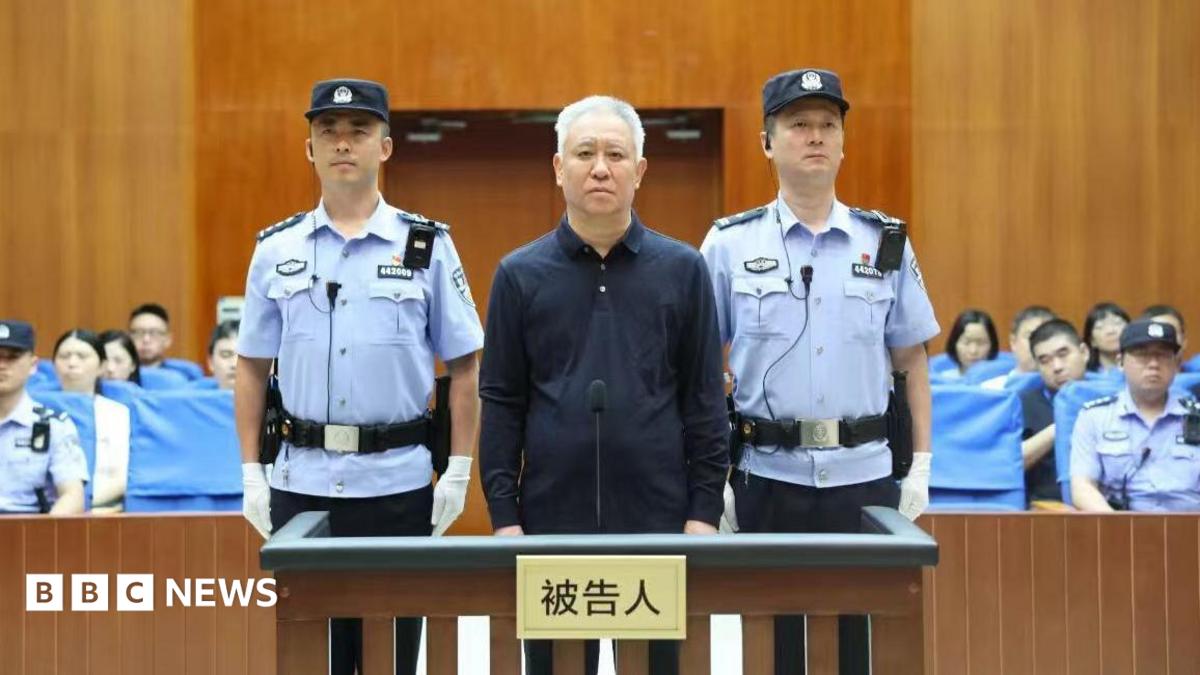
Hui Ka Yan, the man who built China's biggest property developer on a mountain of borrowed cash, has been sentenced to life in prison, with all his personal property confiscated. It's a dramatic fall for a guy who was once estimated to be Asia's richest person, proving that even the loftiest towers can crumble when built on debt and wishful thinking.
Hui, also known as Xu Jiayin, pleaded guilty in April to charges including embezzlement of assets and corporate bribery. The Shenzhen Intermediate People's Court also slapped Evergrande Group with a fine of 8.82bn yuan (£960m; $1.31bn), while its real estate unit was ordered to cough up another 7bn yuan. Because nothing says 'justice served' like taking money from a company that's already broke.
Hui's story begins in rural China, where he was raised by his grandmother before venturing into property development and founding Evergrande in 1996. Through aggressive expansion funded by massive borrowing, he turned the company into China's largest real estate developer, with a stock market valuation exceeding $50bn (£36.7bn). At his peak, he was Asia's richest person - a title that comes with a certain target on your back when the music stops.
The music stopped in 2020 when Beijing introduced measures to control debt in the property sector. Evergrande tried to stay afloat by selling properties at huge discounts, but it all came crashing down in 2021. The court heard that the company had taken millions of dollars in pre-sale funding from potential homebuyers that was never used for construction. Instead, the money was funneled into new developments, leaving hundreds of unfinished projects - and a lot of very anxious homebuyers.
In March 2024, Hui was fined $6.5m and banned from China's capital market for life after his company was found to have overstated its revenue by a cool $78bn. Evergrande's stock valuation shrank by 99% before its shares were delisted from the Hong Kong exchange in August 2025, after more than a decade and a half of trading.
Evergrande's implosion has been widely blamed for triggering a broader slump in China's property market, which continues to weigh heavily on the economy. So, next time you're tempted to borrow a few billion to build a housing development, remember: Hui's story is a cautionary tale about the perils of over-leveraging, and the importance of actually using pre-sale funds for what they're meant for.
The Good Times
News in your inbox.
One sardonic roundup, delivered on your schedule. Free. Unsubscribe whenever your tolerance for wit runs out.
Already subscribed but we never reach your inbox? Check your spam folder and hit 'Not spam' (or 'Remove from spam') to bust us out of junk-mail purgatory. You'll be helping everyone else too.
Don't open any of our emails for a month and you'll be automatically removed from the mailing list.
Rewrite Article
Select parts to regenerate with a fresh AI pass. Translations will be updated automatically.
Generate AI Image
Creates a sardonic version of the article image using OpenAI.