Europe's Launch Industry Stuck Between a Rocket and a Hard Place, Study Finds
SpaceX has turned the launch market into a one-company show, leaving Europe to choose between pricey domestic rockets or hitching a ride on American tech.
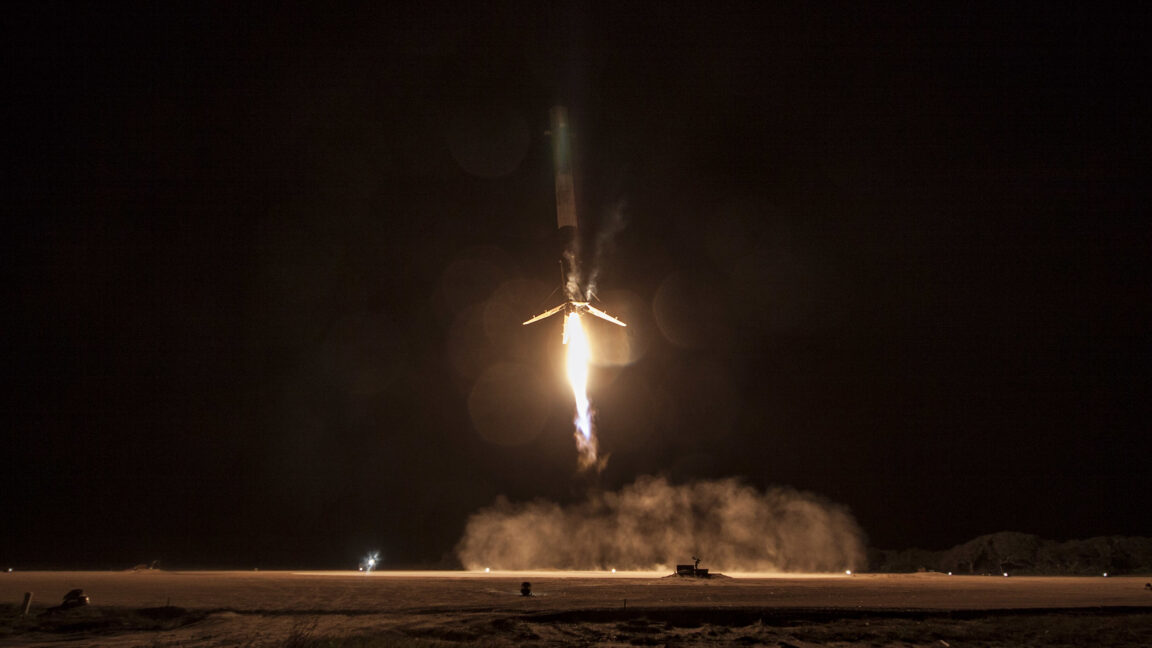
A decade ago, SpaceX began landing Falcon 9 first stages with a regularity that would make a metronome jealous. Fast forward to today, and the company is flying the rocket dozens - then hundreds - of times a year, single-handedly turning the global launch market into a one-company show.
New research published in Economics Letters by policy wonks in the UK and Italy crunches over 6,700 launches from 1960 to 2025 to quantify just how badly SpaceX has upended the spacefaring apple cart. The results are, shall we say, lopsided.
Since 1990, the US has more than doubled Russia's cumulative payload to orbit. The US share of global payload, which collapsed from nearly 50% in 1995 to under 20% in 2012, has since rocketed back to over 82% in 2024. Russia, meanwhile, is presumably staring at its Soyuz rockets with a wistful sigh.
Cost-wise, it's not even close. The average cost per kilogram to orbit in the US is now $3,225. Japan: $5,287. China: $5,809. Russia: $6,682. Europe: a wallet-crushing $9,897. India, despite its frugal space reputation, pays nearly $15,000 per kilogram - though the researchers note that's because they're launching small rockets, so fixed costs get amortized over a limited payload. Frugal, but pricey.
So what's the secret sauce? Bigger rockets, more launches, and reuse. Lots of reuse. Europe, meanwhile, is still waiting for its Themis test vehicle to hop - a program that was supposed to do low-altitude tests by 2022 and hasn't left the pad. Slow and stodgy, indeed.
This leaves European policymakers in a pickle: keep renting rides from SpaceX and other American providers, or go it alone with expensive, poorly scalable domestic tech. The researchers call it being 'between a rock and a hard place' - an apt metaphor for an industry that can't seem to get off the ground.
The takeaway? To stay competitive, nations need to modernize their launch capabilities. The US dominates reusable launch, Chinese firms are pushing forward, and Europe is still trying to figure out how to make a rocket that doesn't need a new engine every time. Maybe they should take notes from Elon's playbook.
The Good Times
News in your inbox.
One sardonic roundup, delivered on your schedule. Free. Unsubscribe whenever your tolerance for wit runs out.
Already subscribed but we never reach your inbox? Check your spam folder and hit 'Not spam' (or 'Remove from spam') to bust us out of junk-mail purgatory. You'll be helping everyone else too.
Don't open any of our emails for a month and you'll be automatically removed from the mailing list.
Rewrite Article
Select parts to regenerate with a fresh AI pass. Translations will be updated automatically.
Generate AI Image
Creates a sardonic version of the article image using OpenAI.