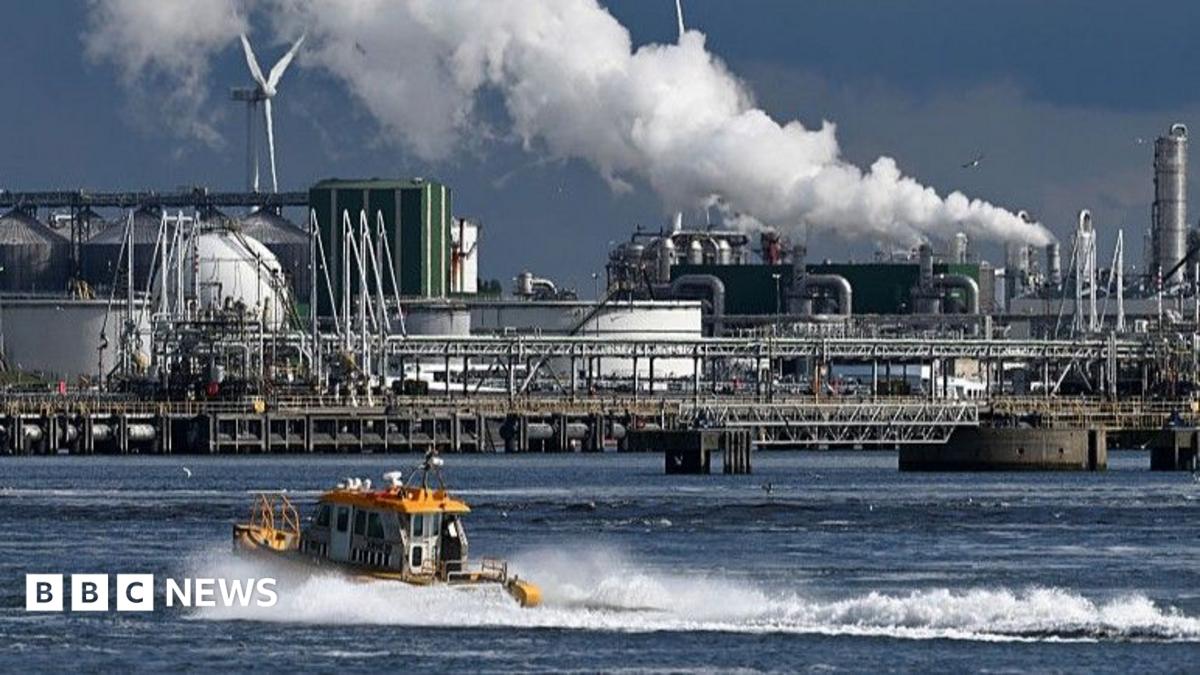
Europe's Biggest Port Tries to Kick Its Fossil Fuel Habit, But It's Complicated
Rotterdam, Europe's biggest port, tries to go green while juggling lawsuits, corporate loyalty, and a fossil fuel addiction that makes Schiphol look like a bicycle.
Standing on a patch of grass in the Hook of Holland, you can see the Port of Rotterdam doing what it does best: being Europe's biggest freight hub, handling almost as much cargo as all UK ports combined, and belching out CO2 like it's going out of style - which, for fossil fuels, it hopefully is.
By some measures, the fossil fuels flowing through this delta of the Rhine and Meuse are linked to around 600 megatonnes of CO2 a year, according to CE Delft. That's many times more than Schiphol airport, which is saying something given the aviation industry's reputation.
The industrial cluster itself coughs up about 29 million tonnes of CO2 annually, roughly half of the Netherlands' domestic emissions. "It's not good," admits Mark van Dijk, head of external relations at the Port of Rotterdam Authority, with the understatement of a man who knows he's standing on a climate time bomb.
The Port Authority has a plan, naturally. It aims to cut its own direct and purchased energy emissions by 90% between 2019 and 2030, develop a hydrogen hub, invest in onshore power so ships don't have to burn fuel while parked, and support alternative bunkering like LNG, biofuels, and methanol. There's also the Porthos project, which will capture CO2 and stuff it into depleted gas fields - because what could go wrong with that?
But environmental group Advocates for the Future isn't impressed. They've sued the port, arguing it's not doing enough to phase out fossil-based energy. Director Maikel van Wissen says a state-owned enterprise should use its clout to speed up the shift. "We are asking in the lawsuit to phase out that dependency, to create alternatives," he says, presumably while shaking his head at the slow pace of change.
The port's director of innovation, Oscar van Veen, says they're working with polluters to phase them out - before catching himself and adding, "As fast as possible, of course." Because nothing says urgency like a verbal correction.
But many of the biggest emitters answer to headquarters abroad, and if Rotterdam gets too strict, they might just pack up and leave - as Shell and Unilever have already demonstrated. Bettina Kampman of CE Delft notes the port's sphere of influence is limited, and even transitioning its own activities faces hurdles like a shortage of power cables. "It's not simply a switch you turn on or off," says emeritus professor Harry Geerlings. "A port needs activity as a logistics node - otherwise it's no longer a port. It's a real dilemma."
Across the Atlantic, President Trump isn't helping, casting doubt on climate policy and favoring fossil fuels, which sharpens Rotterdam's fear of losing industry to regions with looser rules. Advocates for the Future wants a detailed phase-out plan, not just a promise of climate neutrality by 2050. "We are not asking for anything extraordinary," says Van Wissen. "We're asking for a plan that really contributes to a sustainable future for the port."
Van Dijk insists they want the same thing: net zero around mid-century. The disagreement is over how fast and radically to change - which, in the world of climate action, is basically the whole argument.
The Good Times
News in your inbox.
One sardonic roundup, delivered on your schedule. Free. Unsubscribe whenever your tolerance for wit runs out.
Already subscribed but we never reach your inbox? Check your spam folder and hit 'Not spam' (or 'Remove from spam') to bust us out of junk-mail purgatory. You'll be helping everyone else too.
Don't open any of our emails for a month and you'll be automatically removed from the mailing list.
Rewrite Article
Select parts to regenerate with a fresh AI pass. Translations will be updated automatically.
Generate AI Image
Creates a sardonic version of the article image using OpenAI.