ESA and JAXA Formally Agree to Go Poke That Asteroid That's Definitely Not Going to Hit Us in 2029
ESA and JAXA sign a deal to study an asteroid that will buzz Earth in 2029, because nothing brings humanity together like a big space rock that definitely, probably won't kill us.
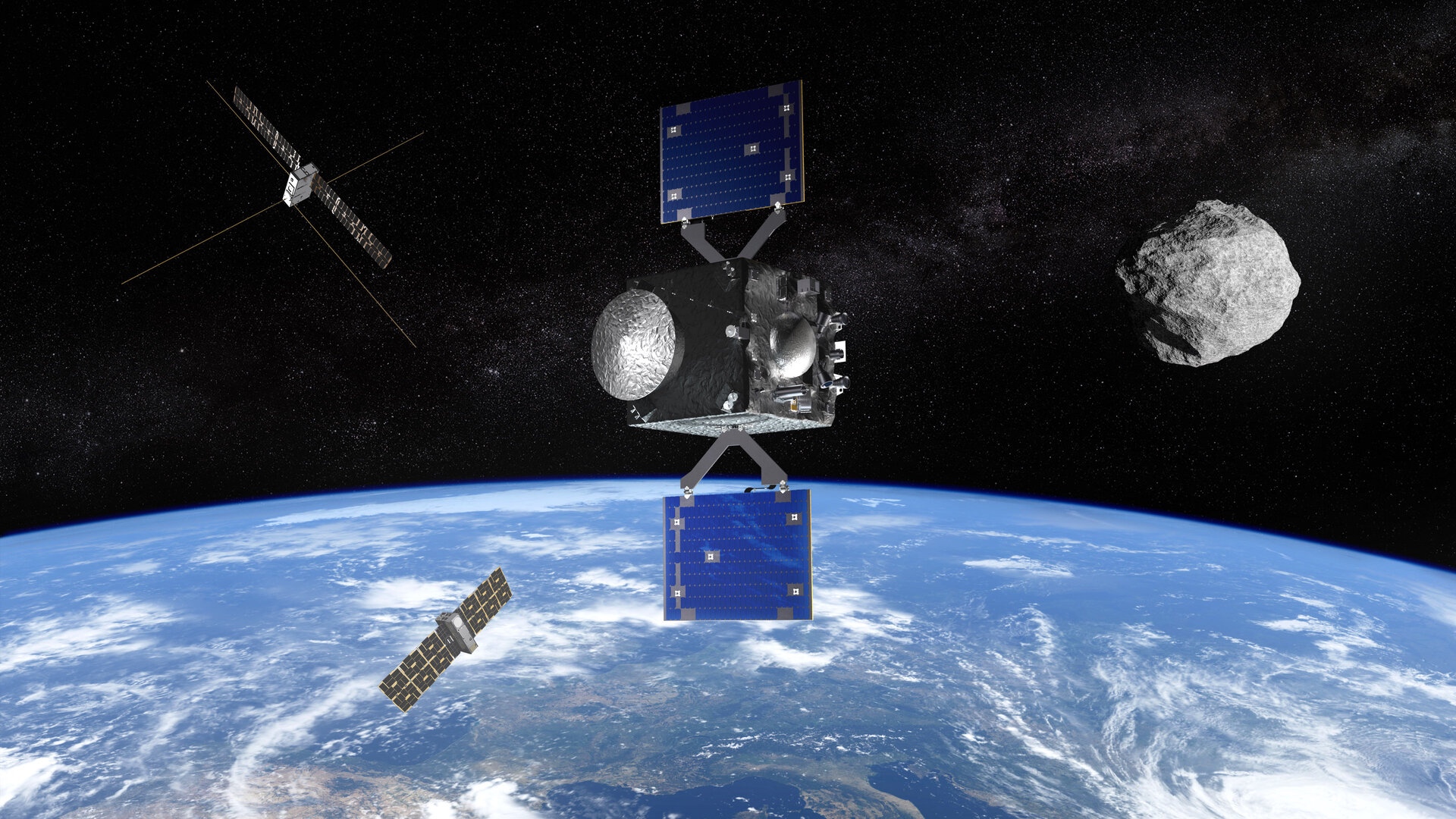
WASHINGTON - The European Space Agency and the Japan Aerospace Exploration Agency have officially signed the paperwork on a joint mission to study the asteroid Apophis during its 2029 flyby, because apparently one planet-killing space rock documentaries wasn't enough.
In a May 7 ceremony in Berlin - a city known for bureaucracy and currywurst, not necessarily in that order - ESA Director General Josef Aschbacher and JAXA President Hiroshi Yamakawa inked a cooperation agreement for the Rapid Apophis Mission for Space Safety, or Ramses, which is scheduled to launch in 2028.
Under the deal, JAXA will supply the solar arrays and a thermal infrared imager for Ramses, and will also launch the whole shebang on an H3 rocket in April 2028. Because nothing says "international cooperation" like strapping your technology to someone else's firecracker.
ESA and JAXA first announced their intention to play nice on Ramses back in November 2024, spending the intervening months figuring out what Japan could usefully contribute. The agreement came together after both agencies secured funding, including formal adoption of Ramses at ESA’s November 2025 ministerial council meeting - which, let's be honest, sounds like a committee meeting where someone definitely brought donuts.
“With today’s signatures, ESA and JAXA are moving decisively from shared intention to concrete implementation, translating commitment into mission-level cooperation,” Aschbacher said, presumably while trying not to look too smug about the alliteration.
“We sincerely appreciate ESA and its member states, including Italy, and expect this cooperation to further advance international efforts in this field,” added Yamakawa, diplomatically acknowledging that Italy's space agency is also in the room. Italian company OHB Italia will serve as the prime contractor for Ramses, which is Italian for "we're building this thing."
Ramses is slated to arrive at Apophis in February 2029, about two months before the asteroid makes its extremely close but reportedly safe approach to Earth, passing as close as 32,000 kilometers from the surface - which in space terms is basically the equivalent of someone leaning in to whisper a secret. The flyby offers scientists a rare chance to study how Earth's gravity will mess with the asteroid's surface, which is the kind of experiment you can only do when the rock is already coming your way.
Ramses isn't the only game in town. NASA's OSIRIS-APEX - an extension of the OSIRIS-REx mission that already brought back a bit of another asteroid - will arrive just after the flyby, assuming Congress doesn't kill its funding again. NASA's fiscal year 2027 budget proposal offers no funding for the mission, but Congress overrode a similar proposed cancellation in 2026, so the space agency is basically in a constant game of funding whack-a-mole.
China has proposed its own Apophis mission, called CROWN/Apophis, which would send two small spacecraft to the asteroid right after the flyby. Because if there's one thing the space community loves, it's a good old-fashioned asteroid rendezvous competition.
Several other companies and organizations have also thrown their hats in the ring for Apophis missions during the 2029 encounter. ExLabs has developed a mission concept funded by media and sponsorship deals - so expect asteroid-branded energy drinks. And Australian space imaging company HEO has proposed using a geostationary orbit satellite at the end of its life to fly by the asteroid, which is basically the space equivalent of sending your dying grandpa on one last road trip.
The Good Times
News in your inbox.
One sardonic roundup, delivered on your schedule. Free. Unsubscribe whenever your tolerance for wit runs out.
Already subscribed but we never reach your inbox? Check your spam folder and hit 'Not spam' (or 'Remove from spam') to bust us out of junk-mail purgatory. You'll be helping everyone else too.
Don't open any of our emails for a month and you'll be automatically removed from the mailing list.
Rewrite Article
Select parts to regenerate with a fresh AI pass. Translations will be updated automatically.
Generate AI Image
Creates a sardonic version of the article image using OpenAI.