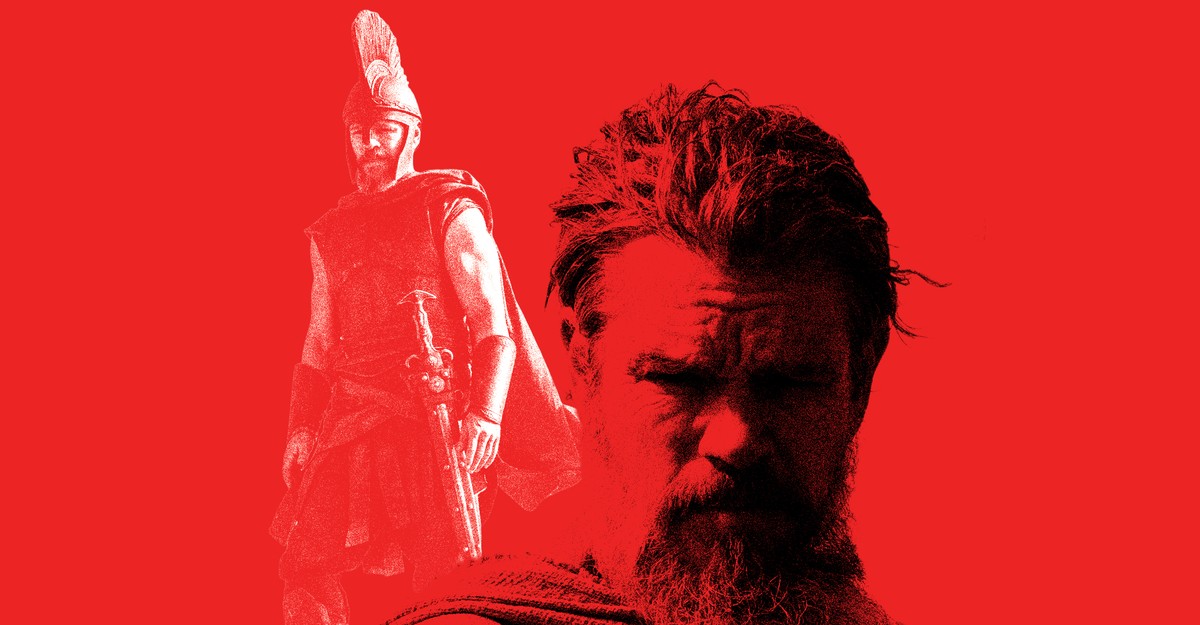
Christopher Nolan's 'The Odyssey': An Ancient Epic About Why You Should Be Nice to Strangers
Christopher Nolan's 'The Odyssey' reminds us that being nice to strangers is the foundation of civilization - and that Odysseus, like us, could use some therapy.
Christopher Nolan's new film adaptation of Homer's *The Odyssey* opens not with a storm at sea or a cyclops, but with a bard singing about Odysseus's famous trick - the Trojan Horse - to the very men who have turned his home into a frat party gone wrong. Because nothing says "welcome home" like a bunch of dudes hitting on your wife and threatening your son while you're stuck on a 10-year road trip.
The film's core theme is the ancient Greek law of xenia, or hospitality - the sacred bond between guest and host. In the Bronze Age, when Greece was less a nation and more a collection of city-states with trust issues, xenia was the only thing preventing every traveler from being treated like a door-to-door salesman. Break it, and you risked incurring the wrath of Zeus, who apparently had strong opinions about Airbnb etiquette.
Nolan's take, however, adds a modern twist: guilt. In the poem, Odysseus is proud of his horse-based war crime. In the film, he's haunted by it. The Trojan Horse was disguised as a holy offering to Athena, and when the Trojans wheeled it inside - because who wants to offend a goddess? - the Greeks popped out and slaughtered everyone. This moral weight follows Odysseus throughout his journey, personified by Athena herself, who wears the face of a priestess beheaded during the massacre. Whether she's a goddess or a ghost is left ambiguous, but either way, it's a heck of a therapist's bill.
By the time Odysseus returns to Ithaca disguised as a beggar, he sees what his absence has wrought: lawlessness, scheming, and a general lack of basic decency. The only kindness he receives comes from his son and a few loyal servants. It's a grim reminder that when hospitality breaks down, so does everything else. As Nolan told *The New York Times*, the poem is "stunningly relevant" - because apparently, we still haven't figured out how to treat strangers.
The film weaves in later Judeo-Christian values like introspection, empathy, and mercy - concepts that would have seemed weird to Homer's audience but resonate today. Odysseus is a hero not because he won a war, but because he feels bad about it. Nolan trusts that a summer audience will embrace a complicated, broken hero who is "fierce but tender toward the weak." In an age where cruelty is often celebrated, that's almost radical.
But the film's message isn't just ancient history. As the article notes, movements today treat mercy as weakness and feed on vengeance. Nietzsche warned that when God dies, morality might collapse too. His modern heirs seem to be practicing cruelty in God's name, creating a world that's harsh, barren, and lonely. We're left with a weariness and a longing for something gentler. As Robert F. Kennedy once said, quoting Edith Hamilton: "Let us dedicate ourselves to what the ancient Greeks wrote so many years ago: 'to tame the savageness of man and make gentle the life of this world.'"
In other words, we want to go home. And maybe, just maybe, be nice to the stranger at the door.
The Good Times
News in your inbox.
One sardonic roundup, delivered on your schedule. Free. Unsubscribe whenever your tolerance for wit runs out.
Already subscribed but we never reach your inbox? Check your spam folder and hit 'Not spam' (or 'Remove from spam') to bust us out of junk-mail purgatory. You'll be helping everyone else too.
Don't open any of our emails for a month and you'll be automatically removed from the mailing list.
Rewrite Article
Select parts to regenerate with a fresh AI pass. Translations will be updated automatically.
Generate AI Image
Creates a sardonic version of the article image using OpenAI.