
SILER CITY, N.C. - John Alderman opened the letter, sent by certified mail from an attorney in New Orleans, and thought, "This is trouble. It can’t be good news." He was right.
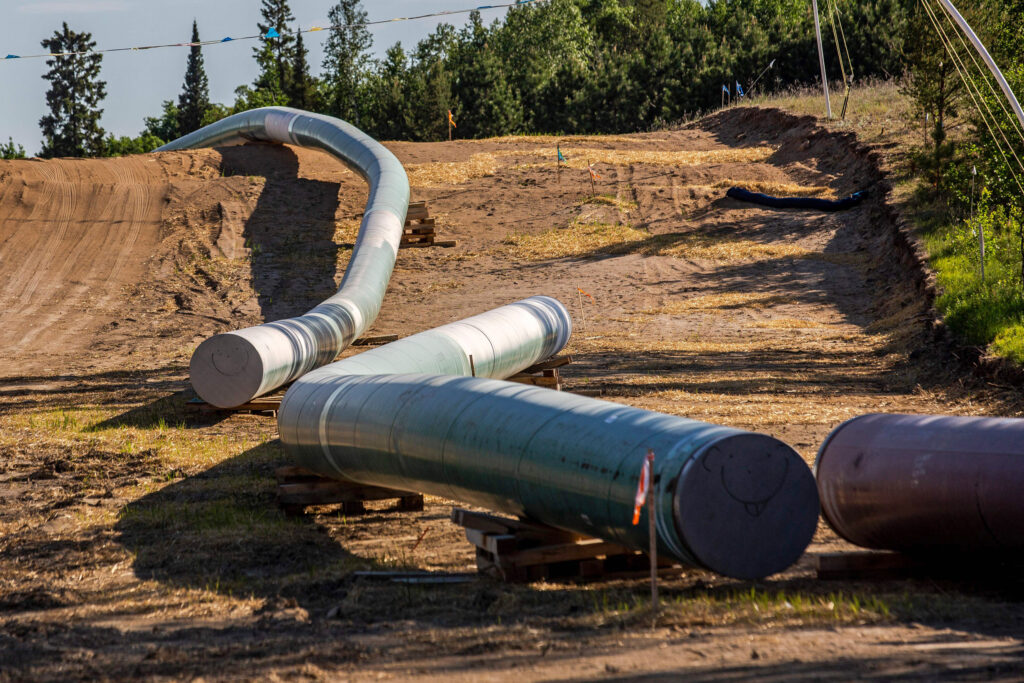
In late April, Enbridge - a Canadian company that apparently missed the memo on renewable energy - announced plans to build a new 28-mile natural gas pipeline through Chatham County, from Siler City to Moncure. Contractors surveying potential routes now want access to Alderman’s land. "I resent a letter like that," said Alderman, who lives in western Chatham County. "We are informed, without asking, that someone is planning to trespass on our land. Everything in it is an affront."
Company spokeswoman Persida Montanez told Inside Climate News the pipeline will serve "broader regional energy needs" in fast-growing Chatham and Lee counties, not specific projects like data centers. The preliminary routing shows the pipeline connecting to Enbridge’s existing system near Siler City, heading southeast, and ending near Moncure. It would bypass Pittsboro but could cross several creeks feeding the Deep River, plus the Rocky and the Haw. Construction could begin in fall 2027, with a service date of spring 2028. Total project costs have not yet been determined - because why ruin the surprise? Enbridge will need various state permits and, if it crosses waterways, a federal water quality permit.
This is Enbridge’s second major pipeline project in North Carolina since 2024, when it bought Dominion Energy’s natural gas business. The first is the T15 pipeline, running 45 miles from Eden to Duke Energy’s new natural gas plants near Roxboro. These projects are part of the state’s immense natural gas buildout that, if completed, will emit hundreds of tons of planet-heating greenhouse gases annually. Natural gas companies and Duke Energy say they’re necessary to meet growing power demands, especially from data centers. Critics - including environmental groups, consumer advocates, and the Public Staff of the N.C. Utilities Commission - counter that those demand projections are inflated. The result, they say, will be hefty profits for fossil fuel interests, higher customer rates, a hotter planet, and habitat destruction.
Alderman is 72, of Viking stock, tall, with deep-set brown eyes and short white hair. He lives with his wife of 52 years, Gloria, off the grid in a solar-powered, modern stucco house on 195 acres of woods once owned by International Paper. The couple grow their own fruits and vegetables. In 2023, they received a federal grant to sequester carbon in their forest; within two years, it could store as much as 100,000 tons. "We’re carbon negative," Alderman said. He drove his Ford Lightning - an electric pickup truck charged via solar panels - down a gravel driveway over a 550-million-year-old fault line. "Everything we’ve done has been geared toward combating climate change. And here we have the irony of ironies - a stinking gas line going through our property."
John and Gloria met as undergraduates in ecology class in 1974. Both became biologists; he specialized in endangered species like mussels, fish, and snails. He was the last person to see many types of mussels alive in a four-state area, wading in radioactive water up to his chest near the Savannah River nuclear site. Inside their home is a wall of framed newspaper cartoons: one shows Alderman staring down bulldozers; another has his feet trapped in concrete as special interests push him off a pier. "John’s seen so much," Gloria said. "His work was fighting. John is not shy."
When the Aldermans bought the land six years ago, they knew Duke Energy had a permanent easement for a high-voltage transmission line toward the front. They couldn’t have known a pipeline might plow through some of the most pristine habitat in Chatham County. Alderman projected the proposed route on his wide-screen TV, pointing to a new water main by regional utility TriRiver as "the first domino to fall." No environmental impact studies were conducted for that project, which was originally for emergency backup. Instead, it sparked new subdivisions and development - and now comes the Enbridge pipeline. "The water line was the catalyst," Alderman said. "Everything is connected."
The Rocky and Deep rivers flow into the Cape Fear River Basin, besieged by PFAS, 1,4-dioxane, and other contaminants. The Atlantic pigtoe, a native mussel not seen since the 1970s, has been extirpated. If the pipeline crosses waterways, more aquatic life could be displaced. "I’ve seen the tremendous effects of climate change on small streams and rivers," Alderman said. "These rivers are under the gun."
The pipeline would run through County Commission District 2, represented by Amanda Robertson, who spent years fighting the canceled Atlantic Coast Pipeline. "Now we’ve got yet another pipeline, and I will do everything in my power to find a way to stop that from happening," she said. "It’ll be a fight."
About 800 people live in Moncure, an unincorporated town in far southeast Chatham County, along an economic development corridor with industries like Arauco, brick factories, a quarry, and Duke Energy’s former coal plant turned coal ash recycling facility. Robertson helped develop a growth plan that kept two-thirds of the area as agriculture, woods, parks, and conservation. But over the past four years, new projects have encroached. The Enbridge pipeline would terminate at Triangle Innovation Point, where more than 1,000 acres of forest were clear-cut for VinFast to build a factory - four years behind schedule, with construction not yet begun. A 750-megawatt data center is also proposed but in litigation over a county moratorium.
"What we’ve seen throughout North Carolina is that where the gas goes, the data centers follow," said Emily Sutton, the Haw riverkeeper. "There’s an inflated energy projection because of the proposed data centers."
Blueberry bushes are blossoming in the Aldermans’ garden. Gloria designed their home with precise measurements aligned with the Earth’s revolution around the sun. The house is fireproof, with 9-inch-thick walls and concrete floors that stay cool even on 90-degree days. "Surviving climate change, that’s the key to what we’re doing," Alderman said. "And the pipeline flies in the face of everything we’re trying to do here."
Eminent domain allows private companies to take property for projects deemed in the public interest, with fair compensation. Landowners can go to court if they can’t agree on a price. Alderman sent a certified letter back to Enbridge’s attorneys: "I told them in no uncertain terms, ‘You can’t do this. Explore the alternatives. Stay off my property.’"